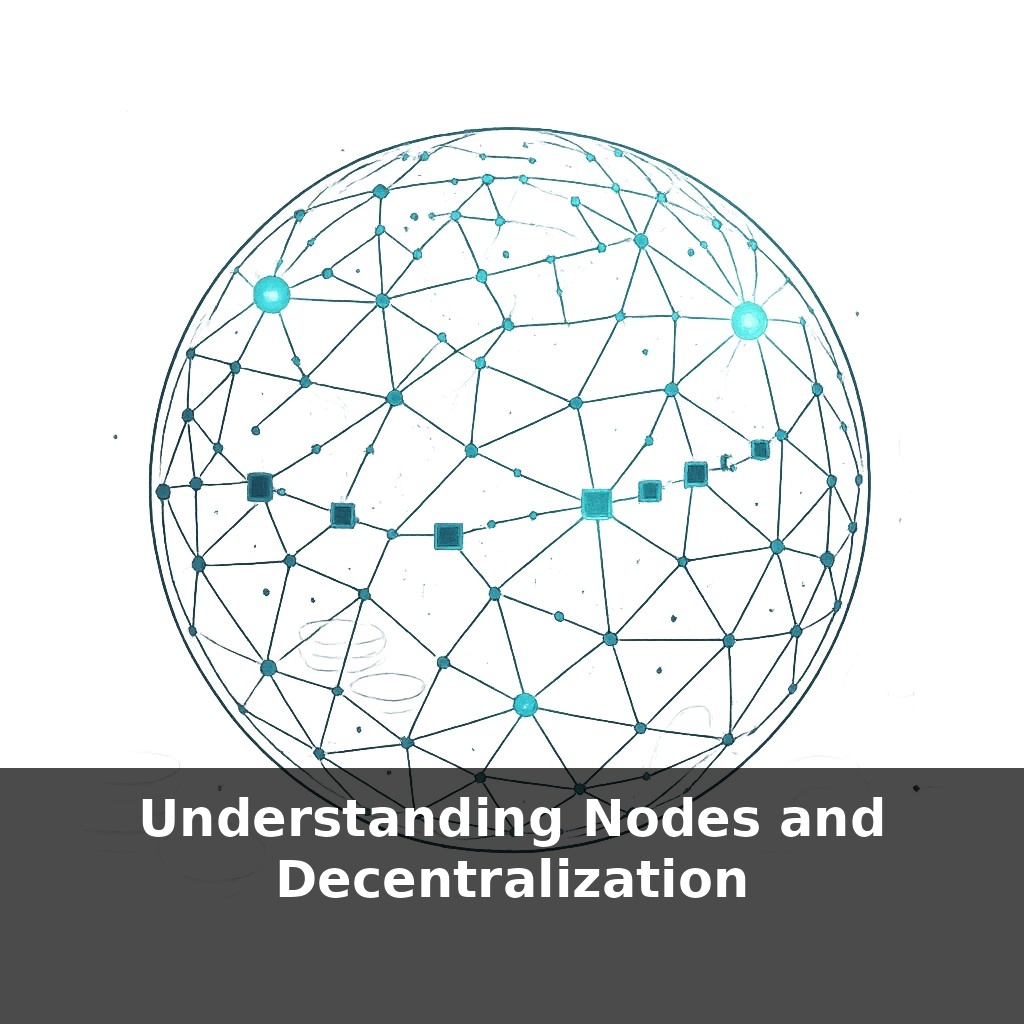
Right now, as you’re listening, thousands of independent computers you don’t control are quietly agreeing on who owns which digital coins—without a boss, a headquarters, or a help desk. How does a system with no center stay honest, resilient, and hard to shut down?
Most people hear “blockchain” and think price charts or energy debates—but under the surface, there’s a quieter story: thousands of independent machines, making tiny decisions every second, that add up to a global agreement. This episode is about those machines—nodes—and why their number, diversity, and behavior matter more than any single blockbuster upgrade or headline.
We’re moving from *what* the network does to *who* actually runs it and *how* power is distributed. You’ll see why 15,000+ publicly visible Bitcoin full nodes are not just a bragging right, but a form of political structure. We’ll look at how Ethereum’s move to proof of stake traded electricity consumption for new decentralization risks. And we’ll get concrete: what it takes to run a node yourself, why light wallets lean on them, and when “more nodes” doesn’t automatically mean “more safety.”
Some of those machines are hobby projects humming under a desk; others live in professional data centers run by exchanges, universities, or infrastructure companies. They don’t all play the same role, either: some keep full historical records, some focus on current consensus, others serve traffic to wallets and apps. What matters is *who* runs them and *where*: one person with a thousand boxes in a single warehouse is very different from a thousand strangers across different countries and legal systems sharing the load. That distribution is what we’ll unpack next.
The simplest way to see how power is distributed is to separate *what* nodes do from *who* runs them and *what they’re willing to accept*.
On Bitcoin, most full nodes are “consensus guardians.” They don’t create blocks; they *judge* them. Miners can propose any block they want, but every node independently checks: Are the signatures valid? Are the amounts possible? Do the rules match the version of Bitcoin this node accepts? If not, the block is ignored, even if a huge mining pool produced it.
That judgment power is where decentralization quietly lives. When developers propose a change—say, a new feature or an increase in block size—it doesn’t become “real” until enough node operators upgrade. In 2017’s block-size wars, for example, some large companies wanted bigger blocks to push more transactions through. Many independent operators refused, worried that bigger blocks would force everyone onto expensive hardware and shrink participation. The result: a split into two chains, with most economic activity following the side chosen by the majority of independent nodes and users—not by the most vocal companies.
Ethereum adds another twist: node *client* diversity. Even if validators are plentiful, relying on one dominant software implementation creates a hidden single point of failure. A critical bug in that client could cause most of the network to stumble in the same way at the same time. That’s why you’ll hear concern when a single client climbs over, say, 70% market share, and why projects like Geth, Nethermind, Besu, and others are carefully tracked.
Geography and legal regimes matter too. A thousand nodes all hosted with one cloud provider in one country can be pressured, censored, or simply knocked offline by an outage. The same thousand, spread across home connections, university networks, and different hosting companies, are far harder to herd. This is why some builders actively court “boring” operators—teachers, retirees, small businesses—rather than only chasing institutional partners.
Think of it like a forest: diversity of species, age, and terrain doesn’t maximize neatness or short-term yield, but it does make the ecosystem far harder to burn down.
A useful way to *feel* this is to zoom into specific roles people play.
One person might run a Bitcoin full node at home purely to settle arguments: when friends dispute whether a payment “went through,” that node is the final arbiter. Another might use a node as a personal checkpoint for savings—refusing to trust any balance they can’t verify from their own machine. A small exchange could operate multiple nodes in different countries, not just for backup, but to ensure local outages or court orders in one place don’t freeze all its users at once.
On Ethereum, some operators deliberately choose a minority client, even if it’s less polished, because they see themselves as “load balancers” for the ecosystem. Researchers run exotic configurations—nodes on flaky connections, odd hardware, or behind strict firewalls—to discover edge cases before attackers do.
Taken together, this looks less like a uniform grid of machines and more like a network of studios in an art district: each with its own tools, priorities, and quirks, yet all contributing to the same evolving canvas.
Fewer people may run heavy-duty setups in the future, yet influence could spread wider. Rollups and sharding let everyday users verify outcomes with lighter gear, a bit like checking a restaurant bill instead of auditing the whole chain of invoices. DePIN projects stretch this further: nodes may guard maps, energy, or bandwidth as easily as money. Law and cryptography upgrades will quietly test how quickly this loose constellation can still move together.
As networks evolve, “who runs what” starts to look less like infrastructure and more like citizenship. You might never mine a block, yet by choosing clients, providers, and tools, you’re still voting. Your challenge this week: trace one transaction you make—card, app, or wire—and map every invisible intermediary it passes, like marking each trail sign on a long hike.