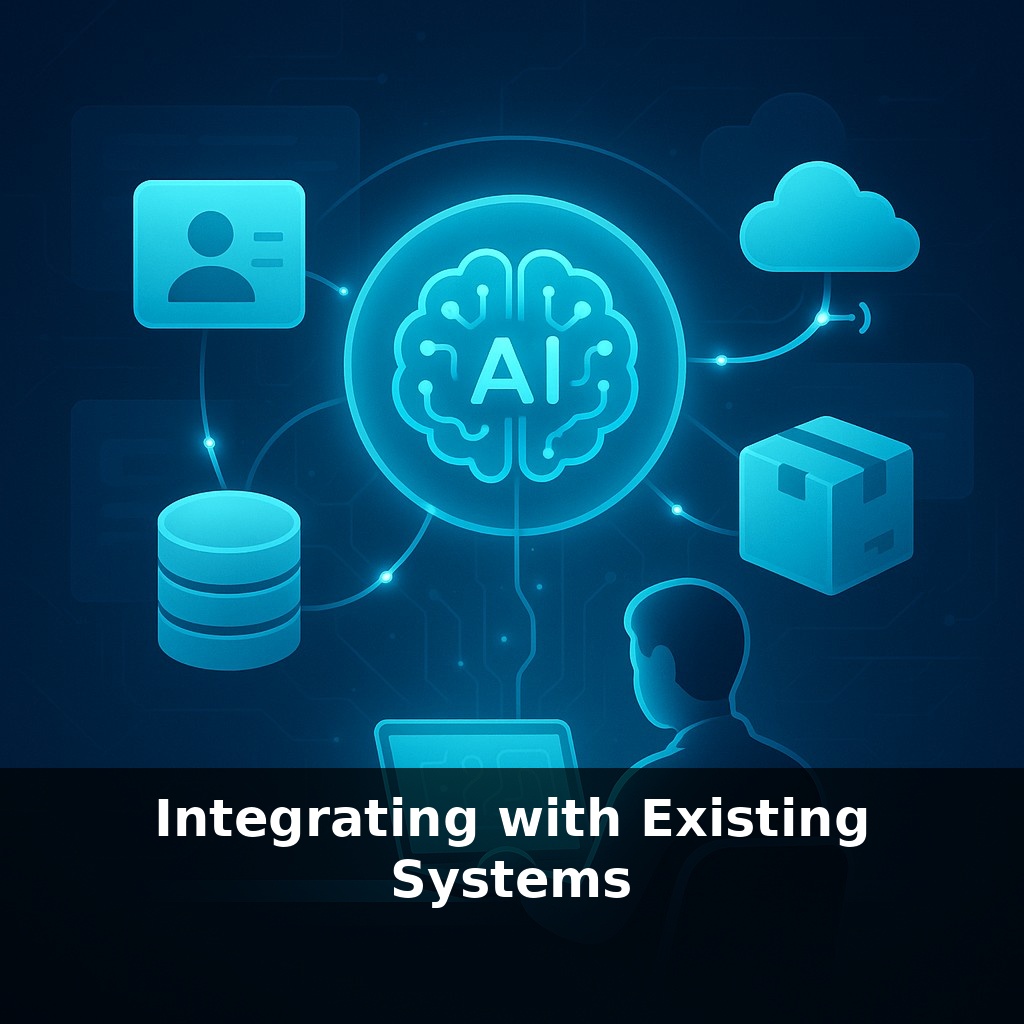
About half the effort in successful chatbot projects isn’t in the AI at all—it’s in wiring it into everything else. A support agent types one question, and in a heartbeat the bot quietly talks to sales, billing, and shipping systems, then answers as if it was one brain.
Twelve percent. That’s how much faster API‑first companies grow on average—and it’s no accident. When your AI can plug cleanly into CRMs, ERPs, ticketing tools, and even IoT sensors, it stops being a demo and starts becoming infrastructure. The trick isn’t just “having an API,” it’s shaping that surface so conversations can trigger the right events, with the right security, at the right speed.
You’ll start hearing new phrases: API gateways handling most production traffic, webhooks firing in under 200 milliseconds, OAuth 2.0 tokens limiting exactly what your bot is allowed to see and do. You’ll also run into stubborn reality: legacy SOAP services, XML schemas no one wants to touch, and translation layers that quietly eat 30 % of your time.
This episode is about turning that messy landscape into a coherent, conversational interface.
Some teams try to dodge all this by building a “single source of truth” before they add an AI interface. Others go the opposite way: they expose tiny, task‑specific endpoints and let the conversation layer orchestrate across them. Both paths can work, but they shape very different products. One favors consistency and governance; the other favors speed and experimentation. We’ll look at how event streams, message queues, and iPaaS connectors change what’s possible, and how security models like mTLS and JWTs quietly decide which integrations you’ll trust in production.
You can think of the integration layer as three interlocking questions: **how does the bot ask for things, how do systems answer, and who’s allowed to do what?** Get those right and the rest starts to look like plumbing detail instead of mystery.
First, how the bot asks. Most teams standardize on a small set of internal “capabilities” instead of exposing every field from every system. For example: `create_ticket`, `get_order_status`, `update_contact`. The conversation layer maps messy user language onto these tidy verbs; an integration layer then fans those verbs out into REST calls, GraphQL queries, or messages on a queue. By keeping the verbs stable while the underlying calls evolve, you avoid breaking your bot every time a vendor bumps an API version.
Second, how systems answer. Real‑world integrations rarely return exactly what a conversation needs. You might get a dozen partial answers from different places: entitlement from one service, inventory from another, human‑friendly descriptions from a third. This is where **composition** matters. Some teams build a thin BFF (“backend for frontend”) that assembles everything into a single response tailored for the bot. Others lean on event‑driven patterns: emit an “order_status_requested” event, let subscribers enrich it, then have the bot listen for the aggregated result. The key is to centralize the *format* of the answer the bot sees, even if the sources stay decentralized.
Third, who’s allowed to do what. Instead of handing the bot a master key, modern stacks give it **scoped, tiered access**. Read‑only flows (like “what’s my shipping date?”) may go through cached, rate‑limited paths that tolerate small delays or stale data. Write flows (refunds, permission changes) often require extra signals: user re‑authentication, manager approval events, or risk‑score checks from a fraud service. Practically, you end up encoding “guardrails as code”: which capability can be called, with which parameters, under which user context.
Your integration design should grow iteratively: start with one or two capabilities end‑to‑end, instrument them obsessively (latency, failure modes, escalation rates), and treat every new system as a chance to refine—not reinvent—those patterns.
A useful way to spot integration gaps is to follow a single, concrete story: a customer asks, “Can I upgrade my plan and keep my discount?” One flow has to surface pricing rules, current contract terms, regional tax quirks, and maybe even shipment dates if hardware is involved. If any one system refuses to cooperate—slow responses, inconsistent IDs, conflicting time zones—the whole answer wobbles. This is where patterns like an internal “customer timeline” view emerge: a composite stream of key events—orders, tickets, payments, device status—that multiple tools can publish to and read from. Instead of wiring every system directly to every other, you give each one a single, well‑understood place to speak and listen. It’s a bit like hiking with a detailed trail map instead of dozens of disconnected snapshots: you still pass the same trees and streams, but now everything lines up into one navigable path your AI can reliably walk for you.
As integrations mature, your “bot + systems” network starts to behave less like a set of tools and more like a living ecosystem. New services plug in the way new plants take root: they either find the light—clear contracts, real‑time signals, audit trails—or they wither and get replaced. Expect policy to become as programmable as code: approvals, regional rules, and risk scores evaluated in milliseconds so the assistant can adapt its behavior per user, per action, without waiting on a human checklist.
Treat this as ongoing choreography, not a one‑time wiring job. The real payoff appears when you can swap in a new CRM, launch a pricing engine, or connect a sensor fleet without rewriting dialogs. Your challenge this week: pick one real user journey and sketch the ideal data “dance card” your assistant would need at each step.