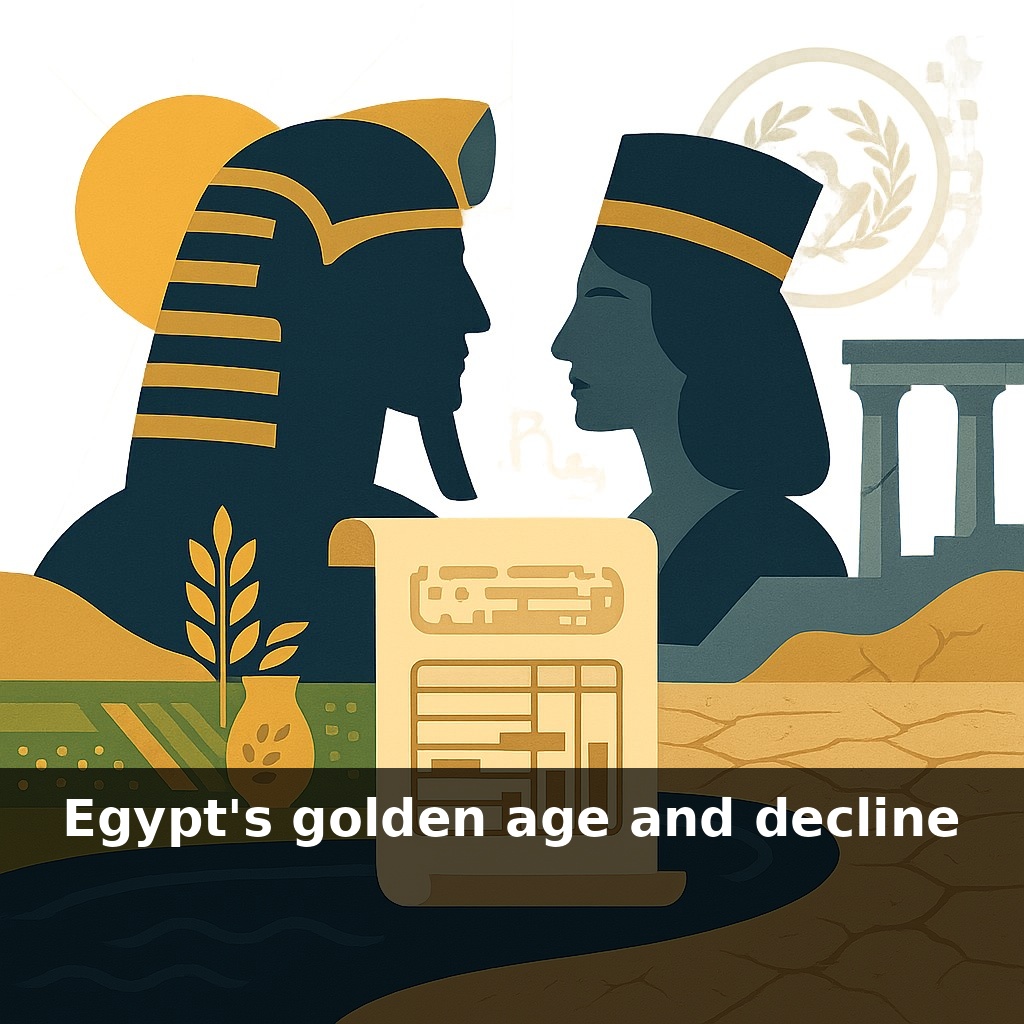
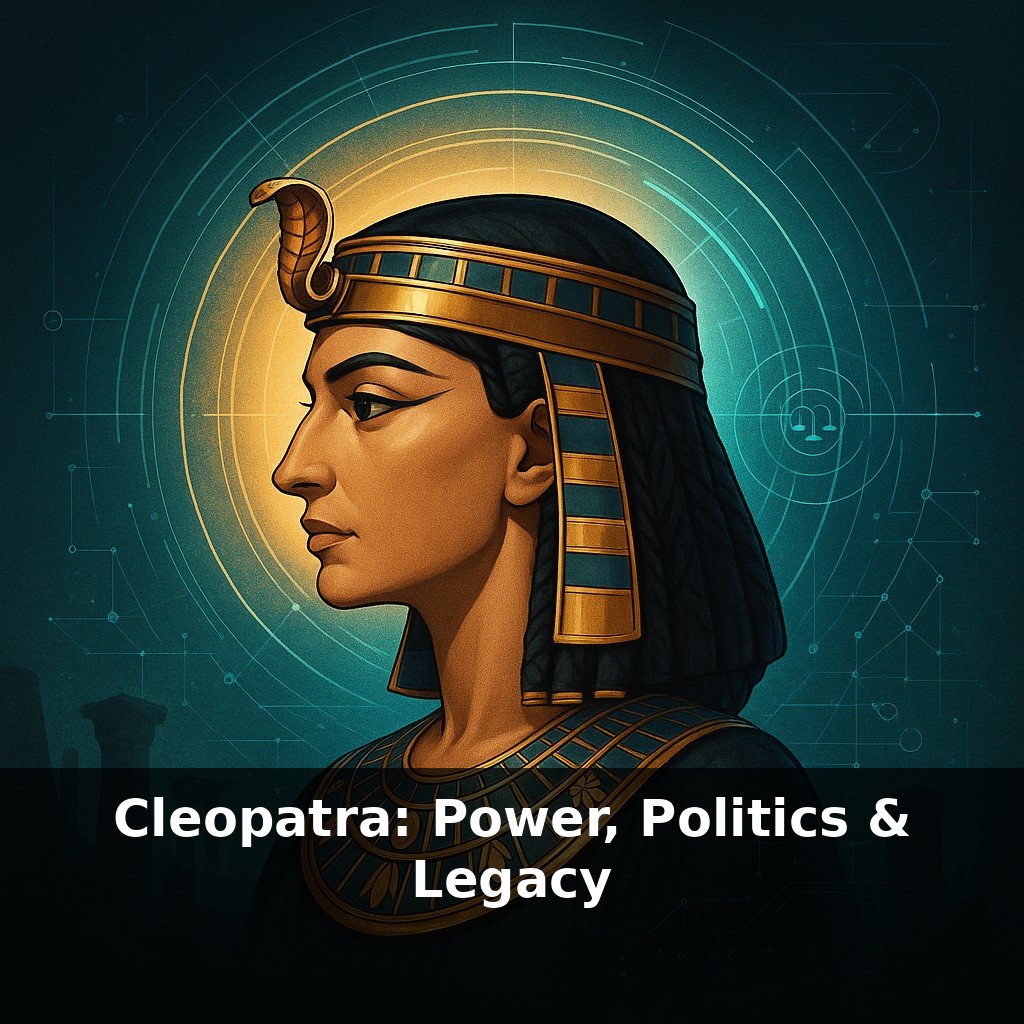
A kingdom survives nearly three thousand years—then vanishes so completely that its writing becomes a mystery. In one scene, pharaohs count overflowing grain; in another, Cleopatra bargains with Rome. Somewhere between those moments, Egypt’s golden age quietly cracks.
The clue to Egypt’s long arc from dominance to dependence sits not in a throne room, but in a ledger. Tax scribes recorded harvests so generous that, in some Delta fields, each hectare yielded several tons of grain—enough not just to feed villages, but to fund armies, temples, and risky foreign adventures. That surplus turned Egypt into a regional lender and a diplomatic heavyweight, able to trade bread for bronze, gold, and loyalty. But such abundance masked a fragility: it tied Egypt’s power to cycles of flood, trade routes, and court politics that few could control. As rival empires learned to redirect caravans, mine their own metals, or tap new ports, the “banker of the ancient world” slowly found its accounts overdrawn, forced to mortgage autonomy in exchange for short-term survival.
Egypt’s strength wasn’t just about food; it was about coordination. A vast, disciplined bureaucracy timed labor crews, storage, and shipments the way a conductor cues sections of an orchestra. Officials logged which villages sent workers to quarry stone, which caravans brought incense or timber, which ports funneled luxury goods into royal storehouses. When that system worked, Egypt projected influence from Nubia to the Levant. When climate shocks, new sea routes, or foreign armies disrupted the rhythm, missed “notes” echoed everywhere—from unpaid soldiers to local governors improvising their own power plays.
Power in Egypt’s New Kingdom rested on three interlocking pillars: control of water, control of people, and control of stories.
First, water. The state didn’t just watch the Nile; it tried to choreograph it. Officials measured flood levels with nilometers carved into stone, then used those readings to set dues, plan canal dredging, and decide which regions got priority for emergency grain. When the floods stayed within a comfortable band, the system looked brilliantly farsighted. When they dipped for several years in a row—as climate data from Eastern Mediterranean cores suggests happened near the end of the Bronze Age—the same calibrated system began to misfire. Assessments set in good years suddenly overshot what villages could actually deliver, sparking quiet arrears, then louder resistance.
Second, people. New Kingdom rulers didn’t rely solely on brute force; they built a hierarchy of loyalty. Local elites gained titles, tax breaks, and access to temple estates in exchange for keeping their districts orderly and supplied. At the top, generals and priests commanded not just troops and rituals, but enormous economic footprints. Temple complexes ran workshops, owned fleets, and held land across nome boundaries. This made them indispensable partners in prosperity—and dangerous rivals in crisis. As military campaigns stalled and external tribute shrank, the court had to choose: cut temple privileges and risk rebellion, or mortgage future autonomy to keep their support.
Third, stories. Monument walls from Thebes to Abu Simbel stage carefully curated victories: foreign princes bowing, deities handing symbols of rule to the king. These scenes weren’t mere vanity; they were tools of coordination. By inscribing a particular version of events in stone, the palace signaled who mattered, who was loyal, and what the future was supposed to look like. When reality drifted too far from these narratives—when border fortresses fell, or when great houses like the Hittites disappeared from the record altogether—the gap bred improvisation. Regional commanders began to present themselves as local saviors, priests as guardians of continuity, even as central authority quietly hollowed out.
Over centuries, each pillar eroded at a slightly different pace. Some reigns patched cracks with reforms or charismatic leadership; others merely painted over them with grander monuments. The result was less a sudden collapse than a long series of adjustments, each trading a bit of independence for short-term stability.
When those three pillars—water, people, stories—lined up, Egypt could do things that still feel audacious. Ramses II didn’t just fight the Hittites; after the clash at Kadesh he turned a bloody stalemate into the world’s first known written peace treaty, locking in borders and prestige much like two rival tech giants signing a cross-licensing deal instead of draining each other in court. Centuries later, the script flipped. By Cleopatra’s time, the same machinery of coordination was working under somebody else’s rules. Egypt’s ledgers now tracked debts to Rome so large they equaled roughly two years of royal income, and foreign garrisons watched key ports. Naval power became the last bargaining chip: at Actium, around 200 Egyptian-Ptolemaic ships faced roughly double that number under Octavian. When that fleet broke, so did the illusion that Egypt could still trade diplomacy for autonomy. Yet even as hieroglyphs faded from everyday use, temple walls kept announcing timeless order, long after real decisions were being made in distant capitals.
Building on our exploration of Egypt's transformation, a future archaeologist might “read” Egypt less through kings than through soil, pollen and river mud. As satellite surveys quietly map buried streets and harbors, climate models are turning flood layers into timelines of stress and recovery. For modern states riding a single river or export, Egypt is less a myth than a case file: long resilience, sudden tipping points, and the way borrowed power can feel local—right up to the moment it’s recalled from abroad.
Egypt’s story isn’t just rise and fall; it’s revision. Each conqueror remixed its temples, laws, and ports, like new musicians sampling an old melody. Rome turned it into a grain vault, monks into a sacred landscape, scholars into a research lab. Your challenge this week: Research how ancient Egyptian architecture influenced modern building designs and share your findings with others interested in architectural history.