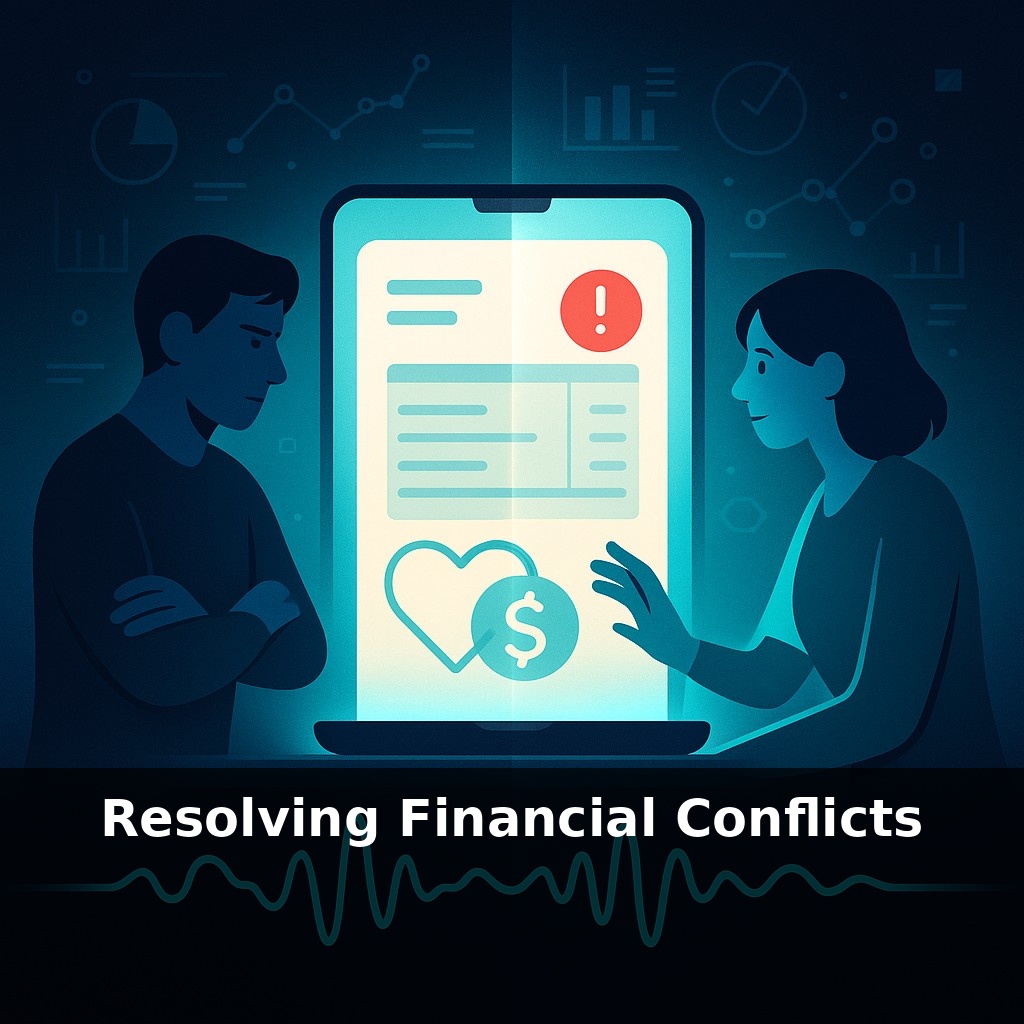
According to a major study, money fights predict divorce more than conflicts over sex, kids, or in‑laws. Now zoom into one tense moment: a late bill, a raised voice, a slammed laptop. Same numbers on the screen—yet one couple breaks, another grows closer. What’s actually different?
Here’s the twist: most couples think they’re arguing about *math*—the balance, the bill, the budget line. But research keeps finding the same thing: the numbers are often just the stage prop. The real drama is about power (who decides), trust (will you follow through), and identity (what kind of person this makes me). That’s why simply earning more or cutting harder rarely ends the fighting. You’ve probably felt it: the same $200 can feel like a crisis in one conversation and a non‑event in another, depending on tone, timing, and whether you feel heard. Modern conflict research borrows from psychology and negotiation science to change *how* you talk before you change *what* you decide. Instead of “Who’s right?” the better question becomes “What are we each really protecting here—and how do we protect it together?”
So instead of trying to “win” the next argument, think of shifting the *format* of the whole conversation. Research on principled negotiation and financial therapy shows that when couples move from blame (“You always…”) to curiosity (“Help me understand…”), they argue less *even when* the numbers are tight. Techniques like Gottman’s soft start‑up or the Interest‑Based Relational Approach are basically conversation scripts: they slow things down, surface what each of you actually needs, and keep you out of that all‑too‑familiar spiral where one overdraft fee somehow becomes proof you’ll “never be on the same team” about money.
Think of this section as learning a different “operating system” for money talks—a few simple rules that quietly change everything running on top.
Start with *interests*, not positions. A position is “We’re not spending $500 on your phone.” An interest is the need underneath it: “I want to feel we’re not sliding backwards into debt,” or “I need a reliable phone because clients text me.” Numbers become negotiable once the needs are visible. Couples using this style stop arguing *if* a purchase is allowed and start asking *what* each person is trying to protect: security, autonomy, fun, status, fairness, relief.
A quick way in: each person fills in the blank—“For me, money is really about ___.” Stability? Freedom? Generosity? Respect? When you say, “This isn’t about the sofa; it’s about feeling like our home is finally ours,” you’ve shifted from a price tag to a shared human need your partner can recognize.
Next, how you *open* a tough talk matters more than you think. Gottman’s work on “soft start‑ups” shows that the first 30 seconds predict whether a conversation spirals or settles. Instead of “You’re so irresponsible with the card,” try, “I feel anxious when I see our balance jump and I’d like us to look at it together.” You still name the issue, but you remove the personal attack and add a specific request.
Then there’s structure. Unstructured money talks tend to happen at the worst possible time—11:37 p.m., three stressors deep, with a phone notification as the trigger. Structured conversations are scheduled, time‑boxed, and focused. Mediation research suggests even a loose agenda helps: (1) what happened, factually; (2) how each of you experienced it; (3) what each of you needs going forward; (4) brainstorming options without judging; (5) choosing one small, testable step.
Here’s where cognitive‑behavioral tools sneak in. Instead of treating every thought about money as “true,” you both get curious: “When I see a big expense, I instantly think, ‘We’re doomed.’ Is that accurate—or is it my old script?” Naming those automatic thoughts out loud (“Here comes my catastrophizing brain again”) makes them less powerful and less likely to steer the conversation.
Taken together, these approaches turn a potential blow‑up into a joint problem‑solving session: same bill, same bank account, but a completely different way of moving through it—side by side instead of head‑to‑head.
Two quick examples. First, a tech‑savvy couple: Alex loves new gadgets; Jordan hates seeing charges they didn’t plan. Old pattern: Alex buys, Jordan reacts, they both dig in. New pattern: before any purchase over a set amount, they run a 5‑minute “needs check.” Alex says, “I’m trying to protect my workflow and avoid crashes.” Jordan adds, “I’m trying to protect our runway so we’re okay if one of us gets laid off.” Once both needs are on the table, they might delay the upgrade a month, sell an older device, or set up a sinking fund—disagreement becomes design work, not a verdict on who’s “bad with money.”
Second, think of a shared playlist in a music app. Instead of fighting over one “right” song, you’re curating mood, tempo, and turns: a track for calm, a track for motivation, a track for fun. Interest‑based money talks are similar: you’re building a playlist of solutions that hits both your core themes often enough that neither of you wants to hit “stop” on the relationship when the next bill drops.
AI tools are starting to act like “practice partners” for hard money talks—helping couples rehearse language, test budgets, and spot emotional tripwires before a real argument. As more banking, debt, and investing happens online, you’ll likely see built‑in “cool‑off” features: pause buttons on transfers, prompts to set joint rules, even optional mediators you can summon inside an app when a charge is disputed, like calling in a referee before the game gets out of hand.
You won’t master this in one talk—treat it like learning a new instrument. Early on, you’ll hit wrong notes, rush the tempo, fall out of sync. That’s normal. Over time, patterns emerge: which topics spike your heart rate, which phrases calm things down. Keep tweaking the “settings” together and your money system becomes less firefight, more steady rehearsal for the life you’re building.
Before next week, ask yourself: 1) “The next time we disagree about spending (like eating out, subscriptions, or helping family), what would it look like if I started the conversation by asking, ‘What’s most important to you about this money decision?’ instead of defending my view first?” 2) “Looking at our last 5–10 purchases, where do I see my money story (how I grew up with money) clashing with my partner’s, and how can I explain that to them without blaming—just sharing context?” 3) “If we picked one recurring conflict—like saving vs. enjoying money now—what is one clear boundary or shared rule (for example, a set ‘fun money’ amount or a savings percentage) I’m willing to propose to reduce future fights?”