Understanding Blockchain Basics
📝 Transcript
Right now, there’s a database running in the open that anyone can read, no single company controls, and yet it’s moved trillions of dollars without a central boss. In this episode, we’ll step inside that strange system and ask: why hasn’t it fallen apart?
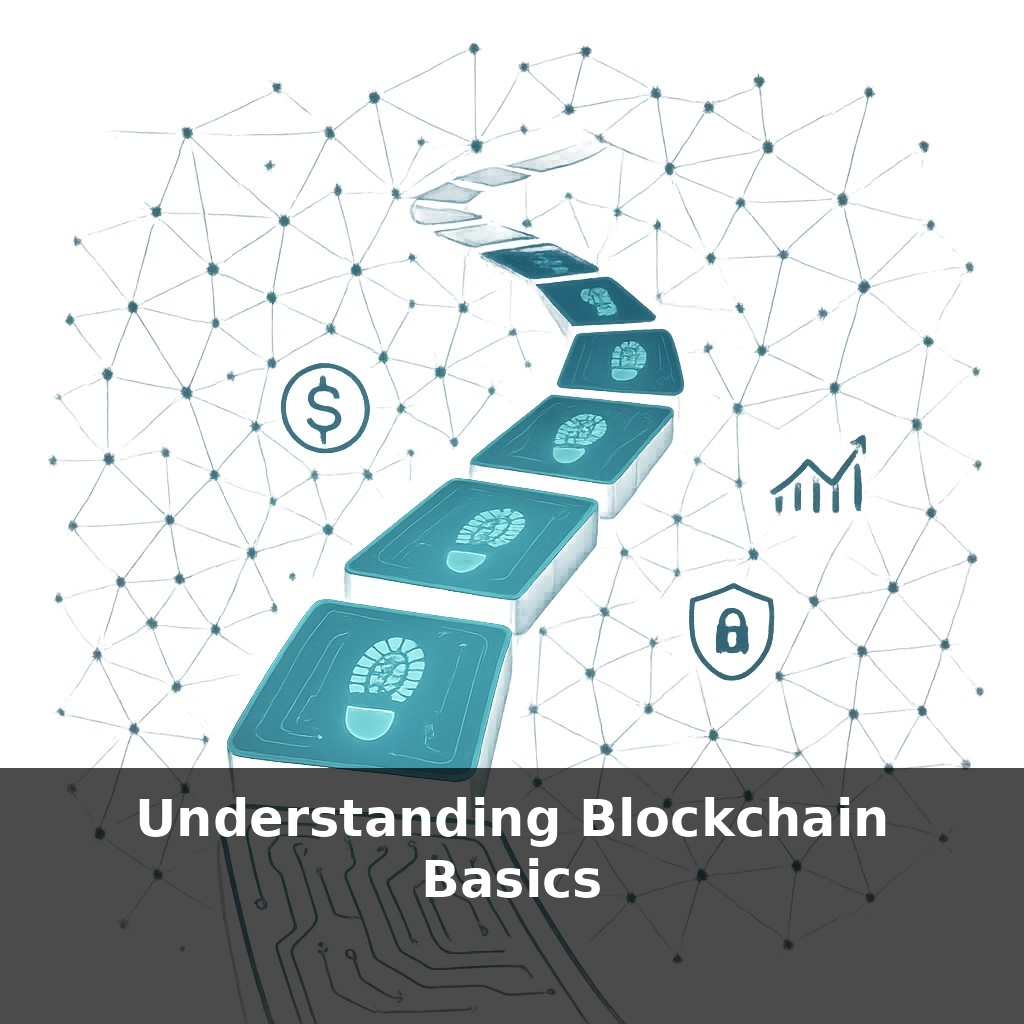
To understand why this open system hasn’t collapsed, we need to zoom in on what it’s actually built from. Not code in the abstract, but a specific structure called a blockchain. You can think of it as a growing trail of digital “footprints,” each one locked to the last, so you can always retrace where value came from and where it went. In this episode, we’re not chasing hype about coins mooning; we’re asking a quieter question: what rules and incentives make millions of strangers agree on the same history of transactions? We’ll look at how blocks get added, why participants bother to follow the rules, and how this structure manages to be both open to everyone and hard to corrupt. By the end, “blockchain” should shift from buzzword to a mental model you can actually reason with.
To really see why this matters for money—and for anything that depends on trust—we need to zoom out from the mechanics and look at the stakes. Our current financial system runs on layers of intermediaries: banks, payment processors, clearinghouses, all keeping their own private records. Most of the time this works, but it’s fragile: outages, hidden fees, and opaque decisions we only notice when something breaks. Blockchains offer a different bargain: shared risk, shared visibility. That’s why they’re being tested for supply chains, digital art, even tracking carbon credits, not just trading coins.
If we strip away the jargon, what actually lives *inside* this thing we call a blockchain? Not just “coins,” but records of agreements: Alice paid Bob, a parcel moved from factory to warehouse, a vote was cast, a certificate was issued. Each record is small on its own, but together they form a timeline of who did what, when.
The power isn’t only that the timeline is hard to rewrite; it’s that everyone can independently verify it. A Bitcoin node can check: did this wallet really have enough funds? Has this coin been spent before? An Ethereum node can go further: did this smart contract follow its own rules? No hotline, no “please hold while we escalate your ticket”—just math and public data.
This leads to a quiet but important shift: “Don’t trust us, *check* us.” Public chains expose every historical transaction. That sounds terrifying for privacy, yet it’s a feature for accountability. On Bitcoin or Ethereum, you can see major exchanges moving funds, governments seizing assets, protocols paying yield. Investigative firms trace ransomware and stolen coins by following those trails; regulators and auditors increasingly do the same.
Of course, exposure cuts both ways. Most users are pseudonymous, not invisible. Reuse an address, leak it once through an exchange or a purchase, and a motivated analyst can link a surprising amount of activity. That’s why you see layers of tools emerging: privacy-focused wallets, mixers (some legal, some not), and new chains experimenting with zero-knowledge proofs to hide details while still proving that rules were followed.
Security has similar nuance. The base ledger is engineered to be tamper-evident, but much of the real risk now lives at the edges: smart contract bugs, compromised wallets, sloppy exchanges. When a DeFi protocol is hacked, the chain usually behaves exactly as coded; it’s the *code* that failed. That’s pushed serious teams toward formal verification, third‑party audits, and “circuit breakers” that can pause systems when something looks off.
So blockchains don’t magically remove trust; they move it. Instead of trusting a single company’s database and legal department, you’re trusting open-source code, distributed infrastructure, and the economic incentives of thousands of strangers. That’s why uptime figures matter—Bitcoin’s continuous operation since 2009 isn’t just trivia, it’s evidence that this particular mix of incentives and transparency can survive in the wild.
Zoom forward a bit, and you can see why non‑financial players are experimenting. A luxury brand might anchor product serial numbers on-chain so customers can check authenticity. A logistics firm can publish shipment milestones so partners all reconcile against the same history. A carbon registry can issue and retire credits publicly, reducing double‑counting and greenwashing. In each case, the shared ledger isn’t about “crypto buzz”; it’s about making cheating more expensive and honest behavior easier to verify.
Yet adoption brings tension. Enterprises often dislike full transparency and permissionless access. That’s led to hybrids: private or consortium chains where only selected members write data, sometimes periodically anchoring a fingerprint of their records to a public chain for extra assurance. Purists argue this dilutes the original vision; pragmatists see it as a bridge between today’s institutions and tomorrow’s open systems.
Beneath all of this runs a simple question you’ll keep revisiting throughout this series: *for this specific use case, who needs to see what, and who should be able to change what, under which constraints?* Blockchains are just one set of answers to that question—but they force those answers into the open, where anyone paying attention can inspect, critique, and, if necessary, fork away to try something better.
Consider the mundane act of shipping a painting from Paris to Tokyo. Today, each party—gallery, insurer, shipper, customs—keeps its own record, and disputes surface months later: who damaged the frame, who delayed the crate? A shared ledger flips this: every handoff, insurance update, and condition report can be logged as a tiny transaction, with time and responsibility nailed down. No one owns the record, but everyone is accountable to it.
Zoom into money: stablecoins on public chains already let people in inflation‑hit countries hold dollar‑denominated value and move it across borders in minutes, often outside banking hours. That’s not theory; it’s what communities in Argentina, Nigeria, and Turkey are actually doing.
In the art world, NFTs showed a rough first draft of on‑chain provenance: not “right‑click savings,” but the idea that any resale, royalty, or exhibition loan could be traced without phoning five registries.
Your mental shift: stop asking “coin or not?” and start asking, “what real‑world claim or process might I want time‑stamped, shared, and hard to quietly rewrite?”
Power shifts when records become shared and tamper‑evident. Suddenly, small players can verify claims once reserved for insiders: a farmer checking a supermarket’s “fair trade” promise, a musician tracking where streaming payouts really go. Think of these ledgers as open trails through dense forests of deals and regulations—paths anyone can walk to see how value moved, who approved it, and where new business models might quietly be waiting.
As you follow these public ledgers into voting, supply chains, or carbon markets, the question shifts from “is this tech real?” to “who gains power when records can’t quietly vanish?” Your challenge this week: pick one everyday promise—“ethical,” “secure,” “eco‑friendly”—and trace how a shared, append‑only trail could expose truth or spin behind that label.
From this course

Cryptocurrency Mastery: The Path to New Age Wealth
5 episodesUnlock all episodes
Full access to 5 episodes and everything on OwlUp.
Subscribe — $1.99/monthLess than a coffee ☕ · Cancel anytime