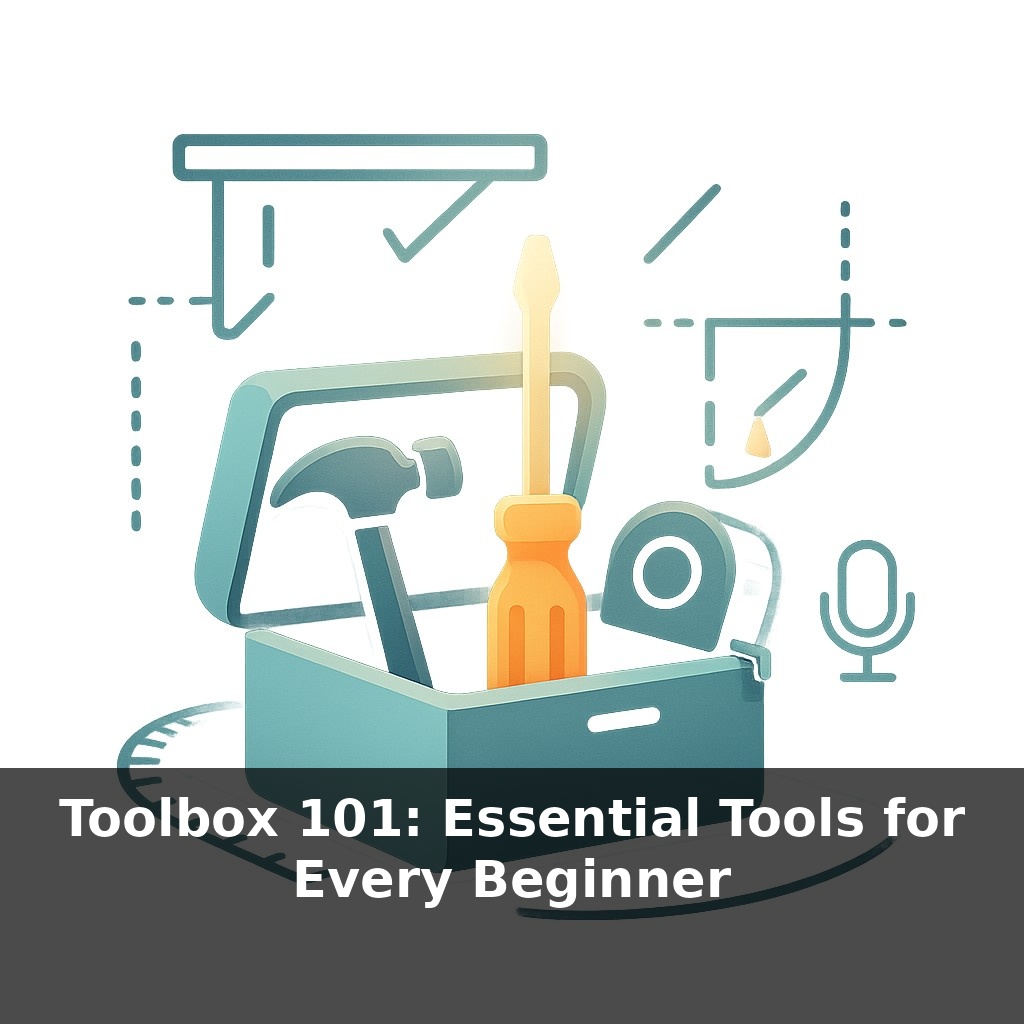
A single screwdriver and a decent hammer can save you a service call that costs more than a basic toolbox. You’re halfway through hanging a shelf, a screw strips, the wall’s a mess—now what? Today we’ll explore why just a dozen smart tools can quietly rescue moments like this.
That shelf disaster? It usually doesn’t happen because you “aren’t handy”—it happens because you’re missing one quiet hero in the toolbox chain. Maybe you can’t find a tape measure, so you eyeball the spacing. Or you skip a level, assuming the naked eye is “good enough.” One small compromise turns into extra holes in the wall and a project you don’t want to repeat.
This episode is about building a beginner’s lineup that actually works together, so you’re not improvising with butter knives, coin edges, or whatever’s in the kitchen drawer. We’ll look at the handful of tools that prevent the most common headaches: rounded bolt heads, crooked brackets, doors that don’t quite latch, and mystery “leftover” parts.
Think of it less as buying gear and more as assembling a small, reliable crew—each tool with a clear job, ready before the next home surprise shows up.
Most people don’t skip repairs because they’re impossible; they skip them because the tools feel mysterious and the stakes feel high. Tighten the wrong thing, hit the wrong spot, and suddenly you’re Googling emergency rates. So here, instead of handing you a shopping list, we’ll walk through what each tool actually *unlocks*: the stuck window that glides again, the wobbly chair that stops complaining, the cabinet door that finally lines up. Think of each piece you add like learning one new brush in a paint set—simple by itself, but together they let you “draw” almost any small fix around your home.
Let’s start with the piece most people skip: pliers. A single good pair of combination pliers quietly solves a lot of “I can’t get a grip on this” moments—think pulling a nail that didn’t quite come out, twisting picture‑wire tighter, or pinching a stubborn metal tab back into place. Add needle‑nose pliers and suddenly you can reach into the back of a cabinet to rescue a dropped nut or bend a tiny bracket without dismantling everything.
Next up, an adjustable wrench. This isn’t about becoming your own plumber overnight; it’s about not being stuck when a bolt, nut, or hose connection needs just a quarter‑turn more or less. Tighten the wobbly leg on a bed frame, snug a loose hose under the sink, or loosen a rusted fastener after you’ve given it a little penetrating oil. The key is learning “snug, then stop” instead of “crank until it squeaks.”
Hex keys (Allen keys) are the secret language of flat‑pack furniture and a lot of home tech. Keep a small set in both metric and imperial sizes. When a chair starts to sway or a drawer handle feels loose, odds are good there’s a hidden hex screw waiting for a quick tune‑up. Use the short end for leverage, the long end for speed, and always match the size exactly so you don’t round the socket.
A utility knife doesn’t sound glamorous, but it’s one of the highest‑leverage tools you’ll own. Break down boxes, score caulk before removal, trim vinyl flooring, open sealed paint cans at the seam instead of prying. The trick is a sharp, controlled blade and cutting *away* from your supporting hand, not toward it.
Now to the cordless drill/driver, the workhorse that tempts people into trouble. As a beginner, think of it less as a “power drill” and more as a powered screwdriver that can also make holes. Use a low speed and set the clutch light for delicate work like assembling furniture or attaching hardware; increase the clutch setting only when you need more bite, like driving long screws into studs. Pre‑drill pilot holes in hard materials—wood studs, dense trim—so fasteners glide instead of fight.
Finally, thread all of this through one quiet constant: safety glasses. Any time you’re prying, cutting, drilling, or working with metal, they’re not optional. You only get one pair of eyes; protecting them turns “DIY” from a gamble into a skill you can keep using for decades.
Think of this starter set as your home’s “first aid kit for objects,” but instead of bandages, you’ve got ways to tighten, release, trim, and guide. A loose towel bar isn’t a renovation project—it’s usually one hidden fastener that’s given up; the right pair of pliers and a hex key turn it into a five‑minute fix. When a cabinet door stops closing cleanly, you’re not stuck living with it or calling a pro; a quiet tweak with an adjustable wrench or driver can bring it back in line.
The drill’s clutch, especially, is like a dimmer switch for force: you’re not just on or off, you’re deciding *how much* power the job deserves. That’s how you avoid chewing up hardware on those flat‑pack shelves and instead get clean, confident installs. Over time, you’ll start recognizing patterns—this wobbly chair “sounds” like a hex problem, that buzzing outlet cover hints at a loose screw behind the plate. Each tool you reach for connects the symptom you see to the small, specific motion that actually solves it.
A small, evolving toolbox quietly changes your role at home—from passive owner to caretaker. As you add pieces, you’ll start spotting “almost broken” things the way a gardener notices stressed plants: a hinge that sighs before it sags, a bracket that flexes before it fails. Future tools may flag those weak points for you, but your growing instincts decide *when* to act. Your challenge this week: pick one nagging issue and fix it with what you have now, then note which missing tool would’ve made it effortless.
As you practice, your kit stops being “stuff in a box” and starts feeling like a sketchbook for your home: each small fix a line, each upgrade a new shade. Soon you’ll notice patterns—doors that drag before they stick, brackets that whisper before they fail—and step in earlier. Your challenge this week: fix one squeak or wobble, then list the *next* tool that would unlock a bigger project.