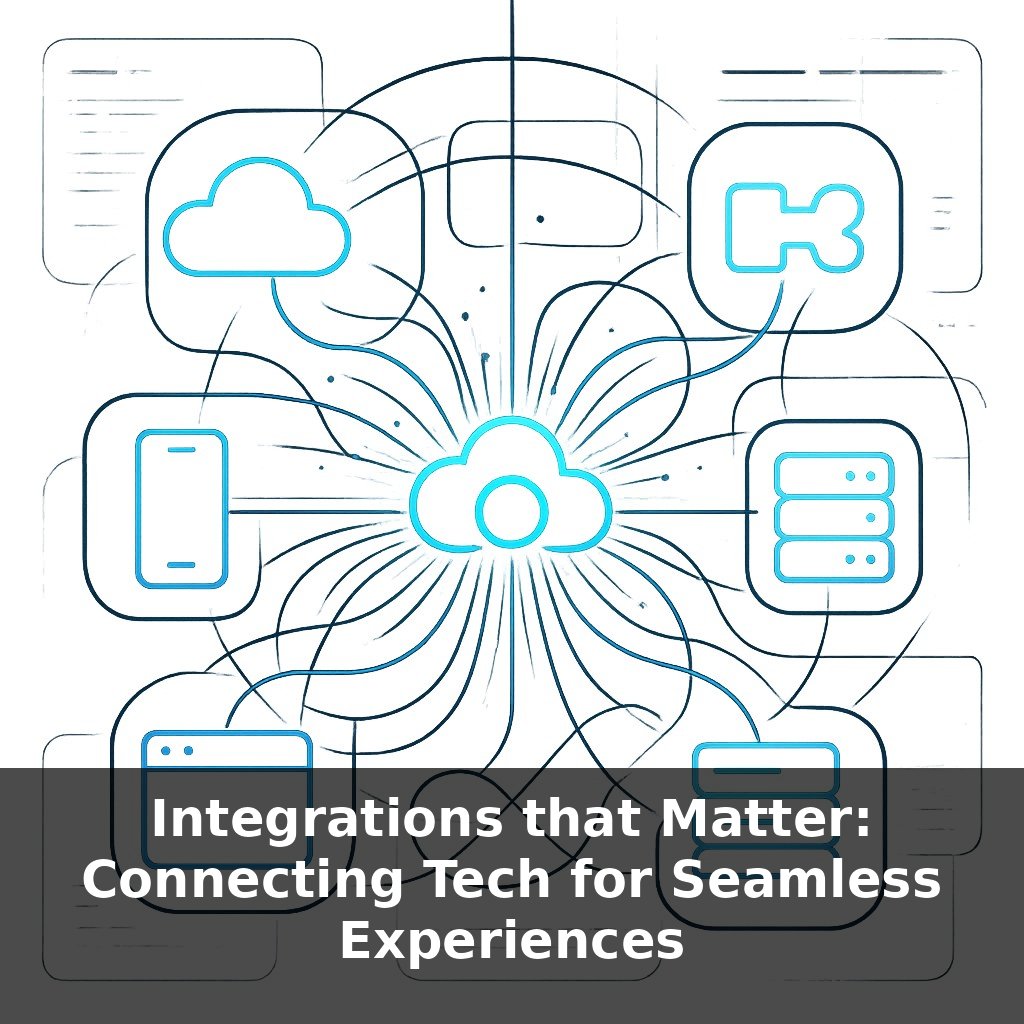
Right now, API calls crossing Akamai’s network each day outnumber the people on Earth by more than ten to one. You tap a screen once, and dozens of silent conversations erupt between apps, clouds, and devices—none of which you ever see, but all of which shape your life.
By 2025, more than 55 billion connected things will be quietly trading over 70 zettabytes of data a year—enough to stream every movie ever made, in 4K, millions of times over. But the real shift isn’t just more “things” talking; it’s *how* they’ll coordinate.
We’re moving from manual wiring between systems to AI-orchestrated, API‑first ecosystems that react in milliseconds. 5G and 6G slash latency, edge computing brings decisions closer to where data is born, and standardized data fabrics let information flow across tools and teams without constant translation.
Instead of stitching integrations one project at a time, we’ll subscribe to “integration‑as‑a‑service,” snapping together workflows like playlists. The line between product, process, and platform starts to blur—and whole industries begin operating as if they’re one adaptive system.
In this next phase, integration stops being a background IT chore and becomes a frontline capability you design for, the way you’d design a user interface or a product roadmap. Low‑code integration platforms turn “can we connect this?” into “how creatively can we use this?”—so marketing, ops, and product teams start composing flows without waiting in line for engineers. Contracts, identity, and compliance policies travel with data, so a customer’s preferences or risk score can update everywhere at once, not weeks later in a quarterly sync. The focus shifts from *connecting systems* to *coordinating decisions* in real time.
Accenture’s 5× revenue-growth gap between integration leaders and laggards is not a rounding error; it’s a signal that “how you connect” is quietly becoming a competitive moat. The technical foundations are landing fast, but the next decade’s differentiator is *who* gets to integrate, and *how quickly* they can turn new connections into new behaviors.
In the old world, integration projects looked like multi‑month deployments: scope the requirements, write custom glue code, schedule a cutover weekend, hope nothing breaks. In the emerging world, integration‑as‑a‑service flips this on its head. You’ll browse prebuilt connectors, event streams, and policy templates the way you browse SaaS apps today—and wire them together visually. What changes is not just speed, but ownership: sales ops will trigger cross‑tool workflows when a deal hits a risk threshold; plant managers will tweak data flows between sensors and scheduling systems; product teams will experiment with new partner data feeds in days, not quarters.
This is also where semantics and governance step into the spotlight. Two APIs may connect in seconds, yet still “disagree” on what a customer, an order, or a failure actually means. The organizations that win will treat shared definitions and reusable policies as first‑class design assets. Gartner’s projection that most enterprises will adopt a data fabric by 2026 isn’t about fashion; it’s about survival in a world where your fraud engine, personalization engine, and supply chain optimizer all need to act on the same truth, at the same moment.
All of this stretches beyond a single company. Entire value chains—retailers, logistics firms, manufacturers, insurers—will operate in loosely coupled but deeply coordinated networks. A delayed shipment won’t just update a tracking page; it will ripple, in real time, through inventory decisions, marketing campaigns, credit exposure, even dynamic pricing. Integration stops being a backstage wiring diagram and becomes a shared operating layer you continuously refine rather than finish.
A concrete glimpse: a hospital network links patient wearables, scheduling, pharmacy systems, and insurers through a single integration layer. When a heart‑rate anomaly appears, triage workflows update, on‑call staff get re‑routed, drug interactions are checked, and pre‑approval is nudged forward—without anyone opening a ticket. In retail, a sudden spike in demand for one product automatically reshapes promotions, warehouse picks, last‑mile routing, and even supplier financing terms across partners. In manufacturing, quality anomalies at one plant quietly retrain predictive models shared with equipment vendors and maintenance crews. Think of it like refactoring a software codebase: the more your “modules” share clean interfaces and common patterns, the faster you can safely ship new features. The frontier isn’t just more connections; it’s treating your whole business network as something you can version, test, and roll back—just like software.
Boardrooms will treat integration strategy like capital allocation: a core fiduciary duty, not a side project. As 5G and industry APIs mature, competition shifts from “who owns the most data” to “who can responsibly combine it fastest.” Expect new roles—data stewards, integration product managers—charged with defending users while enabling experimentation. Regulatory “guardrails” will function less like roadblocks and more like lane markings that make high‑speed collaboration safer.
Tomorrow’s advantage won’t come from owning the most systems, but from rewiring them fastest when reality shifts. Think of mergers, climate shocks, or viral trends as sudden rule changes in a strategy game; winners will be those who can reshuffle data, partners, and workflows mid‑match—without pausing play or breaking the board they’re standing on.
Try this experiment: pick one “future signal” mentioned in the episode (like AI co-pilots, web3 ownership, or ambient computing) and deliberately integrate it into a single, real task you’re doing today. For example, use an AI tool to draft an email, outline a project, or summarize a document you actually need for work, then do the same task manually and compare speed, quality, and how each version *felt* to create. Note where you felt resistance, where you felt relief, and what you’d gladly hand off to this “future” again tomorrow—then decide one specific way you’ll keep that integration going for the next week.