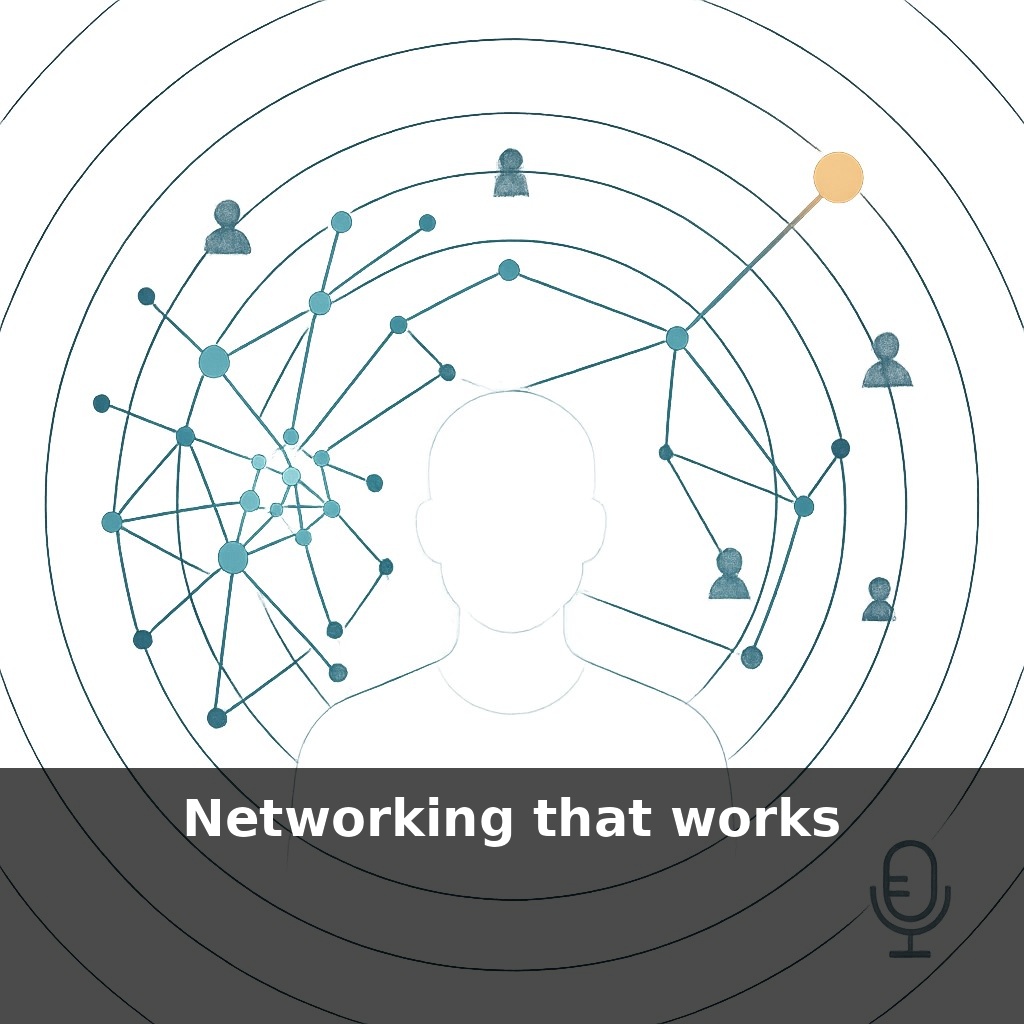
You already know networking matters—here’s the twist: most career‑making introductions don’t come from close friends, but from the “barely know you” contacts we tend to ignore. You’re about to see why the quietest connections in your orbit might be the loudest for your future.
Most professionals treat “networking” like a side quest—nice to have, but optional. In tech especially, it’s tempting to believe your skills, portfolio, and output should “speak for themselves.” Yet look closely at how big moves actually happen: a stretch role opens before it’s posted, a stealth startup quietly assembles a founding team, a dream client asks a trusted contact, “Who do you know that can handle this?”
What decides whether your name enters those conversations isn’t luck; it’s the shape and health of your network. Not just how many people you know, but where they sit in the org chart, across which functions, and how clearly they understand what you’re great at. Think of this less as socializing and more as designing an information system around your career—one that routes the right opportunities to you faster than they reach everyone else.
Here’s where most people get stuck: they treat “meeting people” as the goal instead of asking, *“What kind of system am I actually building?”* A network that works for you isn’t just bigger; it’s better wired. Who knows you *for what*? Where are the bridges between teams, companies, and domains? In tech, you don’t just need more engineers in your circle—you need that PM who hears about roadmap shifts, that recruiter who sees patterns in hiring, that staff IC who mentors half the org. These aren’t random friendships; they’re intentional links that change what reaches you, and when.
Most professionals stop at “meet more people” and never ask a sharper question: *“What does my network actually **do** for me right now—and what do I want it to do?”* Once you treat it like a system, three functions matter: information flow, reputation flow, and opportunity flow.
Information flow is about early signals. Who reaches you before everyone else? In tech, that might be the engineer who hears a reorg rumor, the designer who knows which product is quietly being sunset, or the sales lead who sees which industries suddenly started buying. Notice: these aren’t necessarily senior leaders; they’re people positioned at key junctions where signals first appear.
Reputation flow is different: it’s how your name travels when you’re not in the room. That depends less on “how many people know you” and more on “how clearly a few people can describe what you’re good at.” If your closest collaborators can’t summarize you in one sharp sentence—“She’s the one who can untangle any messy legacy system without drama”—your network may be dense but fuzzy. Fuzzy networks don’t route you high‑stakes work; they route you generic requests.
Opportunity flow is where those two combine: the right person, at the right time, thinking of you for the right thing. Research on cross‑functional ties suggests that people who sit on the seams between groups become “brokers” of new possibilities: they hear something in one context that perfectly fits a need in another. Your goal isn’t to know everyone; it’s to be known *by enough brokers* and to act as a broker yourself in a few strategic lanes.
Notice what’s missing here: volume. A thousand passive connections on LinkedIn won’t move much if no one has seen you solve a real problem, or if your interactions stay at “Nice to e‑meet you!” Surface‑level contact maintains weak ties, but it’s repeated, specific collaboration that creates the kind of trust where people will stake their credibility on you.
The practical shift is this: stop asking, “Who else can I add?” and start asking, “Where are the bottlenecks in how information, reputation, and opportunities reach me—and who sits on the other side of those bottlenecks?”
Think about three concrete situations. First: you’re a senior engineer eyeing staff roles. Instead of hoping a posting appears, you regularly grab 20‑minute coffees with two types of people: eng managers in other orgs and that one finance analyst who seems to know where headcount is shifting. Over a quarter, you start hearing the same product name in different contexts—signal that something big is forming.
Second: you’re a mid‑level designer wanting more strategic work. You volunteer to co‑run a short design review with a PM and a sales engineer on one gnarly deal. Now three people, in three corners of the company, can tell a sharp story about how you operate under pressure.
Third: consider a startup founder who hosts a small, recurring “demo lunch” with one recruiter, one customer success lead, and one principal IC from another company. It’s not about pitching; it’s about swapping what each is noticing in their world. Over time, that circle becomes an early‑warning radar for talent, churn risk, and partnership ideas.
Algorithms will soon filter who you “should” meet, but they won’t know who you *actually* trust. As tools suggest intros and VR events mimic conferences, the edge shifts to people who can read the room—online and off—and set clear norms. Think of it like tuning an instrument: software can suggest chords, but only you can hear when the group is slightly off‑key and adjust. The professionals who learn to fine‑tune both human judgment and machine suggestions will own the next wave of opportunity.
Treat this less like chasing handshakes and more like composing a playlist: you’re curating who you learn from, who you amplify, and who you show up for consistently. Over time, those repeated “tracks” turn into a recognizable sound. When people can hear your distinct rhythm, they know exactly when you’re the right person to bring into the room.
Before next week, ask yourself: “Whose work or ideas have genuinely helped me in the last month (a colleague, creator, or client), and how can I reach out to them today with a specific, sincere ‘here’s how you helped me’ message?” “If I stopped trying to ‘meet everyone’ and instead focused on three people I’d actually enjoy building a long-term relationship with, who would they be—and what’s one tailored question or resource I could send each of them this week?” “Looking at my current projects, where could I naturally invite someone in—by asking for their perspective, looping them into a conversation, or introducing them to someone they’d click with—instead of waiting for the ‘perfect’ networking moment?”