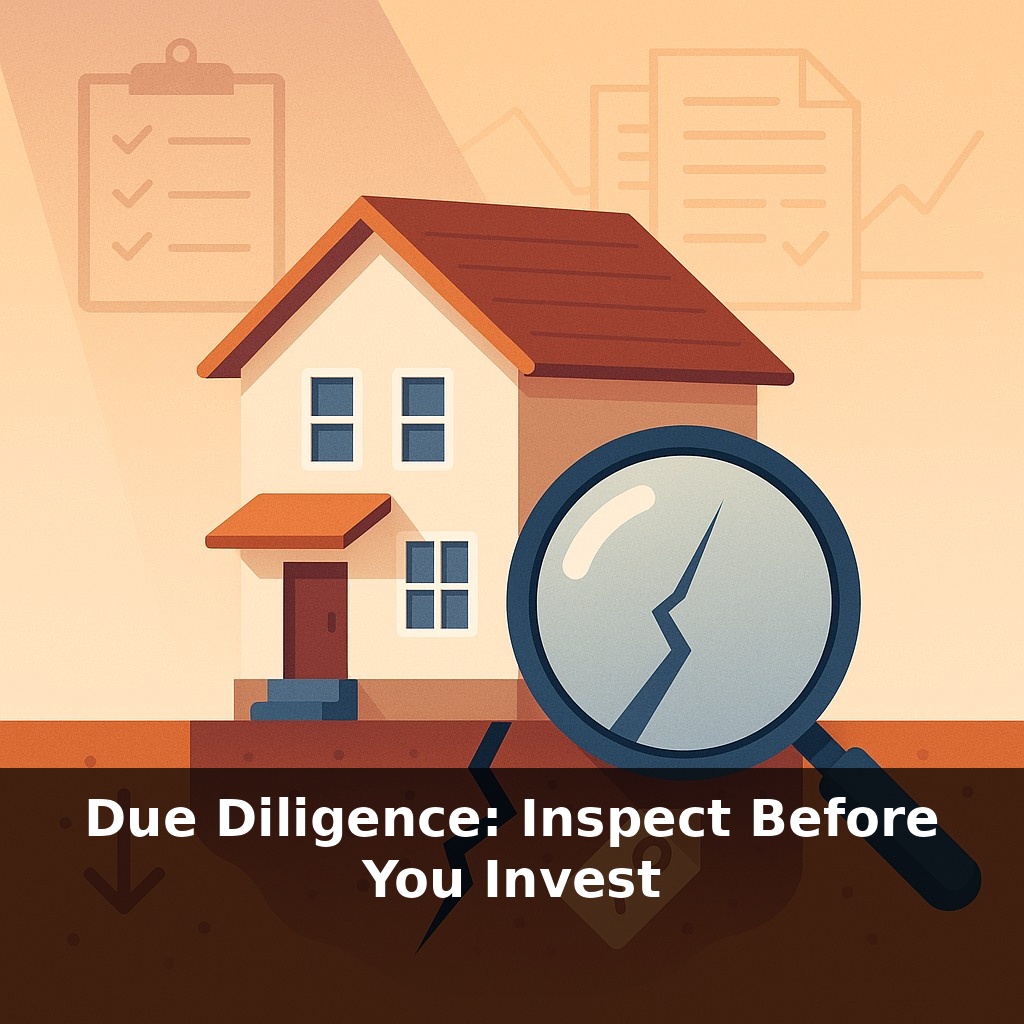
Roughly a quarter of home deals fall apart after the inspection. In one case, a buyer walked through a “perfect” house… then a routine check uncovered a hidden foundation crack. The price dropped by tens of thousands—overnight. The seller was stunned. The inspector? Calm.
That foundation story wasn’t a fluke; it’s the rule hiding in plain sight. Industry data shows that in roughly 20–25% of residential deals, inspections uncover issues serious enough to trigger a price renegotiation or kill the deal entirely. In other words, one in four “dream properties” has a problem big enough to change the math. And that’s just the physical side. Smart investors layer in financial, legal, and market checks too—like reading an MRI, bloodwork, and family history together instead of trusting a quick glance in the mirror. A $300–$500 inspection or a few hours stress‑testing cash flow might feel tedious when you’re excited about an offer, but skipping them turns enthusiasm into blind risk. In this episode, you’ll see how disciplined due diligence transforms unknowns into clear decisions—before your money is locked in.
Those dramatic inspection stories are just the opening act. As you move from basic walkthroughs into real investing, the questions get sharper: Will this roof outlast your loan term? Does the rental income still work if vacancies double? Could an old underground tank turn your “bargain” into an EPA headache? This is where layered checks—physical, legal, financial, environmental—start working together. Think of your deal like a four‑legged table: if one leg is weak, the whole thing wobbles. Your job before closing is to push on every leg hard enough to see what breaks while it’s still cheap to walk away.
Start with the question: “What has to be true for this deal to work—and how can I prove or disprove each piece before I own it?”
On the physical side, zoom out from “does anything look broken?” to “what’s the remaining life of the big‑ticket items?” Roofs, HVAC systems, plumbing mains, electrical panels—these are where surprise capital expenses hide. Ask your inspector or specialist for age estimates, replacement costs, and likely timelines. Then map those against your hold period: if you plan to own for 7 years and that roof has 5 good years left, you don’t “maybe” have a roof expense; you almost certainly do. Budget it now or adjust your offer.
Next, widen the lens to the land and surroundings. Zoning and use permissions tell you not just what you can do today, but what might change around you. A property that barely conforms to current rules might be stuck if you want to add units, convert use, or even rebuild after a fire. Call the planning department, pull the zoning map, and ask them to walk you through what’s allowed by right, what needs a variance, and what the neighborhood plan anticipates over the next decade.
Environmental risk is another layer many small investors skip until it’s painfully relevant. That modest commercial building with a parking lot might sit over an old dry‑cleaner site. Even a “clean” Phase I report that notes past industrial use could justify deeper testing before you commit. Remember: you can inherit cleanup obligations you never caused.
Then there’s the income side under stress. If you’re buying for rent, underwrite not just your best guess, but your worst reasonable year. Lenders often require that debt‑service coverage stay above a certain cushion; run your own harsher scenarios. What happens if a key employer leaves town? If insurance premiums jump 25%? If taxes are reassessed right after your purchase? You’re not predicting disaster; you’re testing resilience.
Common ownership structures add another twist. In condos or HOAs, the health of shared finances matters as much as your unit. Dig into reserve studies, delinquency rates, upcoming special assessments, and litigation. A low monthly fee can be a red flag if reserves are thin and big repairs loom.
The goal isn’t to find perfection; it’s to surface reality, then decide if the price and terms truly match the property’s story.
A useful way to think about deeper checks is how specialists in medicine work together. Your general doctor might flag that your blood pressure is high; a cardiologist then runs targeted tests, while a pharmacist checks how new meds interact with what you already take. Each one looks at a different system, and the power comes from how their findings connect. In a deal, your “specialists” might be a structural engineer for an odd wall crack, a surveyor verifying boundaries, an attorney reviewing easements, and an insurance broker mapping wind or wildfire exposure beyond standard maps. Each report is a clue, not a verdict. Suppose the survey shows a neighbor’s fence over the lot line, the title work mentions an unrecorded driveway, and the market data shows strong rent growth on adjacent blocks. You’re not done; you’re now in hypothesis mode: Is this a small encroachment you can live with, or leverage for a price cut—or a sign of messy, undocumented agreements you’d rather avoid?
As data and tools improve, “inspect before you invest” becomes less about clipboards and more about live dashboards. AI can flag suspicious rent rolls like a fraud analyst catching odd credit card charges. Drones may scan roofs and facades in minutes, feeding models that predict when systems will fail. Regulators are likely to push for standardized risk snapshots—climate, insurance, resilience—so every buyer sees the same x‑ray, not just the glossy listing photos. Smart investors will treat these as a starting point, then dig deeper where the signals conflict.
Treat every deal like a story you’re fact‑checking, not a fairy tale you’re buying into. The public records, leases, surveys, and site visits are chapters; your job is to see whether they line up or clash. Your challenge this week: pick one listing you like and, purely as practice, hunt for three hard facts that could overturn your initial excitement.