Roughly half of Americans in their 30s are leaving free retirement money on the table at work—and they don’t even realize it. One small choice at enrollment time can mean the difference between a modest nest egg and an extra six‑figure boost later on.
Most people in their 30s think “401(k) vs. Roth IRA” is the main decision. The twist: the order you use each account can matter just as much as the accounts themselves. Two coworkers earning the same salary, saving the same total amount, can end up with very different outcomes—simply because one knew how to stack the tax rules in their favor.
This episode connects the dots between your Rule of 25 target and the cash‑flow buckets we set up earlier. Now we’re asking: *which* buckets should you fill first if you want to shrink your tax bill and grow your money faster?
We’ll look at why the employer match is just the starting line, how an HSA can quietly act like a stealth retirement account, and when Roth vs. Traditional contributions make more sense. Think of this as arranging the instruments in an orchestra so they sound good together—not just playing each one louder.
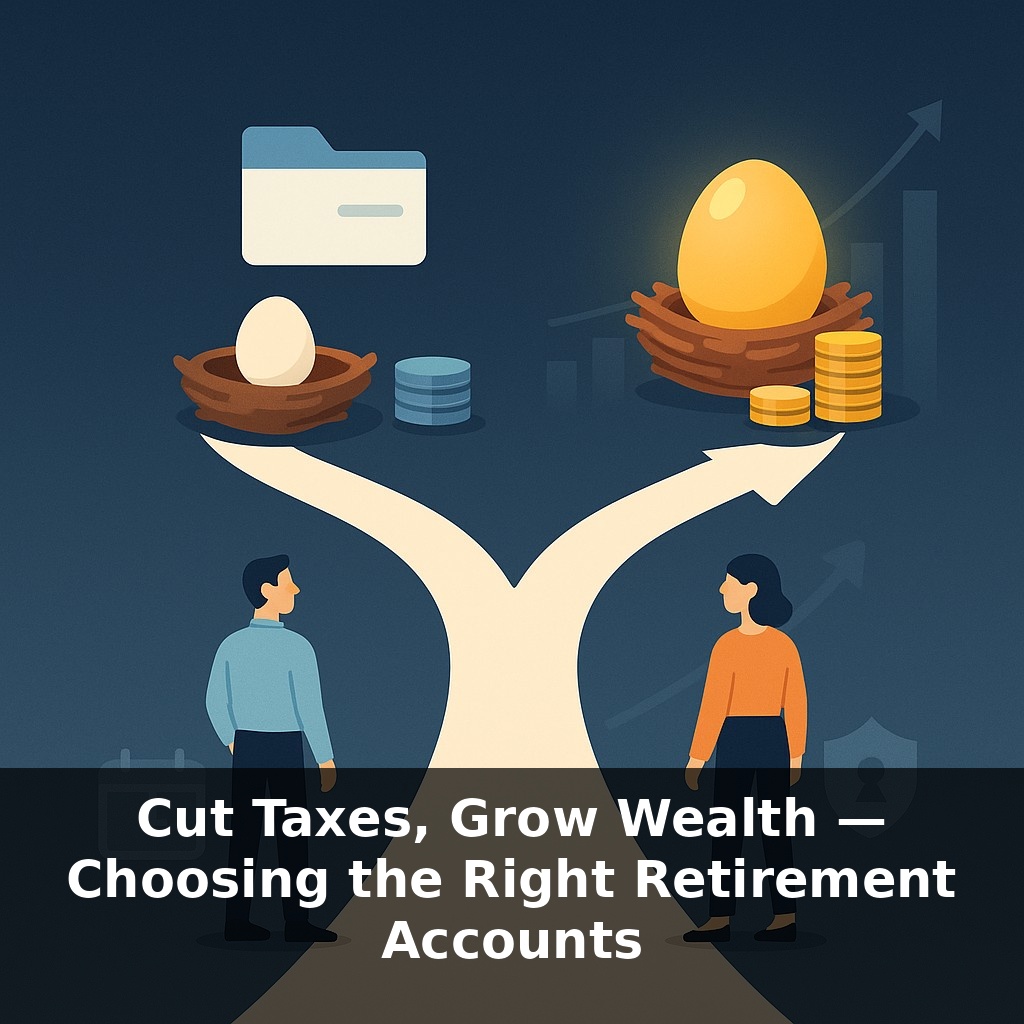
Think of today’s accounts like different “rooms” in a house you’re designing for your future self. Each room has its own rules: some are easier to enter now, some are more comfortable later, and some lock you in until a certain age. In your 30s, the real skill isn’t cramming everything into one room, but deciding **which door to walk through first** with each new dollar you save. We’re layering on what you’ve already set up—your targets and cash‑flow system—and asking: how do you balance flexibility, taxes, and growth so your future lifestyle options keep expanding instead of shrinking?
Most people stop after “get the match,” but that’s really Level 1. In your 30s, the real gains come from **sequencing**: deciding where each extra $50 or $200 goes once the basics are covered.
Start with the simple ladder many planners use:
1) 401(k) up to the match 2) HSA (if you’re eligible) 3) Roth IRA (or backdoor Roth if your income is too high) 4) Back to 401(k) above the match 5) Taxable brokerage account
Why this order? Because each rung changes how much of your money the IRS can eventually touch.
On rung 1, you’re trading a small slice of your paycheck for an immediate boost from your employer—that’s already in place from earlier episodes. The new twist is rungs 2–4.
On rung 2, you prioritize the HSA **after** the match because of something no other account offers: money goes in pre‑tax, can grow without tax, and *can* come out tax‑free if used for qualified expenses—even decades later. And after 65, you can tap it for anything (non‑medical withdrawals are just taxed like a Traditional account). That makes it a flexible tool: in practice, many high‑savers let it grow and treat current medical bills like any other living expense.
On rung 3, the Roth IRA becomes your “optionality” bucket. Contributions can be withdrawn if life throws you a curveball, while earnings keep compounding. In a weird way, this straddles the line between retirement money and long‑term emergency backup.
Rung 4—extra Traditional or Roth 401(k) contributions—is where tax‑rate strategy really matters. If your current tax bracket is low or you expect higher rates later, Roth inside the 401(k) often shines. If you’re in a high bracket today and expect lower income in retirement, Traditional may give more after‑tax spending power.
Finally, rung 5 (taxable accounts) looks plain, but it buys something none of the others do: **total timing freedom**. No penalties, no age rules. For people eyeing work optionality before their 60s, this “bridge money” can be what actually makes an early exit possible.
Meet Alex and Jordan, both 32, both earning $90K, both saving 15%. On paper, they look identical. But they route their money differently.
Alex funnels everything into a single pre‑tax account, feeling “efficient.” Jordan follows a sequence: gets the match, maxes the triple‑tax‑favored account at work, then sends money to an after‑tax account with no future RMDs attached.
Fast‑forward 30 years. Their balances are similar, but when it’s time to spend, Jordan has something Alex doesn’t: **control over which dollars get taxed, and when.** That control can mean choosing a lower bracket in retirement, qualifying for more favorable ACA subsidies if they downshift in their 60s, or keeping taxable income under thresholds that trigger higher Medicare premiums.
Here’s the twist: the “winner” isn’t always the person with the biggest statement balance—it’s often the one who gave their future self the **widest menu of tax choices** with each account they funded along the way.
Future policy shifts could tilt the game board overnight. If “Rothification” expands, today’s after‑tax contributions might look like locking in tickets before prices spike. Fintech tools will likely start steering each extra dollar for you, but the inputs—your goals, risk tolerance, career path—will still be human. Longer lives plus uncertain Medicare rules mean medical costs may dominate late‑life spending; how you stock HSA, 401(k), Roth, and taxable accounts now will shape which levers you can pull later.
Your challenge this week: map your “tax toolkit.” Grab a sheet and draw four columns: workplace plan, health account, after‑tax account, and plain brokerage. Under each, jot what you *actually* contributed last year and what’s automatic for this year. Then circle one spot where nudging up contributions would hurt least—and commit to that small move now.