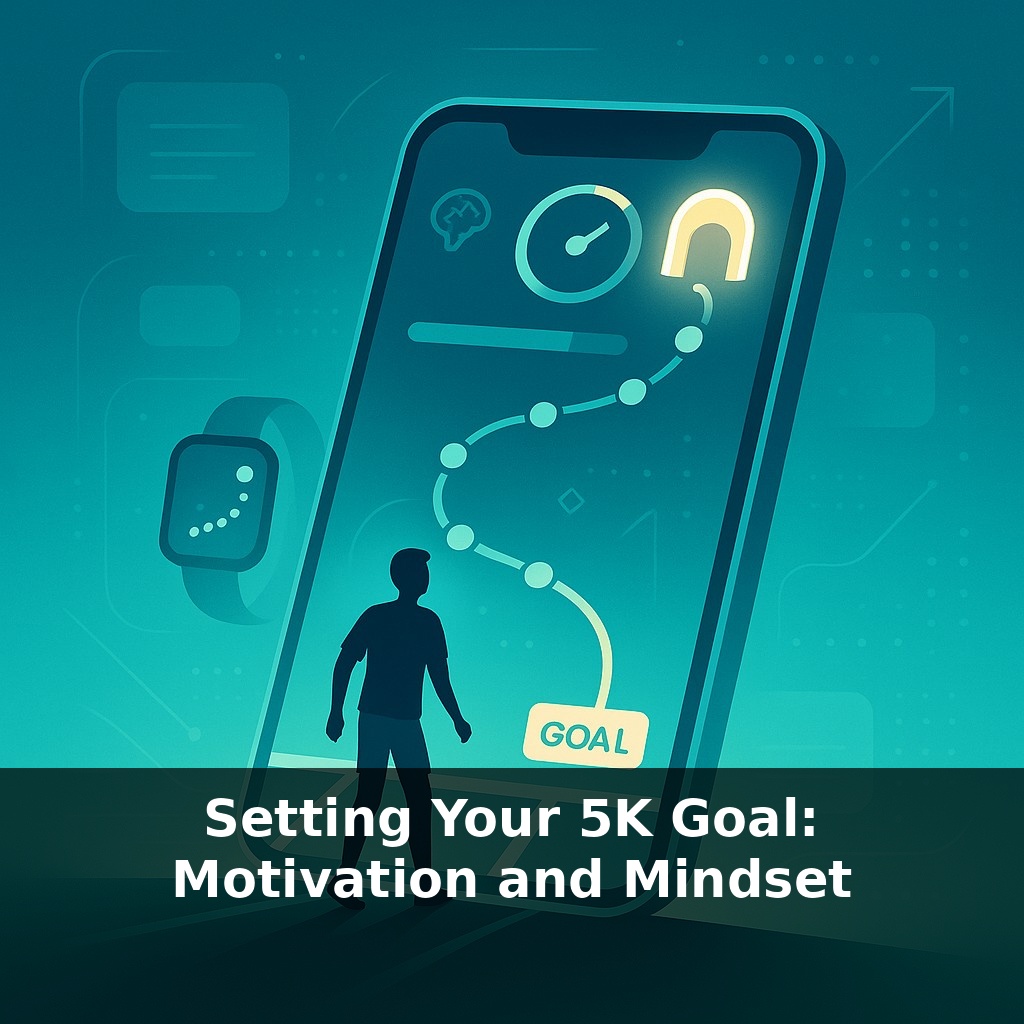
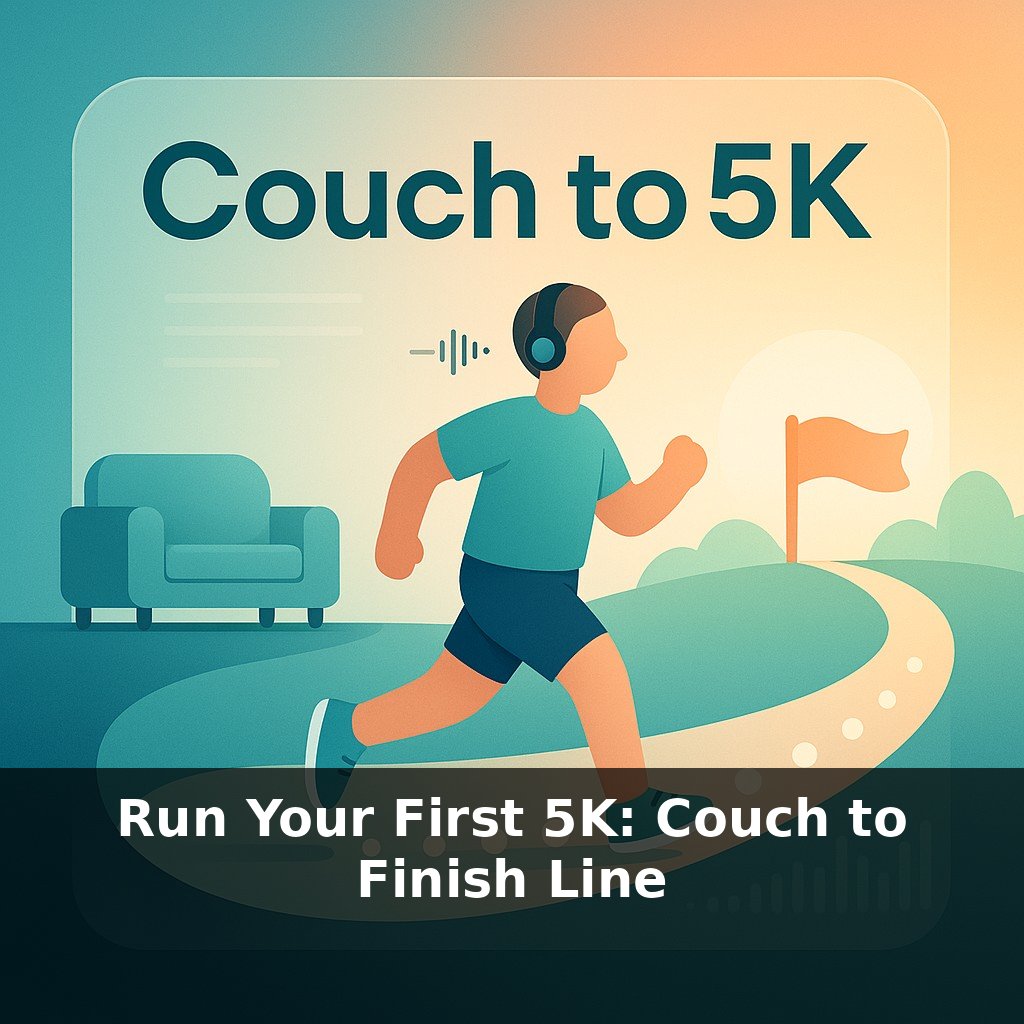
About half of people who start training for a first 5K never make it to the start line—not because their bodies can’t, but because their goals quietly fall apart. You’re lacing up, your app is counting down, and here’s the twist: the way you set that finish-line goal may decide everything.
Nearly every new runner starts with the same thought: “I just want to finish.” Yet people with almost identical fitness levels have wildly different outcomes—some cruise through their first 5K, others vanish from their training app by week four. The missing piece usually isn’t effort; it’s clarity. Not just *having* a target, but understanding *why* it matters to you, what it looks like in detail, and how you’ll respond when motivation quietly slips.
This is where motivation and mindset stop being abstract buzzwords and become practical tools. Research-backed strategies—like tying your goal to something you truly care about (better sleep, more energy for your kids, headspace after work) and planning specific responses to rough days—dramatically change whether you keep showing up. Think of it as upgrading from a vague wish to a custom blueprint for how you’ll think, decide, and act all the way to race day.
A useful next step is to zoom in on *what* “running a 5K” actually means in your real life. Same distance, totally different stories: for one person it’s jogging comfortably with a friend before brunch; for another, it’s crossing a charity race finish line without walking; for a third, it’s proving they can stick with any habit for 8 weeks. These versions pull on different emotional levers and will shape how you train, when you run, and what “success” feels like. The richer that story becomes—where, when, with whom—the easier it is to keep moving when the early novelty wears off.
A practical way to sharpen that blurry “5K idea” into something you can actually move toward is to anchor it in a few concrete dimensions: *how it feels*, *how it fits your life*, and *how you’ll measure progress along the way*. This is where a SMART-style structure quietly becomes useful—not as corporate jargon, but as a checklist to make sure you’re not leaving big gaps.
Start with the feeling: do you want to finish able to hold a basic conversation, or are you okay with breathing hard and being wiped out afterward? That single choice will influence your weekly effort and how you pace yourself. Then look at fit: are early mornings realistic, or are you more likely to stick with short evening sessions after work? Aligning your plan with your natural rhythms and real constraints is far more powerful than chasing an ideal schedule that constantly clashes with your life.
Next, bring in numbers—not just distance and time, but frequency. “Three sessions per week” is a very different commitment from “whenever I can.” Decide what you can *consistently* hit for the next 8–10 weeks, then protect those sessions like appointments. This is also the moment to name non-negotiables around sleep, recovery, and other responsibilities, so you’re choosing trade-offs consciously instead of feeling ambushed later.
Because motivation tends to wobble around weeks three and four, it helps to build small “checkpoints” well before race day. Examples: your first continuous 10-minute run, your first week without skipping a planned session, your first time finishing a route you used to cut short. Each checkpoint is like a small flag you plant on the route, proof that you’re moving forward even when the finish line still seems far away.
You can also weave in identity cues: are you “someone who experiments with running three times a week,” or “someone who shows up even when it’s drizzling”? These quiet labels influence the choices you make at 6 a.m. or after a stressful day. Over time, those choices start to matter as much as any stopwatch.
Think of three different “versions” of your first 5K that would all count as a win, like alternate endings to the same story: one where you jog steadily the whole way, one where you mix in short walks but feel strong at the end, and one where you show up to a local fun run with a friend and simply cross the line smiling. Each version suggests a distinct route there—your pacing, how often you run, even which route you choose on a busy weekday.
Now zoom even closer. What does a “solid Tuesday session” look like for you when work runs late, or when your sleep’s been patchy? Maybe it’s 15 minutes of easy run-walk near home instead of bailing completely. What does “showing up on a bad day” practically mean—changing into your kit and jogging one lap around the block, then deciding if you want more?
Visualise your future self on race week looking back: what tiny decisions did they repeatedly make—about laying out shoes, saying no to one extra episode, texting a friend to join—that nudged them here?
A 5K might soon be less about a single race and more like a “passport” into a wider ecosystem. AI tools could quietly learn how you respond to stress or bad sleep and nudge you toward micro-adjustments, the way a good jazz band reacts to each note in real time. Communities might shift from one-off race photos to ongoing digital “crews” that evolve as you do, blurring the line between public health, social life and personal experimentation.
Treat this as an experiment in who you’re becoming, not just what you’ll do. Tech can be your lab partner here: apps that nudge you on rough days, maps that reveal new routes, playlists that unlock a second wind. Like adding layers to a painting, each small choice adds depth; over time, the picture that emerges is a runner who keeps showing up.
Start with this tiny habit: When you lace up your shoes (even if you’re not going for a run yet), whisper to yourself, “I’m training for my 5K on [date]” and picture the finish line for three seconds. Then, while you’re standing there, take exactly 10 light marching steps in place, counting each one out loud. Do this once a day, preferably at the same time you plan to run in the future. Over time, those 10 steps and that short visualization will prime your brain that “this is what 5K training time feels like.”