In the worst year since the early eighties, some investors still slept fine—and even stayed on track for retirement. Same stock market, same headlines. So why did their accounts behave so differently from their friends’? The answer hides in a decision most people make by accident.
Look past the ticker symbols and hot tips, and you’ll find a far quieter force shaping your results: the way your money is divided between different types of investments. Two people can own zero individual stocks in common, yet end up with almost identical long‑term performance, simply because their overall mix of stocks, bonds, cash, and “other stuff” is similar. That mix is your asset allocation—and historically it has mattered far more than which specific fund or stock you picked.
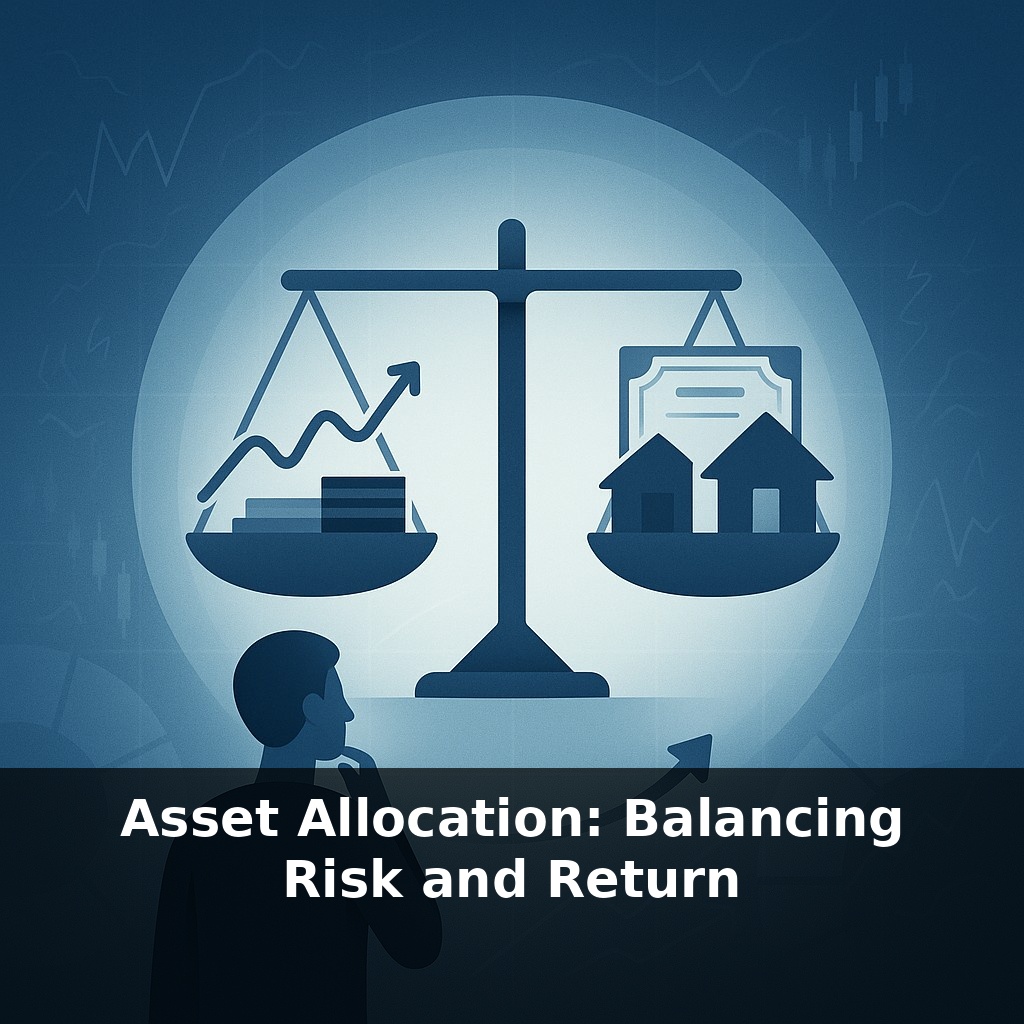
This is where risk and return really start to trade punches. Load up on stocks and your account can surge—or sink—in a single year. Lean heavily on bonds and cash and your ride smooths out, but your progress slows. The trick isn’t finding a “perfect” recipe; it’s finding a mix that matches your timeline and temperament today, and being willing to adjust it as your life and goals evolve.
Most people back into a portfolio through random choices: a fund their friend mentioned, whatever their 401(k) defaulted to, a headline about “safe” bonds. The result is a patchwork of holdings that may not match what they actually need. Under the surface, though, each asset type reacts differently when inflation jumps, when rates rise, or when growth slows. Some zig, others just fall less. Over decades, that pattern matters more than any single stock pick. In this episode, we’ll zoom out and look at broad building blocks—stocks, bonds, cash, and alternatives—and what roles they realistically can play for you.
Start with the question markets actually ask you every day: “How much pain can you take in pursuit of gain—and for how long?” Different asset groups answer that question in very different ways, and the way they interact often matters more than any single choice.
Consider three broad roles:
First, growth engines: pieces that typically respond well when the economy expands and companies are thriving. These include broad stock index funds, global equities, and to some extent real estate investment trusts (REITs). They tend to deliver the highest long‑term returns, but they’re also the most exposed when recessions, rate shocks, or profit slumps hit. Historically, U.S. and international stocks don’t move in perfect lockstep; that imperfect correlation is what lets you blend them to chase growth without taking only one country’s risk.
Second, shock absorbers: assets that often hold up when growth engines struggle. High‑quality government and investment‑grade corporate bonds usually fall into this camp. When fear spikes and investors want safety, these may attract money, cushioning the blow. 2022 was the nasty exception: inflation spiked, rates jumped, and both major stock and bond indexes sank together. That doesn’t mean the relationship is “broken”; it means any single pairing can fail under specific conditions, so your defense can’t rely on one tool alone.
Third, diversifiers: pieces whose returns are driven by different forces entirely—things like commodities, managed futures, market‑neutral or long‑short strategies, private equity, or direct real estate. These live under the “alternatives” label and range from simple (a broad commodity ETF) to highly specialized. The Yale Endowment’s heavy use of them wasn’t about chasing fads; it was about stacking multiple, distinct return drivers so that no single economic story dominated the portfolio.
Here’s the key shift: instead of asking, “Is this fund good?” start asking, “What job does this holding actually do next to everything else I own—and when might it fail?” A growth‑heavy mix might shine during low‑inflation expansions. Add more bonds and you’re explicitly trading some of that upside for resilience in deflationary or slowing‑growth environments. Layer in true diversifiers and you’re betting that different economic “stories” will play out over your lifetime, and you don’t want all your money tied to just one plot.
Think of two friends starting with the same $10,000. Alex splits it 80/20 between growth and more stable holdings; Jordan goes 40/60. Over a strong decade for markets, Alex might end up near $22,000 while Jordan reaches maybe $18,000. But in a nasty year like 2022, Alex could see a $3,000 drop in months, while Jordan’s loss might be closer to $1,500. Same starting point, very different emotional experience and choices they’ll face when things get rough.
Now stretch that idea. Add a small slice—say 5–10%—to something that doesn’t move like either of their core holdings, such as a broad commodities or trend‑following fund. In some years it may barely matter; in others it could be the one area quietly positive while everything else struggles, leaving the total account much closer to flat than the headlines suggest.
Over a lifetime of paychecks, these small structural differences often outweigh whether you chose Fund A or Fund B inside each bucket. The mix sets the weather pattern; everything else is local forecasts.
Markets won’t stay built around just public stocks and bonds. As private credit, infrastructure, and even tokenized assets become easier to access, the “menu” widens—and your future allocation may look more like a tasting menu than a two‑item combo. AI‑driven tools could quietly rebalance in the background, tilting you away from climate‑exposed sectors or toward tax‑efficient sleeves, the way navigation apps reroute around traffic before you even know there’s a jam.
Your allocation isn’t a one‑time recipe; it’s more like adjusting the seasoning as the stew cooks. New tools—factor funds, low‑cost global ETFs, even small alternative slices—let you fine‑tune without turning investing into a full‑time job. Your challenge this week: sketch a simple “now, soon, later” map of your money and how boldly each bucket can be invested.