Right now, your smartwatch might know you’re stressed before you do. A silent buzz, a gentle nudge: “Time to breathe.” In one ordinary day, you could get coached on your posture, warned about your heart rhythm, and guided to sleep—without a single doctor in the room.
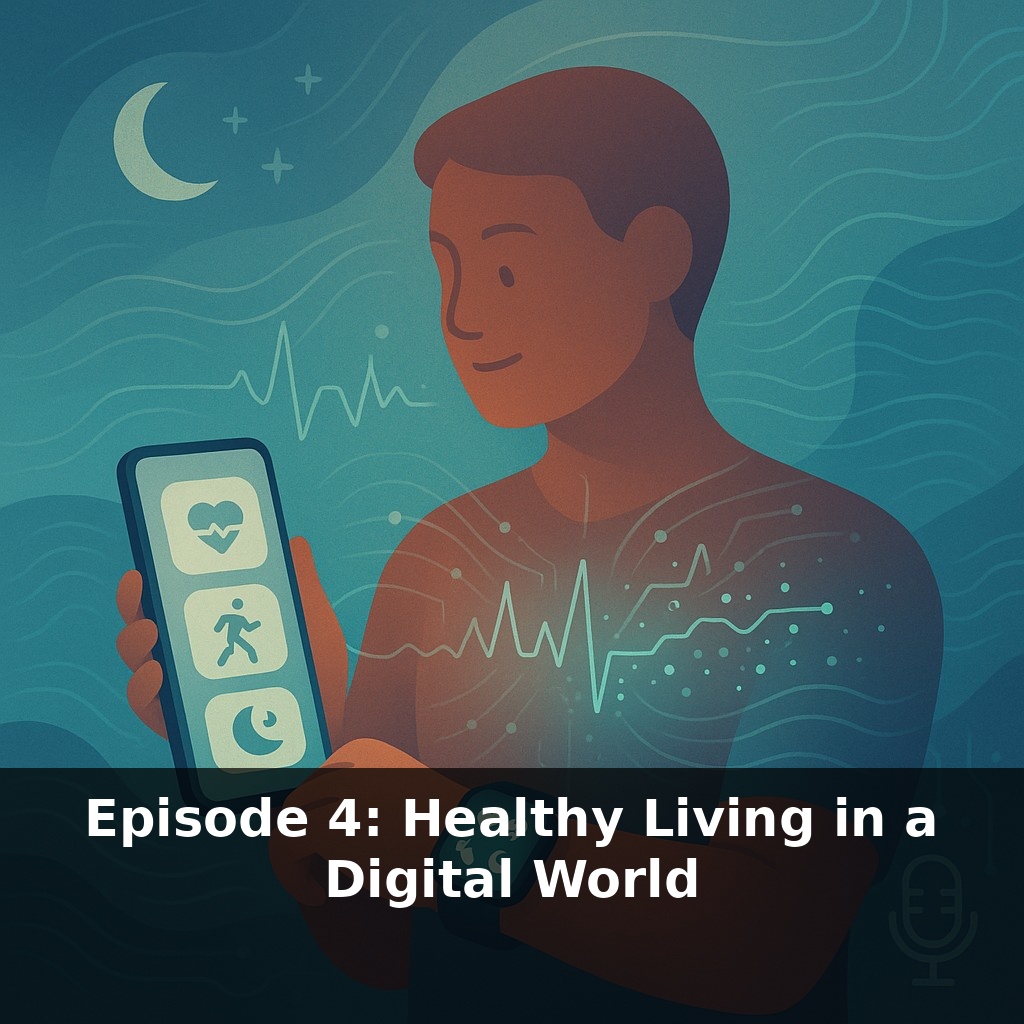
Your phone might now know more about your health habits than your doctor: how often you move, when you stay up too late, even whether your breathing changes during the night. Add in fitness apps, online therapy platforms, and group challenges on Strava, and you get a health ecosystem that lives in your pocket, on your wrist, and in the cloud.
Used well, these tools can quietly coach you toward better choices—nudging you to take the stairs, check in with your mood, or finally book that appointment. Used poorly, they can become just another set of ignored notifications or, worse, a source of pressure and guilt.
This episode is about learning to treat digital health tools like a personalized toolkit rather than a bossy rulebook: choosing what to track, what to ignore, and how to plug technology into real‑world care instead of replacing it.
Some of these tools are impressively effective. A Stanford review found that people using wearables walked about 1,200 extra steps a day—roughly a 12 % boost in movement built from tiny choices: taking the long route to the bus, getting off the couch once more. Clinical studies now test apps the way we test medicines: Headspace, for example, cut stress scores by almost a third in a month. Yet there’s a catch. These gains only stick when the tools fit your real life: your schedule, energy, privacy comfort, and the support (or skepticism) of the people around you.
The first question isn’t “What’s the best app?” but “What problem am I actually trying to solve?” Better energy? Less back pain? More consistent moods? When you start with a clear target, tech becomes a tool, not a distraction. A mood‑tracking app is useless if what you really need is help sticking to a sleep schedule; a beautiful food‑logging interface won’t fix the fact that you hate cooking and live on vending machines.
Think in layers. At the base are simple trackers: steps, heart rate, mood logs, symptom diaries. Their job is to reveal patterns you’d otherwise miss—like noticing that your “bad days” cluster around weeks when you sleep under six hours or skip walks. On top of that are “coaching” tools that suggest actions: stretch now, wind down, check in with your breathing. Finally, there are connection tools: telehealth visits, chat with a therapist, peer communities that make it easier to keep going when motivation dips.
Evidence matters more than aesthetics. Any app can show graphs; far fewer have clinical trials behind them. Look for clear claims (“may help reduce anxiety”) instead of magic promises (“cure panic in 7 days”), links to published studies, and options to export data so a clinician can interpret it. If you wouldn’t take a pill with no label, be wary of a health app that won’t explain how it was tested.
Privacy is the other pillar. Many tools quietly monetize your information. Before you connect devices or share sensitive details, check: Can you use it without your real name? Turn off data sharing with advertisers? Delete your history if you change your mind? Data about your body and mind is like financial information: you’d share bank details only with institutions you trust and understand.
Finally, pay attention to how a tool makes you feel. Some friction is normal—change is uncomfortable. But if an app leaves you constantly guilty, obsessed with “closing rings,” or ignoring your own signals because the graph says you’re “fine,” it’s working against you. The right setup feels like a low‑key partner in the background: present when you need it, quiet when you don’t, and adjustable as your goals and life circumstances shift.
Think about the specific “jobs” you want tech to do. Maybe you use a food‑photo journal just to notice what you actually eat during stressful weeks, while a separate breathing app is there only for pre‑presentation jitters. A strength‑training app might live in a different lane: three workouts a week, with short video demos so you’re not guessing at form in a crowded gym.
You can also combine tools for a single goal. Someone working on migraines might log symptoms in one app, track caffeine in another, and sync both to a calendar to see if busy days are a trigger. Another person might pair a period‑tracking app with a mood log to spot hormonal patterns before they feel blindsided.
Treat setup like planning a monthly budget: decide your “must‑have” categories (sleep, pain, mood), pick one simple tool per category, and cap how many notifications you’ll allow. That way, technology supports your body’s signals instead of drowning them out.
In a few years, your health data may flow like direct deposit: quietly, automatically, and with far fewer middle steps. On‑device AI could flag patterns early, then share only what’s necessary with clinicians—more signal, less oversharing. VR workouts might feel less like “exercise” and more like play. The paradox: as systems get smarter, your job gets more human—deciding who you trust, which goals matter, and when to unplug so “optimization” doesn’t replace actually living.
In the end, “healthy living” with tech is less about squeezing in one more app and more about curating a small, honest set of helpers you’ll actually use. Notice which tools feel like background music—supportive but not overwhelming—and which feel like someone blaring a megaphone in your ear. Keep the band; fire the noisemakers and protect your attention.
Before next week, ask yourself: Where in my day does scrolling (social media, news, or YouTube) consistently leave me feeling worse—more anxious, distracted, or drained—and what exact 30‑minute window am I willing to turn into a phone‑free zone instead? When I’m using health or fitness apps, which ones actually support my wellbeing (better sleep, more movement, calmer mind), and which ones quietly sabotage it with constant notifications or comparison—and am I ready to delete or mute at least one of the latter today? Tonight, if I looked at my last 60 minutes before bed, would I be proud of how “digitally healthy” that time was, and what simple swap (like a podcast-to-walk instead of to-scroll, or a real book instead of late-night TikTok) am I willing to try just once this week?