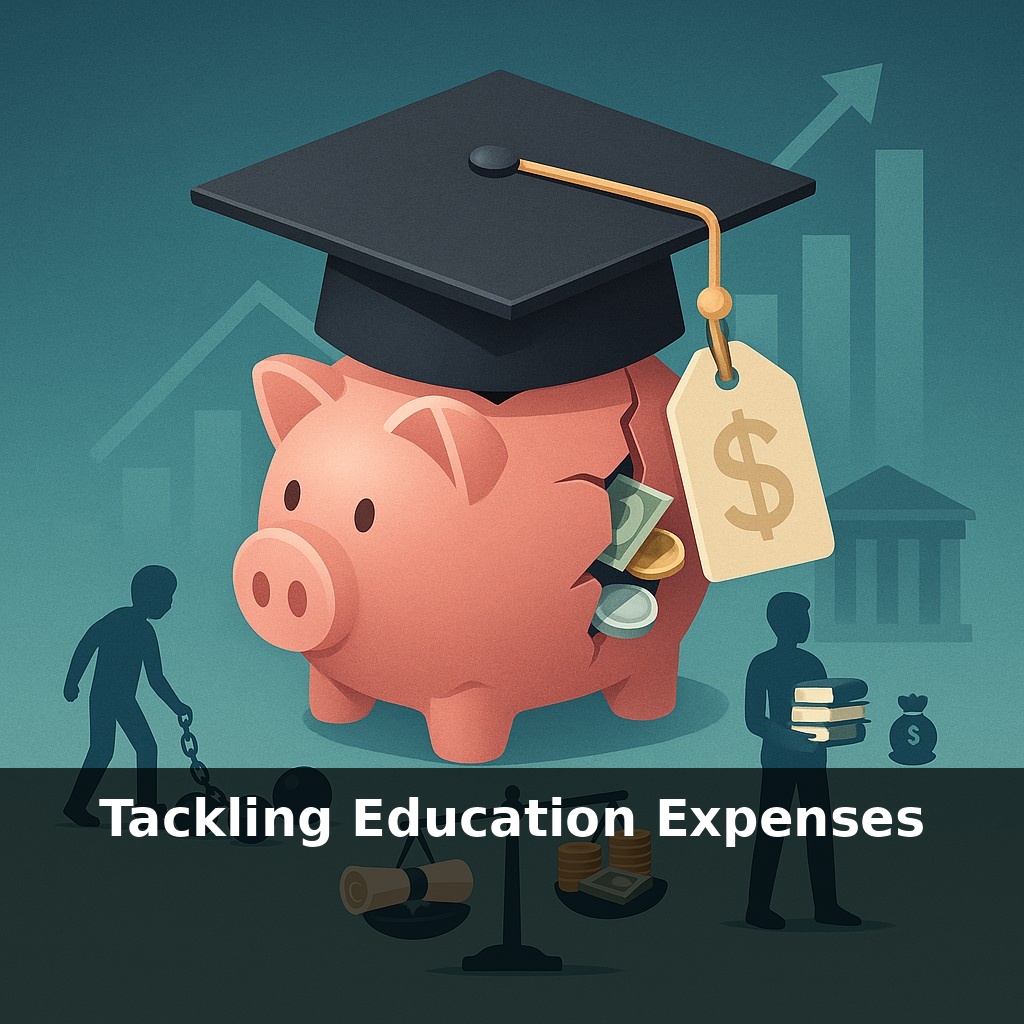
College costs have climbed faster than almost everything else in your budget… yet most families still wait until junior year of high school to panic. Now picture two kids: same school, same degree—one leaves with crushing loans, the other with manageable payments. What changed?
Seventeen percent. That’s how much the net price of a public four‑year school has outpaced inflation in just over a decade—and that’s after grants and scholarships are counted. No wonder so many parents feel like they’re chasing a moving target. The good news is, you don’t have to fund everything out of pocket, and you don’t have to do it all at once. Think less about writing one giant check, and more about stacking small, smart moves over many years: using tax‑favored accounts when they’re available, steering your student toward credits that cost less but transfer well, and treating every new semester as a fresh cost‑benefit check‑in. In this episode, we’ll zoom out from the anxiety of a single tuition bill and map a full life‑cycle approach—starting whenever you are right now, whether your kid is 3, 13, or already comparing acceptance letters.
Here’s the twist most families miss: the “college plan” doesn’t start with a tuition bill, it starts with your regular monthly budget. Education is just one more big project your money has to fund over 18+ years, alongside retirement, housing, and everything your kid needs right now. Instead of treating it as a separate, panicky line item, we’ll weave it into the flow of your cash: when raises show up, when daycare costs drop, when debts get paid off. Like upgrading an app in stages, each life phase unlocks new features—more room to save, better aid options, and smarter ways to cut the final price.
Let’s break the life‑cycle into four phases and match the tools to each one, so you’re never trying to do everything at once.
**Phase 1: Early years (birth to ~age 9)** Your main edge here is time. Modest, automated contributions can matter more than heroic lump sums later. This is where 529s quietly shine: tax‑free growth, potential state deductions or credits, and the ability to invite grandparents to contribute instead of more toys. Only about a third of savers even use a 529, and far fewer squeeze the full state benefit—often just a matter of routing what you already save through the right account.
You don’t have to lock yourself into tuition at a specific campus, but prepaid plans like Florida’s show one path: trade flexibility for predictability. If your state offers something similar, check whether the guaranteed rates justify giving up investment upside and school choice.
**Phase 2: Middle years (~9–14)** As activities and expenses grow, this is when many families stop saving. Instead of pausing, try *rebasing* your contribution: when a temporary cost ends—daycare, a car loan—redirect part of that freed cash into the education bucket before lifestyle creep eats it.
This is also the time to start thinking about the *shape* of education. Could your student earn high‑school credits that later wipe out general‑ed requirements? Are there magnet or dual‑enrollment programs that blend high school and college at reduced cost?
**Phase 3: High school (~14–18)** Now the focus shifts to *price control*. Three big levers:
- **School list construction.** Include financial “safeties” known for strong aid, tuition reciprocity, or generous merit. The same student can see radically different net prices. - **Scholarship systems, not one‑offs.** Data shows the odds climb after several applications; treat it like a part‑time job with a weekly quota instead of a last‑minute scramble. - **Return‑on‑investment checks.** Pair each potential program with realistic salary ranges, completion rates, and debt projections using tools like College Navigator or school‑specific outcome data.
**Phase 4: College and beyond** Once enrolled, treat each academic year like a new contract. Refile aid forms on time, appeal when circumstances change, and keep hunting for departmental and local awards—many upper‑class scholarships receive few applicants. Look for ways to trim costs on housing, books, and summer credits at lower‑priced institutions that transfer cleanly.
If gaps remain, compare borrowing options carefully: federal loans first for protections, then private only as a last resort and with a clear payoff strategy.
Think of your education strategy like a software update rolling out in patches instead of one massive download. Each “patch” is small, but together they change the whole system.
For example, a family might start with $50/month in a 529 when cash is tight. When daycare ends, they bump that to $200 and set an annual calendar reminder to check whether they’re hitting the maximum state tax break. Later, when travel sports get too expensive, they intentionally redirect half of that freed money into extra contributions rather than letting it disappear into random spending.
On the student side, treat aid and discounts like stacking promo codes. A local credit union scholarship, a departmental award for sophomores, and a textbook grant from the campus foundation may each feel minor, but combining them can offset an entire semester’s housing. Add one summer of community‑college gen‑eds that your advisor confirms will transfer, and suddenly a fifth year on campus becomes optional instead of inevitable.
A quiet shift is coming: “college savings” is morphing into “learning capital” you’ll deploy across a whole career. As 529 rules loosen and employers add matches, your kid’s account might someday fund a midlife data‑analytics bootcamp or a late‑career teaching credential. Picture a flexible toolkit more like a Swiss Army knife than a single‑use ticket: a balance you can point at certificates, online courses, even relocations, as industries evolve and second acts become the norm.
Treat this less like saving for one deadline and more like funding a series of “learning sprints” across decades. As rules evolve, your strategy can flex too—mixing employer help, micro‑credentials, and even short sabbaticals for retraining. Like tweaking a recipe over time, each adjustment teaches you how to stretch limited ingredients into something sustainable.
To go deeper, here are 3 next steps: 1) Open a free account at SavingForCollege.com and use their 529 plan comparison tool to plug in your state, your kid’s age, and your monthly savings target to see exactly which low-cost plan and contribution level fits your situation. 2) Download the myStudentAid app from Federal Student Aid and use its “Aid Estimator” to forecast your Expected Family Contribution, then compare that number with actual tuition/aid stats on CollegeNavigator.gov for 2–3 schools you’re considering. 3) Go to your public library’s app (Libby or Hoopla) and borrow “Paying for College, 2025 Edition” by Kalman Chany, then block 30 minutes on your calendar tonight to read the chapters on merit aid and tuition discounting so you can ask sharper questions on your next call with a financial aid office.