Almost half of Americans can’t cover a few hundred dollars in surprise costs—yet many still save only when they “feel ready.” You’re checking your account, a payment hits, and… nothing happens. No transfer, no plan. Why does money move so fast everywhere—except into your own safety net?
Automatic 401(k) enrollment once boosted participation from 59% to 86%—not because people suddenly became disciplined, but because they didn’t have to decide every payday. The default did the heavy lifting. That’s the move we’re borrowing for your emergency fund: shifting from “I’ll transfer something later” to “it moves itself, every time money shows up.”
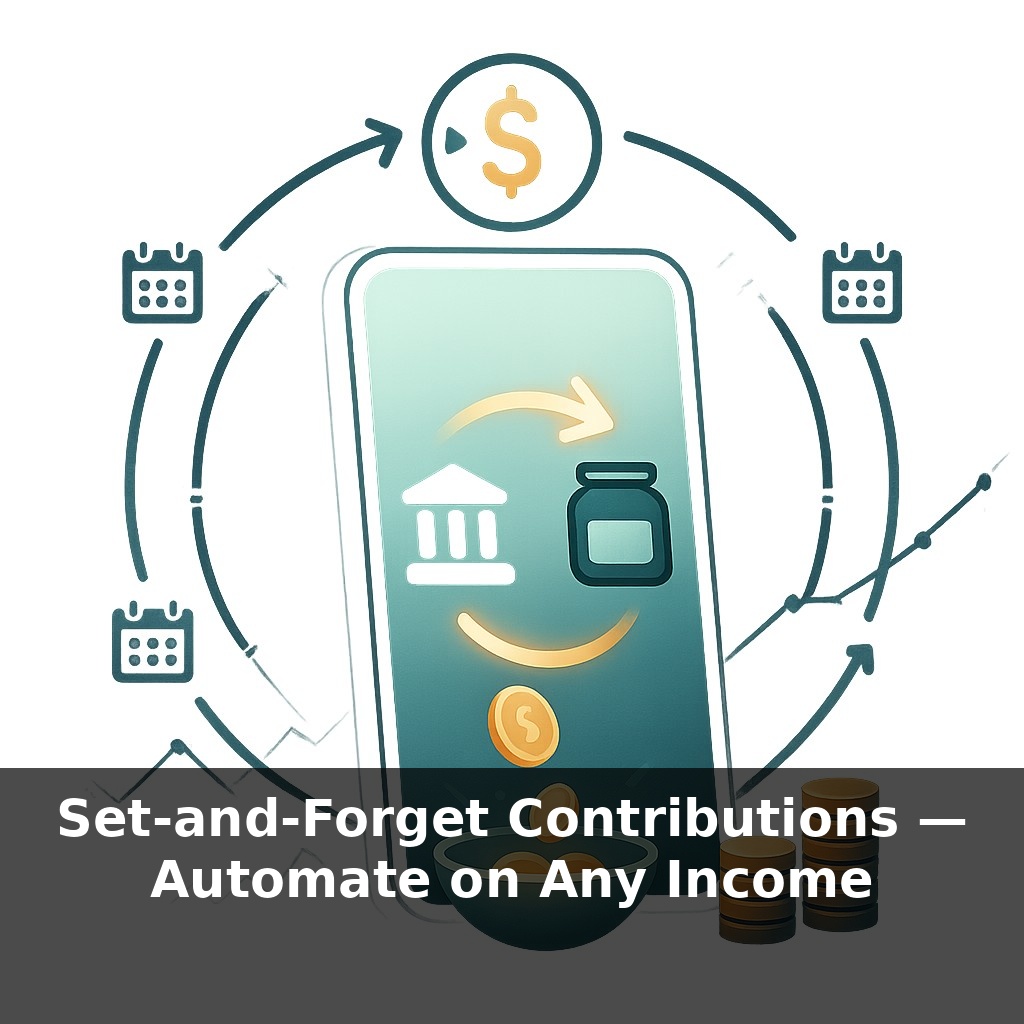
This matters even more if your income isn’t a neat salary. Freelancers, gig workers, and side‑hustlers live on wobbly paychecks, but today’s banking tools let you treat each deposit like a mini‑payday. Rules-based transfers, percentage skims, and even spare-change round‑ups can quietly reroute tiny slices of income into a separate, high‑yield account—before you can talk yourself out of it.
Instead of asking, “Can I afford to save this month?” you’ll start asking, “What rule will handle it for me?”
If Episodes 3 and 4 were about *where* your emergency fund lives and *why* that first $500 matters, this one is about making contributions so routine they feel boring—in a good way. Think of your money flow as weather patterns: deposits are sudden storms, bills are heatwaves, and without planning, your savings only get the leftovers. Automation lets you “forecast” in advance: every time new money appears, a small, pre-decided slice moves out of the danger zone. The goal isn’t perfection; it’s designing a system that quietly works on good months and bad, without demanding daily attention.
Think of this episode as moving from “I know automation helps” to “here’s *exactly* how I make it run on whatever income I’ve got.” The aim isn’t to squeeze every dollar; it’s to set up a few smart rails so your money doesn’t slide straight from deposit to spending.
Start with one simple decision: *What’s the smallest amount I can move without feeling it?* For some people that’s $5 per deposit, for others it’s 2–5% of each incoming payment. The key is to set the bar low enough that it still happens on your worst month, not your best.
Next, match the rule to your reality:
- **Regular paycheck?** Use a fixed dollar transfer the day *after* payday. That slight delay gives bills time to clear and keeps you from bouncing payments. - **Irregular income?** Use deposit‑based rules if your bank or app allows it: “Whenever a deposit over $50 lands, move 3% to savings.” If tools are limited, create your own ritual: each time you get paid, manually trigger a pre‑set transfer button or shortcut. You’re still deciding once, then repeating, not negotiating from scratch.
Layer small systems instead of relying on a single big move. A few examples: - A fixed $20 on the 1st of the month - Plus 3% of every freelance payment - Plus a roundup feature that sweeps leftover cents
Each one is tiny; together they form a quiet conveyor belt toward your buffer.
One powerful twist: use **balance‑based guardrails**. Set an extra rule such as, “If checking creeps above $X, sweep the extra to savings.” This captures the “float” that would otherwise evaporate into random spending, without touching the cash you actually rely on.
On the flip side, protect yourself from over‑optimism. If your app lets you, cap how much can move out in a given week, or set a minimum checking balance that must remain untouched. That way, a surprise bill doesn’t push you into overdraft just because your rules were too aggressive.
Behaviorally, this works because the *decision* happens once, while you’re calm—then the system keeps acting when you’re tired, busy, or tempted. You’re not trying to become a different person; you’re building a different environment.
Over time, you’ll barely notice the transfers day to day. But check in monthly, not to “fix” the system, just to nudge it: a little more when life feels stable, a little less when things are tight. The system isn’t rigid; it’s a living script you update as your income and confidence grow.
Jamal drives for multiple apps, so his Tuesday looks nothing like his Friday. Instead of aiming for a fixed monthly goal, he tags each new payout with a color in his banking app: green for “extra,” yellow for “must cover bills.” A rule moves 4% from just the green deposits, so busy weekends quietly boost his cushion without touching rent money.
Lena, a nurse with steady pay but chaotic shifts, sets up two rails: $15 leaves every payday, and any overtime above her normal check gets skimmed at 10%. She never has to “decide” what to do with a fat check when she’s exhausted after nights.
Carlos sells art prints online. Some months he clears $300, others $2,000. He creates tiers: at $0–$800, nothing moves; $801–$1,500 triggers a $25 transfer; above $1,500, the extra 5% glides out. Like adjusting medication doses based on symptoms, his rules flex with how strong the month is, so progress continues without risking a crash.
As “self‑driving money” spreads, those quiet background rules could start learning you. Instead of a single savings rule, your apps might adjust daily—like a weather forecast updating a picnic plan—based on your spending mood, calendar, and even location. Rent due soon? They’d brake. Just got paid and your habits look calm? They’d gently accelerate. The real leap isn’t more features; it’s shifting from *you chasing control* to systems that anticipate and steady your financial swings.
Your challenge this week: treat your setup like a beta test. Turn on one tiny rule—maybe a $5 transfer tied to any deposit—and watch it for seven days. Notice when it feels invisible and when it annoys you, like a too-loud notification. Next week, either nudge the amount up or down, or add a second “test rule” so your system evolves with you.