About half of people say they’re “being themselves” daily—yet their bodies quietly disagree, showing higher stress and tension. You’re friendly at work, kind at home, generous with friends… and still feel off. How can so many honest choices add up to a life that doesn’t feel true?
We usually treat ethics like a fire alarm—something we notice only when it’s screaming at us in a crisis. But most of your ethical life happens in tiny, almost invisible moves: which email you answer first, whether you round up that report, how you talk about a colleague who isn’t in the room. Each small moment either reinforces or erodes your sense of who you are.
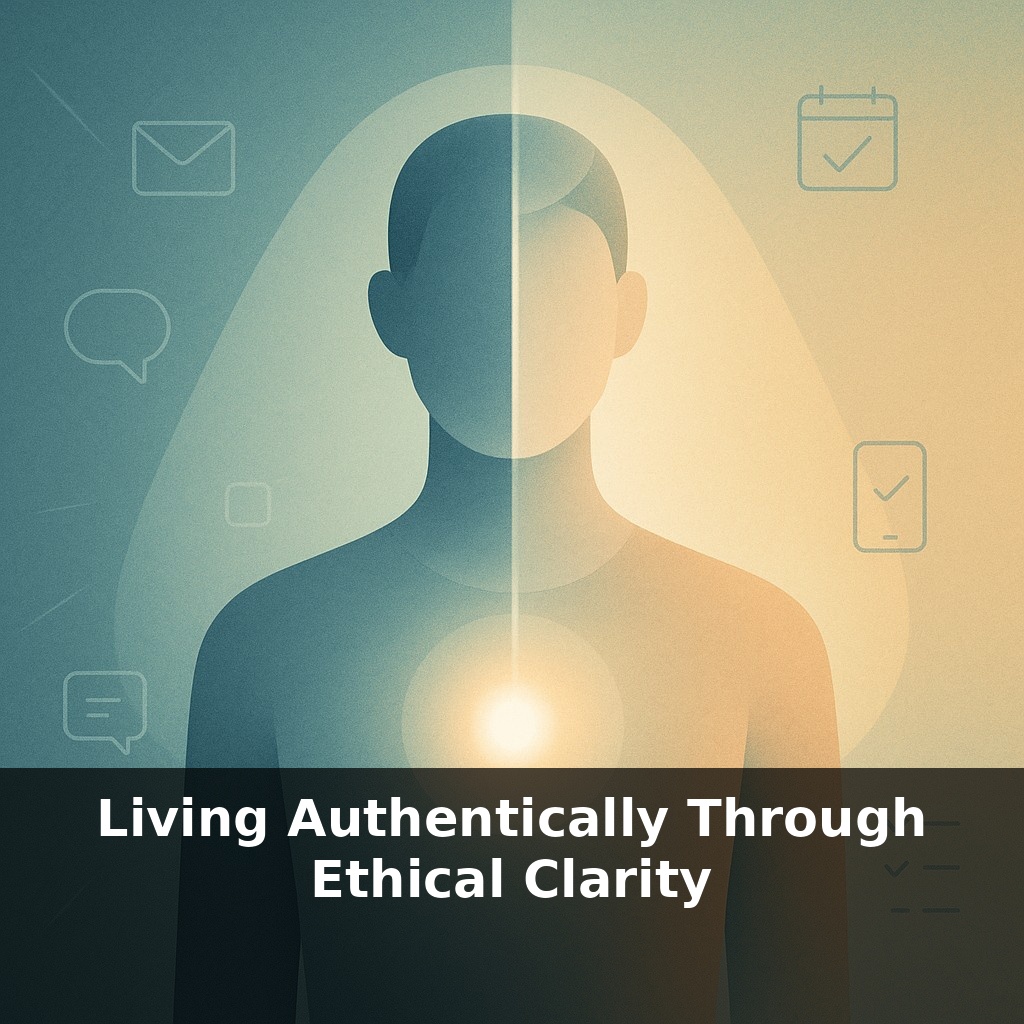
Living authentically through ethical clarity doesn’t start with grand moral stands; it starts with noticing these micro-choices. Noticing when you stay quiet to keep the peace, laugh along to fit in, or agree to “harmless” shortcuts that don’t sit right. Those moments are data, not verdicts.
Instead of asking, “Am I a good person?” a more useful question is, “What pattern of choices am I quietly rehearsing every day—and whose values does that pattern actually serve?”
You already have clues. That hesitation before you say yes, the relief when you finally say no, the tiny surge of pride when you defend someone who isn’t there—these are live readouts of your inner ethics system. But most days, they flash by unrecorded, like notifications you swipe away. Research shows that people who deliberately track these signals—moments of quiet discomfort or alignment—end up making more consistent, less draining decisions. Not because they became “better,” but because they learned their own user manual instead of running on guesswork.
Most people try to “think their way” into better decisions, but your mind is only half the data. The other half lives in your body’s aftertaste. Not the spike of stress itself—that part we’ve already talked about—but what lingers an hour later.
You send an email that’s sharper than needed. Ten minutes later you feel oddly restless, refreshing your inbox. You back a colleague in a meeting; later that day, your posture is looser, your attention easier. Those echoes aren’t random. They’re feedback reports from your deeper priorities.
Here’s the twist: that feedback isn’t telling you whether you’re “good” or “bad.” It’s telling you whether your recent moves are coherent with the person you’re trying to become. People with clear internal ethics systems notice these signals faster and adjust sooner, which is why they tend to recover more quickly from mistakes instead of doubling down to protect their ego.
A practical way to work with this is to watch decision–emotion chains, especially in three hotspots:
1. **Trade-offs with time.** When you protect focus for something that matters, do you feel more grounded or more guilty? The answer reveals whose expectations you’re actually prioritizing.
2. **Loyalty conflicts.** When you defend someone who isn’t in the room, do you feel exposed or quietly solid? That reaction points toward your real standards for fairness.
3. **Comfort vs. candor.** When you offer soft honesty instead of flattery or silence, do you replay the conversation anxiously, or does your mind move on? That trace shows how ready you are to live with the consequences of your own voice.
Think of each day like a coach reviewing game footage. You’re not judging the player; you’re studying patterns: Where do you keep hesitating? Where do you come alive? Over time, you’ll see that “authenticity” isn’t a mood you wait for; it’s a series of tiny, trackable experiments in which you test what happens when your stated principles and your visible behavior line up a little more closely.
And crucially, the goal isn’t purity; it’s responsiveness. As your context changes—new job, new relationship, new limits—your ethical clarity should update too. The point is not to freeze yourself into a fixed identity, but to become someone who can revise their approach without betraying their core.
You can spot this “inner user manual” most clearly when circumstances pull you in opposite directions. A manager at Patagonia described choosing suppliers: one was cheaper, another had stronger labor practices. On paper, it was a close call. The deciding signal wasn’t a spreadsheet; it was the quiet steadiness she felt after recommending the more ethical partner—and noticing, days later, she wasn’t mentally defending the choice to herself.
A different leader tracked the opposite pattern. Each time he dodged a tough feedback conversation, he slept worse, replaying what he hadn’t said. After a month of noticing, he realized his discomfort wasn’t about conflict; it was about abandoning his own standard of respect: “I wouldn’t want someone to withhold this from me.”
Ethical clarity here isn’t heroic sacrifice; it’s pattern recognition. Which decisions keep expanding your mental bandwidth afterward—and which ones keep taxing it? That running tally is often more honest than whatever story you tell in the moment.
A curious side effect of this kind of noticing is that your “aftertaste log” becomes a quiet strategic tool. You start to see where to invest your limited courage: which relationships actually deepen when you speak up, which projects repay your extra care, which habits give you back more energy than they cost. It’s less like judging days as good or bad and more like tuning an instrument: tiny, regular adjustments that gradually extend your range in the real constraints you live with.
Over time, this kind of quiet tracking reshapes your default settings. You notice which rooms invite your full voice, which tasks light up your curiosity, which people nudge you toward who you’re trying to be. Like rearranging furniture so you stop bumping into the same corner, you start redesigning your days so your future self has fewer avoidable bruises.
Here’s your challenge this week: Pick one recurring situation where you usually “people-please” (like with your boss, partner, or family) and, before it happens again, write a 3-sentence personal ethical boundary for yourself using the values the episode highlighted (honesty, respect, and self-trust). When the situation comes up, say one clear sentence out loud that aligns with that boundary (for example, “I won’t say yes to extra work I can’t do well,” or “I won’t pretend I’m okay when I’m hurt”). Afterward, give yourself a quick 1–5 score on how aligned you felt with your ethical clarity, and note one specific tweak you’ll make next time to stay even more authentic.