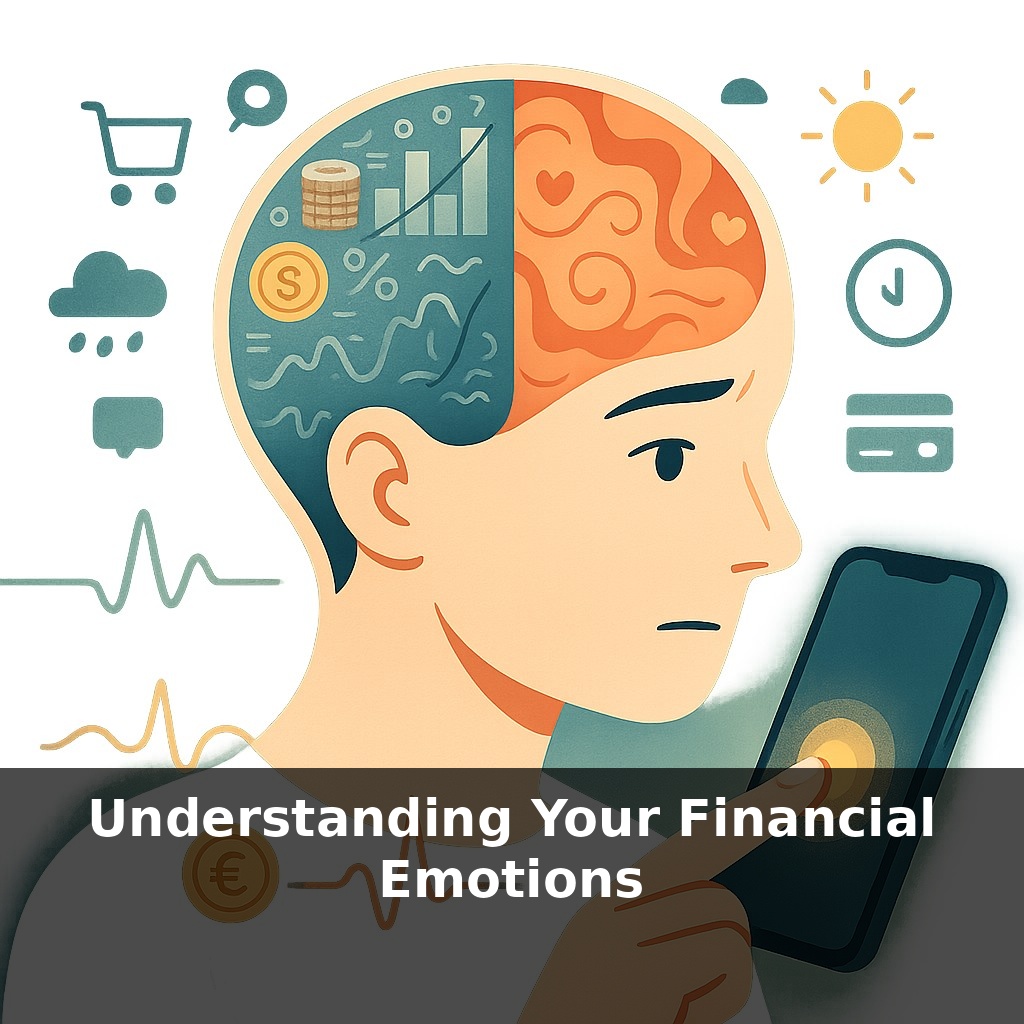
You’re not bad with money—your brain is just wired for drama, not decimals. One moment you’re calmly checking your balance, the next you’re in an online cart spiral. Today we’ll peek behind that switch and ask: who’s really making your money choices—you or your emotions?
So let’s slow down the moment *before* the tap, swipe, or click. That tiny pause is where your “financial emotions” live—often disguised as urgency, relief, or even boredom. You might tell yourself, “I deserve this,” “I’ll fix it next month,” or “Everyone else is doing it.” Those aren’t numbers talking; they’re feelings wearing spreadsheets as costumes.
Modern behavioral research shows that stress, fatigue, and social comparison can quietly tilt your choices long before you open a banking app. A rough day at work can turn a harmless scroll into a $200 splurge. A market headline can nudge you into selling at the worst possible time. None of this means you’re reckless; it means you’re human.
In this episode, we’ll start identifying your personal “emotional fingerprints” around money—so instead of being dragged by them, you can start steering with them.
Your bank balance and your feelings don’t live in separate universes. That tight chest before opening a bill, the rush when “pay in 4” pops up, the numbness after checking your card statement—those are data points, not character flaws. Studies show that when financial stress ramps up, your brain literally has less bandwidth for planning, so shortcuts and habits quietly take over. That’s how a long day at work becomes three delivery orders, or how “just checking” a stock price turns into panic selling. Instead of judging these moments, we’re going to start treating them like clues in an ongoing investigation.
Let’s get more concrete and look at how these “financial emotions” actually show up in real life—because they rarely walk in announcing themselves. They tend to sneak in wearing perfectly logical disguises.
Fear doesn’t usually say, “I’m scared.” It says, “This is urgent.” That’s the voice behind flash sales, limited-time offers, and “only 2 left!” messages. Your brain reads “threat,” and suddenly the question isn’t “Do I really want this?” but “Will I miss out and feel stupid later?” That subtle shift—from wanting something to avoiding regret—is where a lot of unplanned spending lives.
Anxiety often masquerades as avoidance. Instead of thinking, “I’m worried about my debt,” your mind goes, “I’ll check it when things calm down.” Bills sit unopened, balances go unmonitored, and late fees quietly pile up. Ironically, the very thing that might bring relief—seeing the real numbers—gets delayed because the feeling feels too big in the moment.
Excitement tends to sound rational too. You tell yourself, “I’ll make this back,” “This is an investment in myself,” or “I’ll be more disciplined next month.” Notice how often these thoughts involve a future version of you who is calmer, richer, and more organized than you feel right now. That imaginary future self is generous with your current credit limit.
Overconfidence shows up not just in investing, but in everyday spending. It tells you, “I know how this story ends.” That might mean assuming a raise will cover lifestyle upgrades, or believing, “I always bounce back from dips,” so there’s no need to adjust habits. Confidence is useful; overconfidence silently edits out risk.
Here’s where written structures start to matter. A budget isn’t about restricting every impulse; it’s about deciding ahead of time which emotional moments get a safe outlet. Planned “fun money” turns a random urge into a pre-approved option instead of a secret rebellion. Automated transfers to savings or debt can act like guardrails for days when your feelings are louder than your plans.
The skill you’re building isn’t “never feel things about money.” It’s catching the moment when a feeling puts on a clever costume—urgency, avoidance, optimism, certainty—and starts making quiet edits to your financial story.
Think about the last time you clicked “buy now” faster than you meant to. Maybe you weren’t just reacting to a product—you were reacting to a feeling: boredom on the couch, pride after a win at work, or resentment after seeing a friend’s vacation photos. Those moments aren’t random; they cluster. Excitement might spike on Fridays after payday. Avoidance might show up Sunday night when you’d rather not look at your accounts. Overconfidence often rides along with good news—a bonus, a promotion, a tax refund.
Treat these patterns like version updates to your internal “money software.” Instead of judging the pop‑ups (“I’m so bad with this”), start noticing their timing and triggers. A recurring late‑night scroll that ends in a cart isn’t just lack of discipline; it’s a cue that you’re tired and seeking relief. The goal isn’t to delete the app—your emotions—but to change the default settings so they don’t auto‑charge your future every time they load.
Soon, your bank app may feel less like a ledger and more like a coach that notices patterns you miss. A spike in late‑night food orders after tough workdays could trigger a gentle nudge: “Rough day? Want comfort that doesn’t hit your card as hard?” Investing platforms might dim bright colors or confetti during volatile markets to avoid stirring reflexive trades. Schools could pair compound‑interest lessons with breathing drills and journaling, so kids practice staying steady before real money is on the line.
So as you move through this week, think of each tap, swipe, and click as a data point, not a verdict. Curiosity beats shame here. Start noticing which people, places, or apps tend to nudge you off-course—like certain songs that always speed up your driving. The more specific your map gets, the easier it is to steer on purpose.
To go deeper, here are 3 next steps: (1) Take the free Money Script Assessment from Dr. Brad Klontz’s work (Google “Klontz Money Script Inventory”) and compare your results with the emotional money patterns discussed in the episode. (2) Set up a “money emotions check‑in” ritual by downloading the free Mindful Money app or using the You Need A Budget (YNAB) trial, and after your next spending decision, log what you felt (anxiety, guilt, excitement) right before and after the purchase. (3) Pick up *The Psychology of Money* by Morgan Housel and, this week, read just chapters 1–3 with a highlighter, marking every story that sounds like your own reactions around saving, debt, or lifestyle upgrades, then bring one of those stories to your next money conversation with a partner or friend.