About one in ten grieving adults doesn’t just feel sad—they stay pinned to the moment of loss for years. A song, a street corner, a smell, and suddenly they’re back at day one. In this episode, we’ll explore why some grief freezes in time while other grief slowly shifts.
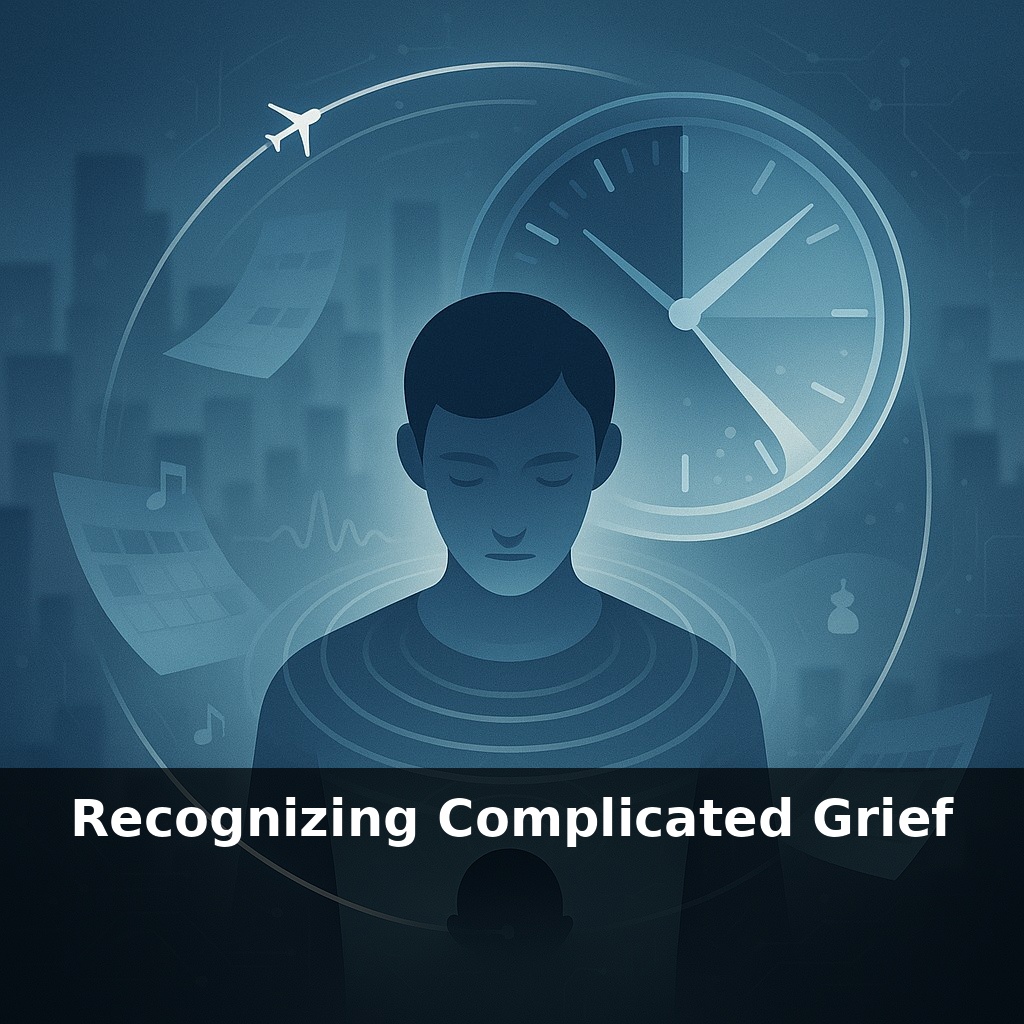
Around 7–10% of grieving adults don’t just hurt; their entire inner world quietly reorganizes around the loss. Days still pass, calendars still flip, but emotionally it’s as if life is circling the same airport, never cleared to land. In this episode, we’ll explore what researchers now call Prolonged Grief Disorder—when mourning stops being a raw but shifting experience and hardens into a persistent, disorienting state that won’t ease on its own.
We’ll look at subtle early signs that grief is getting stuck, how this differs from depression or PTSD, and why certain kinds of losses carry higher risk. We’ll also unpack what effective help actually looks like today: specialized therapies, supportive technologies, and the role of community. The goal isn’t to pathologize sorrow, but to recognize when a normal response has silently become something that deserves targeted care.
Some people describe this kind of grief as “being pulled under by a wave that never recedes,” yet on the surface they might look unusually composed, productive, even “strong.” That mismatch is one early clue experts pay attention to: the outside life moving forward while the inner life stays locked onto the loss. In this episode, we’ll zoom in on those quieter warning signs—like rituals that must stay exactly the same, or intense guilt whenever joy appears—and how daily routines, relationships, and even your phone habits can reveal when mourning is silently taking over the cockpit.
Researchers looking closely at daily life patterns have noticed something striking: in people whose mourning has become complicated, it’s not just the intensity of emotion that stands out—it’s the *rigidity* around anything connected to the person who died.
Early on, structure can be life-saving: visiting the grave regularly, scrolling old messages, wearing a specific item every day. Over time, though, those same habits can quietly harden into rules that feel dangerous to break. A playlist that once brought comfort now *must* be played in a certain order; a photo gallery that once felt like a bridge now becomes the only place where feeling is “allowed.” The red flag isn’t the ritual itself, but how much panic, guilt, or collapse appears when it’s interrupted.
Another pattern researchers see is what you might call “grief orbit.” Conversations, searches, and even late-night scrolling spiral back to the loss again and again—obituaries, memorial pages, old emails, photos—while other parts of life shrink. People describe feeling like they can’t think about the future unless it somehow loops back to the past. Even positive memories get replayed so constantly that they stop bringing warmth and instead feel like a test they’re always failing: “If I really loved them, I wouldn’t be able to laugh,” “If I move forward with this decision, I’m betraying them.”
The body often joins in. Sleep gets tethered to specific objects or media (“I can only fall asleep listening to their voicemails”). Appetite, energy, and concentration start to depend on how much time has been spent that day in grief-related activities. It’s less like occasional waves of sorrow and more like the entire nervous system recalibrates around loss-related cues.
A useful medical parallel: just as a sprained ankle that’s never gently used again grows weaker and more painful, a life slowly narrowed to loss-linked actions and spaces becomes more fragile. The world outside that narrow channel starts to feel not just empty, but threatening—making it even harder to experiment with tiny steps toward re-engaging.
A therapist might notice warning signs in everyday choices long before a formal diagnosis appears. Think of the parent who keeps their teen’s room identical for five years, yet can’t bring themselves to step fully inside; they stand in the doorway, talk to the bed, then retreat. Or the partner who spends hours designing online memorial posts but avoids basic tasks like opening mail or answering messages unrelated to the loss. On the surface, these can look like “deep love” or “creative coping,” yet underneath there’s often a shrinking tolerance for anything that doesn’t reference the person who died.
Digital traces tell a story too. Search histories fill with “if I had done X” scenarios. Calendar apps are packed with anniversaries and countdowns, but empty of plans that extend beyond them. In social feeds, the person appears only in one role—widow, sibling, child—while former interests, communities, and quirks quietly disappear. It’s less about how sad someone feels, and more about how narrow their emotional and practical runway has become.
Some researchers think PGD might one day be screened like high blood pressure: quick check‑ins built into routine care, not just crisis visits. If that happens, digital “early warning” signs—like drastic shifts in sleep, step counts, or messaging patterns—could quietly flag when someone’s world is shrinking. The ethical puzzle is how to use those signals as a soft porch light, not a surveillance spotlight: an invitation to support, not a label that follows you.
Your inner signals are often subtle: a skipped hobby here, a canceled visit there, until life feels like a house where most rooms stay dark. Noticing that pattern can be a turning point, not a verdict. Your challenge this week: pick one “dark room” and crack the door—send the text, step outside, or reopen a small ritual that connects you to the living world.