Most people will face several life-altering losses, yet no two grief stories sound the same. One person screams in the car, another goes silent at work, a third starts a charity run. Same kind of loss, totally different paths. Why do our hearts break in such personal, specific ways?
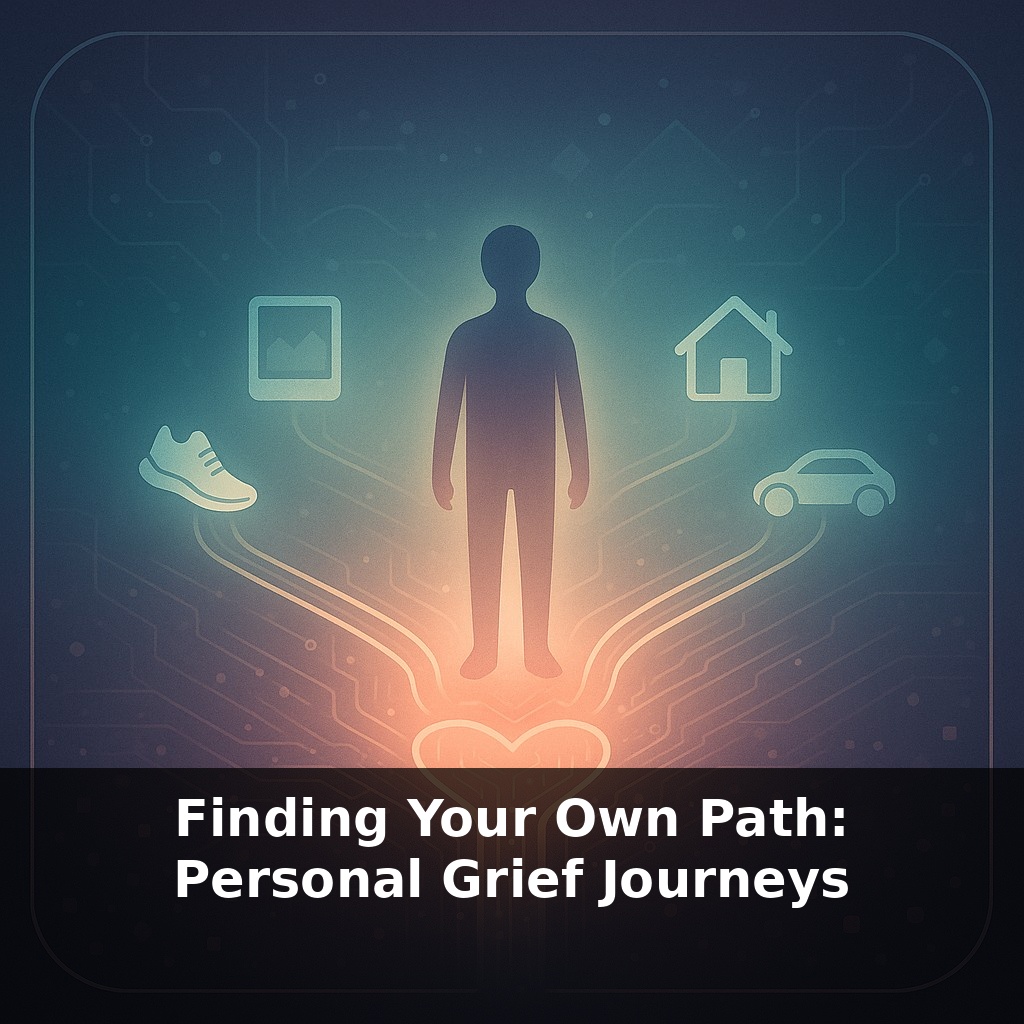
Some people throw themselves into marathon training. Others rearrange the whole house at 2 a.m. Some quietly scroll photos every night before sleep. From the outside, these choices can look random or even “wrong.” Inside, though, they’re doing something very specific: helping your mind and body test out who you are in a world that’s been permanently altered.
Researchers call this an *adaptive* process: you’re not trying to “get over” what happened, you’re slowly learning to live *with* it. That learning happens in loops, not straight lines. You try returning to an old routine, notice what stings, pull back, then try again differently.
Across cultures, one of the strongest tools for this kind of learning is story. Not a polished, inspiring tale—just the rough, changing account of “this is what it’s like for me right now,” revised as you go.
Some stories arrive out loud, in late-night phone calls or awkward overshares at the office. Others stay wordless for a long time, showing up as playlists you repeat, routes you avoid, or photos you can’t quite bring yourself to move. All of these are versions of “telling,” even if you never write a sentence about what happened. Research suggests that *how* you shape your grief story matters: whether you see yourself only as someone life happened to, or also as someone still capable of choosing, acting, and caring in the aftermath of what you lost.
“Grief stories are not just about the past; they are also blueprints for the future,” writes researcher Robert Neimeyer. That’s where the science gets interesting: the same loss can generate very different futures depending on the story you gradually assemble around it.
When clinicians study people over months and years, they don’t ask, “What stage are you in?” They ask questions like: - *Who are you in this story now?* - *What still matters to you since the loss?* - *Where does your person (or your old life) live in your story today?*
Patterns keep showing up. In more stuck, painful versions, the plot sounds like: *“Everything meaningful ended when they died / when this was taken from me.”* The self becomes only a victim; time is frozen around the moment of impact. In more adaptive versions, the loss is still awful, but the script slowly shifts to: *“This shattered me, and…here’s what I’m trying to do with what’s left.”* The “and” doesn’t cancel the pain; it makes room for a future self to exist beside it.
This is where oscillation from the research shows up in real life. On some days, your internal monologue might center entirely on the wound. On others, you catch yourself caring—against your own expectations—about a new hobby, a coworker’s joke, a TV show finale. Those small sparks of interest aren’t betrayals; they’re lines in a new chapter that’s still being drafted.
People often assume that talking about the person or the loss will make everything worse. Yet across cultures, communal retellings—funeral eulogies, anniversary gatherings, spontaneous stories at the kitchen table—tend to *soften* the sharpest edges over time. They give your nervous system repeated chances to touch the pain while also being held in some kind of safety.
On the other hand, pushing the whole story underground doesn’t actually delete it. It just forces it to leak out sideways: in sleep problems, irritability, difficulty concentrating, sudden overreactions to “small” things. Therapists sometimes see this as the body and brain trying to narrate what the mouth won’t.
Crafting a livable grief story is less like writing a finished novel and more like keeping a sketchbook: some pages messy, some half-erased, some you never show anyone. The point isn’t to arrive at a perfect “take” on what happened. It’s to keep giving yourself enough language—and enough witnesses—that you don’t have to carry the whole thing in silence.
A few people craft their grief story the way some artists keep series of paintings. One woman I worked with chose “chapters” named after songs her brother loved. Each month, she added a short scene—sometimes a memory, sometimes a rant, sometimes a small victory, like cooking his favorite meal without breaking down. Over a year, those scenes traced a path she couldn’t see day to day.
Another person used text messages. He never sent them; he just wrote to his dad as if the conversation had kept going: “You’d hate this traffic,” “I finally fixed the sink.” Scrolling back months later, he noticed how the messages had shifted from raw disbelief to a mix of sorrow and ordinary life.
You might instead think in “seasons”: the hospital season, the paperwork season, the “I can’t go to that side of town yet” season, the “I’m surprised I laughed” season. Each has its own colors, routines, and phrases you repeat to yourself. Naming those seasons doesn’t tidy anything up. It simply marks that your story has more than one page, and you are moving, even on days that feel completely still.
About 3–5 major losses across a lifetime means your narrative will likely be revised many times. Tech and policy are slowly catching up. AI tools might someday suggest prompts that fit *your* history and culture the way a good editor nudges a writer, while VR memorials could act like evolving digital scrapbooks, updated as you change. Longer bereavement leave would then become less a pause button and more a protected writing retreat for your ongoing story.
Your path may also weave through unexpected media: playlists, photo folders, voice notes, even search histories. Each choice you save or delete quietly edits the plot. Over time, these traces can become like margin notes in a favorite book—evidence of how your perspective shifted, not proof you “moved on,” but that you kept turning pages.
Here’s your challenge this week: Choose one small ritual that resonates with *your* grief—maybe a nightly walk where you speak out loud to the person you lost, rearranging a space in your home to reflect who you are now, or cooking one of their favorite recipes your own way—and do it three times on three different days. Each time, change one tiny detail (a different route, a new object on the shelf, a twist on the recipe) to symbolize how your path is evolving. At the end of the week, tell one trusted person what you tried and which version felt most like *your* path, not the one others expect you to follow.