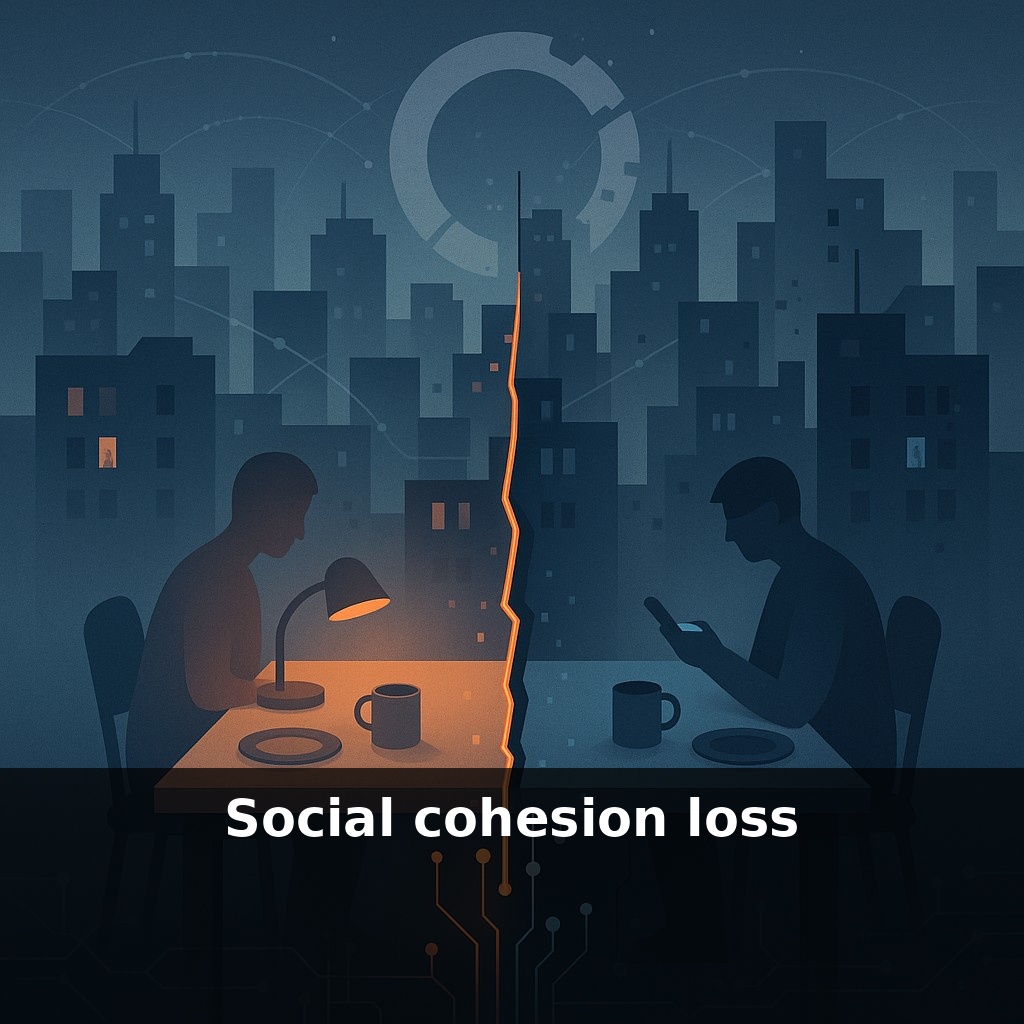
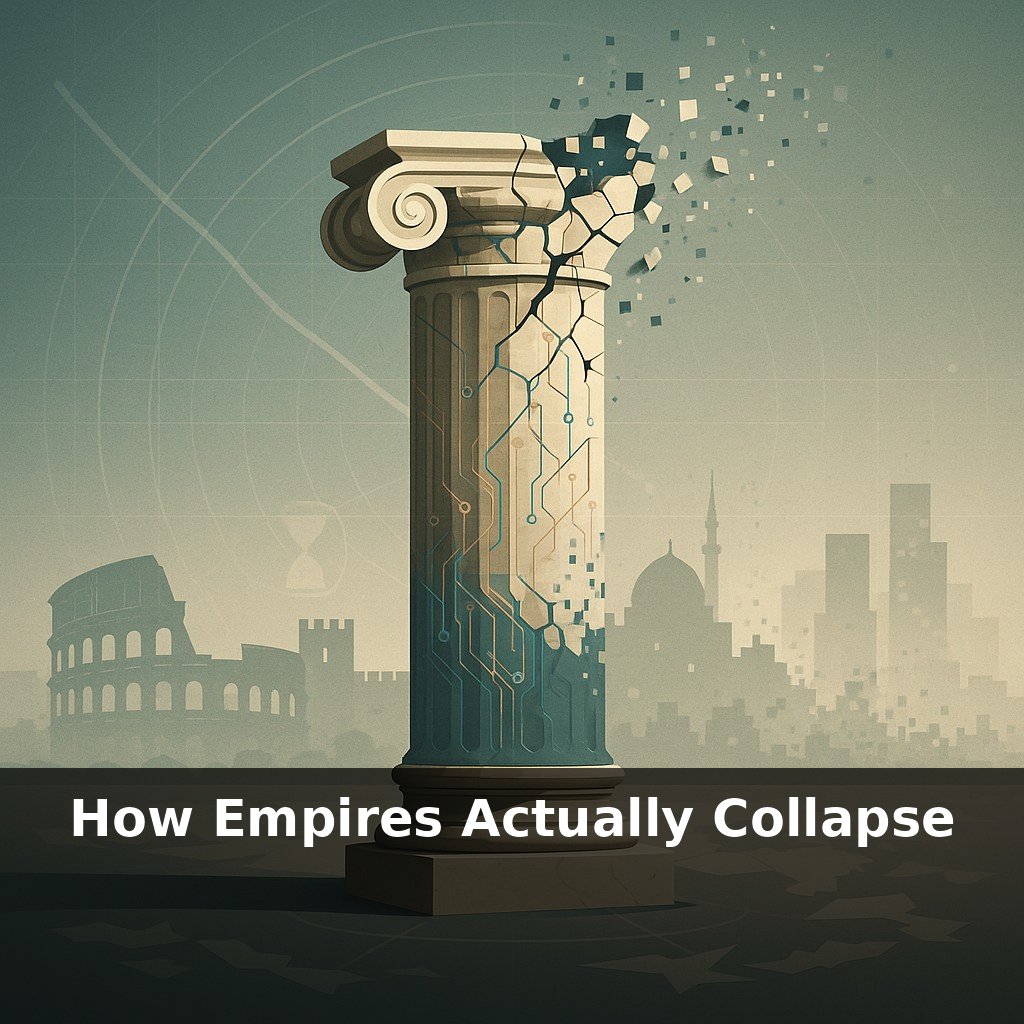
A world power is rarely defeated from the outside first. It quietly stops believing in itself. In late Soviet cities, neighbors shared kitchens but not a country. In modern democracies, trust falls, rage rises—and suddenly, the real threat isn’t foreign, it’s next door.
By the time an empire is arguing over who really belongs, it’s already in trouble. The danger isn’t just people disliking each other; it’s when they stop believing they share a future. That’s when cooperation turns into calculation: “Why should my group sacrifice if theirs won’t?” Data makes this visible. The OECD’s Social Cohesion Index shows that countries in the bottom quarter don’t just feel tense—they are, on average, twice as likely to experience political violence. Once that threshold is crossed, every shock hits harder: elections become security crises, protests require armored vehicles, and governments spend more on fences than on bridges. The cost isn’t abstract. After January 6, 2021, the U.S. spent roughly $1.5 billion just stabilizing its own capital—a budget line that might otherwise have gone to schools, research, or resilience against actual external threats.
Empires don’t just crack; they unweave. The patterns show up early if you know where to look. In late Rome, military payrolls ballooned while tax bases shrank, not only because of bad harvests, but because regions quietly stopped feeling bound to the center. In the Soviet Union, republics framed secession not as revolt, but as “self-determination”—a polite word for opting out of shared risk. Modern surveys echo this drift: where people feel “mostly on their own,” investment drops, birth rates fall, and politics turns into a permanent cold war among neighbors.
When cohesion fades, three feedback loops start to reinforce each other.
First is the **identity loop**. Once politics turns into a contest over who is the “real” nation, every compromise looks like surrender. In the late Soviet Union, ethnic Russians were just over half the population, yet by 1991 nine republics claimed sovereignty on cultural grounds. Each declaration made the remaining union feel less legitimate, which in turn encouraged more exits. Something similar happened in Yugoslavia: party forums that once argued about budgets shifted to arguing about whose language, heroes, and memories mattered. The formal constitution hadn’t changed yet, but people’s mental map of “us” had already fractured.
Second is the **capacity loop**. As cohesion erodes, central institutions lose the benefit of the doubt. Citizens become less willing to pay, obey, or serve without immediate payoff. That forces rulers to lean more on coercion and side deals. Late Rome offers a stark case: by the 4th century, over 60 percent of soldiers were non-Roman-born auxiliaries. Many fought bravely, but their loyalty was transactional. When pay lagged or local interests clashed, mutinies and defections spiked. The army still existed on parchment; in practice, it was a patchwork of semi-independent armed groups with their own agendas.
Third is the **economic loop**. The World Values Survey finds a strong correlation between interpersonal trust and long-run growth. In low-trust environments, people hedge instead of build: they move assets abroad, shorten investment horizons, and favor safe but unproductive stores of value. Growth slows, inequality hardens, and resentment deepens—feeding back into identity conflict. Elites respond by insulating themselves: gated neighborhoods, private security, parallel services. That visible exit from the common life signals to everyone else that the game is rigged.
One helpful way to see this is to borrow from medicine: a society under stress can tolerate a few “infections”—corruption scandals, protests, even recessions—if its immune system of shared norms and institutions is strong. But when that immune system is weakened, minor shocks spread, and ordinary disputes metastasize into existential crises. Collapse then isn’t a single event; it’s a long, uneven failure to heal.
In concrete terms, erosion shows up in small, ordinary choices. In companies, you see it when teams hoard information because “the other department” might get the credit. Short-term, projects still ship; long-term, the best people leave for places where they don’t have to fight their colleagues to get work done. Cities follow a similar script: when residents stop expecting help from shared institutions, they quietly build private backups—generators, wells, security cameras. Each household may feel safer, but the public grid decays faster, making collective repair politically harder and financially riskier. You can track the same pattern online: once platforms become arenas for factional combat, users who just wanted to learn or collaborate either disengage or form closed groups. The platform survives in a technical sense, yet its value as a common space withers. Like a band whose members start touring solo, the name still exists, but the music that made it matter doesn’t.
OECD data hints at a quiet fork in the road: places that strengthen cohesion now will enter the next century with more room to adapt, while others burn energy just staying intact. Think of neighborhoods that organize cooling centers before heatwaves, or cross-party coalitions agreeing on basics like grid upgrades and flood defenses. The surprise is where renewal often starts—not in parliaments, but in school boards, unions, even hobby clubs that practice cooperation when nothing is on fire yet.
Empires rarely announce their breaking point; you hear it in quieter choices—who people marry, hire, or help in a blackout. Social fabric frays long before borders do. Yet it can also be rewoven. Each cross-cutting tie—a mixed neighborhood, a union with rivals, a joint project after a flood—works like a backstage jam session, letting groups rediscover a shared rhythm.
Before next week, ask yourself: Where in my daily life do I most clearly see “social cohesion loss” (for example, people retreating into online echo chambers, neighbors who never speak, or tense conversations at work), and how am I currently reacting in those moments—do I avoid, shut down, or lean in? When you encounter a polarizing topic (like politics, public health, or culture wars), what’s one genuine, curious question you could ask the other person—rather than arguing—that might help you understand their story beneath the opinion? Thinking about one real relationship that’s been strained by disagreement, what concrete step could you take this week (a phone call, a walk, a shared meal) to repair trust, even if you still strongly disagree on the issue?