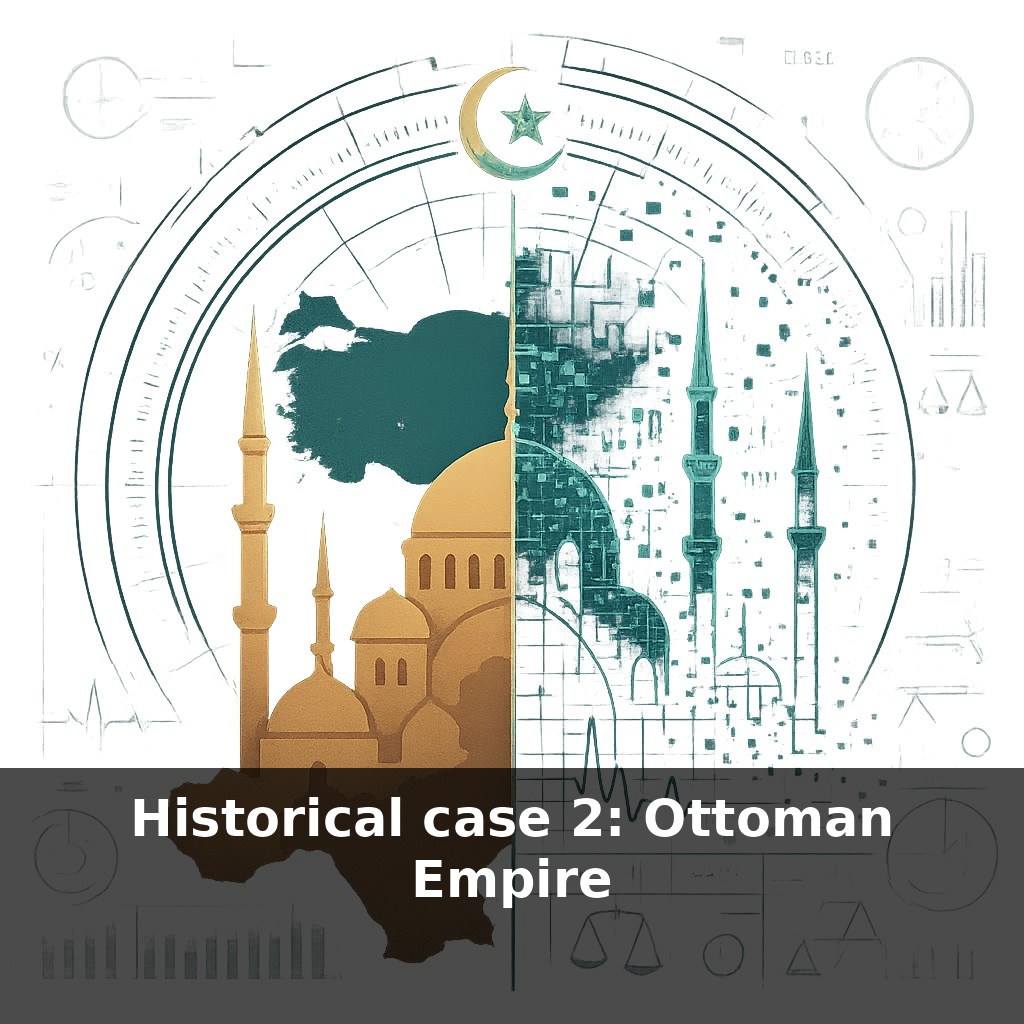
An empire can lose about half its land and still insist it’s fine. In one lifetime, Ottoman officials saw provinces peel away, debts pile up, and new armies outgun them. Yet on paper, the empire survived—until a single world war finally exposed how hollow it had become.
By the 1800s, diplomats in Europe were quietly calling the Ottomans “the sick man,” but the numbers told a sharper story: interest payments eating half the budget, factories that couldn’t match cheap imports, and generals watching their troops reload muskets while rivals tested rapid‑fire rifles. On maps, the state still stretched across three continents; in balance sheets and battle reports, it was thinning out. Reforms came in waves—new schools, legal codes, railways—each promising a fresh start, like repainting a house whose foundations were already cracking. At the same time, Greek, Serbian, Bulgarian, Arab, and Armenian activists were sending pamphlets, petitions, and sometimes bombs, pulling at the empire from below while foreign powers tugged from above. To understand how it all came apart, we need to zoom in on the technology gap.
Generals and ministers could see the problem in hard numbers: rivals laying telegraph lines deeper into their territory than they could themselves, foreign-built steamships setting schedules local ports had to obey, imported textiles undercutting prices from Damascus to Salonika. Technology wasn’t just about better guns; it rewrote who controlled time, information, and credit. Each new foreign concession—mines, rail links, cables—was like quietly surrendering another nerve in the empire’s body, until reacting slowly became the default, not the exception. The question is: when does “catching up” stop being realistic and start becoming fantasy?
Factories were the first warning sign. In the early 1800s, Ottoman workshops tried to spin cotton and weave cloth for local markets, but British mills were already turning out cheaper, more uniform textiles at staggering volume. Customs officials saw the result in ledgers, not headlines: imported cloth flooding ports like Izmir and Beirut, local producers quietly closing, tax receipts shrinking. “Industrial policy” became a defensive exercise—raising tariffs, subsidizing state factories—yet every protective wall risked retaliation from powers that could sink the navy or call in loans.
Firearms told a harsher story. Officers visiting Paris or Berlin came home with glowing reports of breech‑loading rifles and modern artillery. On paper, the state ordered thousands; in practice, deliveries stalled, spare parts ran out, and training manuals arrived in languages few soldiers could read. Domestic arms plants existed, but their output and precision lagged. Battlefield defeats in the Balkans and the Caucasus were not just about courage or numbers; they were about reload speed, range, and logistics chains that broke down after a few days’ march.
Information control slipped next. Newspapers and printing presses multiplied in multiple languages, often financed or encouraged from abroad. Censors tried to keep up, but nationalist groups used cheap print and clandestine schools to spread new political ideas faster than imperial edicts could respond. Rail lines and steamships that should have tightened control also made it easier for dissidents and deserters to move, meet, and organize.
Money was the thread tying these problems together. To fund modern armies and infrastructure, the government borrowed heavily on European markets. Interest rates reflected not just credit risk, but geopolitical leverage. When revenues disappointed, creditors demanded oversight, gaining a say over tariffs and monopolies. By the late 1800s, financial decisions in Istanbul were shaped in Paris and London boardrooms.
Like a patient given advanced medicine without long‑term treatment, the state kept receiving injections of foreign hardware and capital that eased symptoms but deepened dependency. Each “modernization” that relied on external suppliers nudged control of security, opinion, and revenue a little further out of reach.
Software updates are a useful way to think about how these choices played out on the ground. In some provinces, new barracks, uniforms, and drill routines looked like a clean install of a modern army; in others, officers were still using manuals written generations earlier. Naval yards in one port experimented with steel‑hulled ships while another was stuck repairing wooden vessels with improvised parts. Schools followed the same uneven pattern: a few urban institutions taught engineering and political economy, while large rural districts relied on local notables who viewed new subjects with suspicion or feared they would loosen their own grip.
Banking practices reveal another layer. Prominent merchant families in cities like Salonika or Izmir began adopting double‑entry bookkeeping and international credit instruments, gaining leverage over provincial tax farmers still operating on memory and ledgers. Those gaps in methods—between port and interior, capital and frontier—quietly shaped which regions could plug into new trade routes and which remained dependent, even before borders formally shifted.
Today’s large states can repeat this slow unravelling without noticing. Data dashboards and risk models act like lab tests: they flag local recessions, minority unrest, or regional brain‑drain long before borders shift. But if leaders cherry‑pick numbers that flatter them, the diagnosis comes late. Think of budget spreadsheets as weather maps: a storm forming on one coast matters even if the capital is sunny. The danger is not one big shock, but years of “minor” alerts quietly syncing up.
Collapse here looked less like a cliff and more like a shoreline eroding—each fiscal crisis, mutiny, or lost province another quiet wave. For modern systems, the lesson isn’t doom, but vigilance: listen when outlying districts, small firms, or junior staff start to fray. History suggests breakdown whispers at the edges long before it speaks at the center.
Before next week, ask yourself: “If my organization started to resemble the late Ottoman Empire—slow to reform, full of entrenched interests, and relying on ‘capitulations’ (special favors or dependencies on outsiders)—where would I see the warning signs today?” Then ask: “What is one ‘Tanzimat-style’ reform I could champion right now—something as specific as modernizing a key process, renegotiating an unhealthy dependency, or bringing in new ‘Young Turk’ voices—that would actually shift our trajectory?” Finally, consider: “Where am I clinging to legacy structures or traditions just because they’ve always existed, and what would it look like this week to experiment—on a very small but concrete scale—with a more flexible, adaptive alternative?”