After forty, your muscle doesn’t just “age”—it starts ignoring the usual food signals to grow. You finish a solid workout, eat a normal dinner, and… almost nothing happens. Why does a younger body turn that same meal into muscle, while yours treats it like background noise?
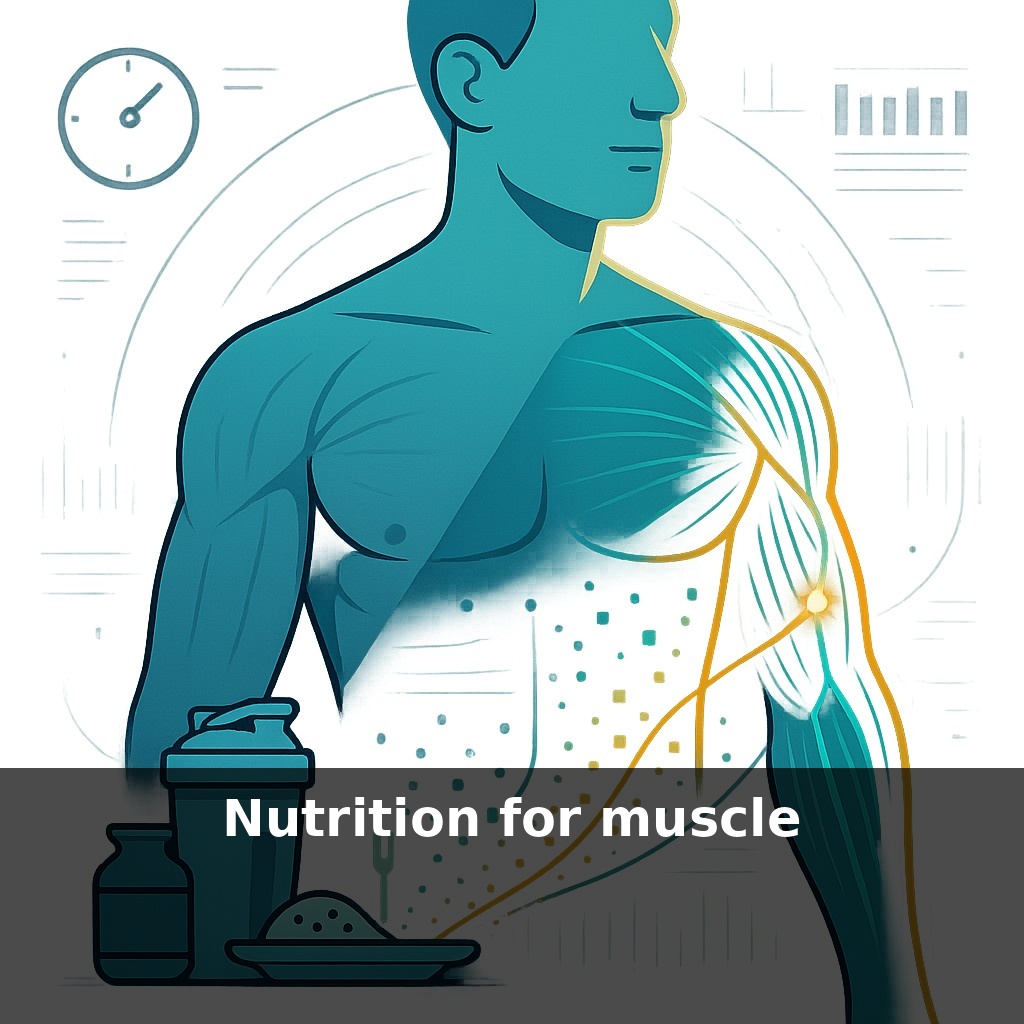
Here’s where it gets interesting: the “ignored signals” after forty aren’t random—they’re heavily influenced by *how* you eat, not just *what* you eat. Two people can eat the same total protein in a day, yet one steadily builds or preserves muscle while the other keeps losing it. The difference often comes down to timing, dose, and the company that protein keeps—carbs, fats, and key micronutrients.
Think of your day as a series of training “slots” for your muscles: each meal is either a missed session or a productive one, depending on whether it delivers enough of the right amino acids to cross a kind of activation threshold. Add in smart use of carbs around training and supportive nutrients like vitamin D, omega-3s, and creatine, and you can push back hard against age-related loss, even if your schedule or recovery isn’t perfect.
Here’s the twist most people miss: your muscles don’t care about “healthy eating” in the abstract—they care about whether today’s intake convinces them you’re in a building phase or a rationing phase. Total calories, protein quality, and how meals line up with your training quietly vote on that decision all day long. A beautifully “clean” but underpowered diet can still tell your body to conserve, not construct. It’s a bit like planning a trip with plenty of stops but never enough fuel at any one station—you’re moving, but you’re not set up to go the full distance or pick up speed.
Here’s where strategy beats guesswork.
Once you’re past forty, two quiet shifts are happening in the background: 1) You burn fewer calories at rest than you used to. 2) Your muscles demand a *stronger* signal from food and training before they commit to upgrading themselves.
Those two together create a trap: you eat “light” to control weight, but that lighter intake often drops below what your muscles interpret as a green light to maintain or build. You stay the same scale weight—or even lose a bit—but a larger share of that loss is muscle.
To sidestep that trap, you need three levers working together:
**Lever 1: Total energy availability** If your intake is too low for too long, your body quietly reprioritizes. Instead of spending resources on new tissue, it focuses on keeping the lights on. Practically, that means long-term, aggressive dieting makes your training feel harder, your recovery slower, and your muscle less responsive to otherwise solid meals. A mild deficit can work, but it has to be paired with higher protein and smartly placed carbs so your workouts still feel “funded.”
**Lever 2: Meal structure across the day** What often matters most isn’t the *label* on the meal (breakfast, lunch, dinner) but which one consistently *fails* to deliver enough high-quality protein. For many people over forty, breakfast is the weak link: a pastry, a small bowl of cereal, or just coffee. That’s several hours where your muscles get almost no meaningful growth stimulus, even if lunch and dinner look decent. When this pattern repeats for years, muscle slowly drains away despite you “eating well.”
**Lever 3: Training alignment** On paper, your workout is one event. In reality, it defines a several-hour window where your muscles are unusually keen to use incoming nutrients. If your hardest sessions cluster on certain days but your most substantial meals land on different days—or late at night after you’ve barely moved—your effort and your fuel keep missing each other. Aligning your more robust meals with your more demanding sessions tightens that loop so each rep has a better return on investment.
Think of your day like a playlist you’re programming for muscle, not mood. You already know certain “tracks” (meals, workouts) matter more—but now you’re deciding *what* plays *when*.
Example: a 46-year-old office worker who lifts at 6 p.m. - Morning: instead of a tiny snack, they front-load with a solid, protein-focused breakfast so the “album” doesn’t open with three hours of silence. - Midday: lunch becomes a steady, balanced track—enough protein and carbs to keep afternoon training from feeling like a low-battery performance. - Evening: the heaviest meal now lands within a couple hours after lifting, when the body’s most ready to “record” new muscle.
Or take someone training at 6 a.m.: a small, easily digested pre-training bite plus a substantial breakfast right after turns that early session from a solo into a well-supported duet between effort and fuel.
As you experiment, notice which “playlist order” leaves you strongest in the gym and least ravenous at night—that’s usually the one your muscles prefer.
Soon, “eating enough protein” may feel as outdated as dialing up internet. Smart forks, cups, and wearables could log what you consume, watch how your glucose and recovery respond, then nudge you: “Add 10 g here, shift 20 g there.” Travel and schedule changes might auto-adjust your plan the way map apps reroute around traffic. Your challenge this week: notice where tech already tracks you—steps, sleep, heart rate—and ask: what *muscle data* do you wish it showed?
So as you tweak protein, carbs, and the rest, treat your plate like a setlist before a big show: each choice changes how loud your muscles “play” tomorrow. The next frontier is personalization—genetics, gut health, even time of day. Your job now is to experiment, log what actually works, and let data—not habit—shape how you fuel strength after forty.
Before next week, ask yourself: 1) “Looking at what I actually ate yesterday, where could I realistically add 20–30g of protein—like a Greek yogurt, an extra egg, or a chicken breast—to better support muscle growth?” 2) “If I had to choose one meal to consistently anchor my protein (for example, 35–40g at breakfast), what would that meal look like with foods I already enjoy and can afford?” 3) “On days I train, how can I make my post-workout meal (within 2 hours) a bit more muscle-friendly—could I swap a low-protein snack for a protein shake, cottage cheese, or a tuna sandwich?”