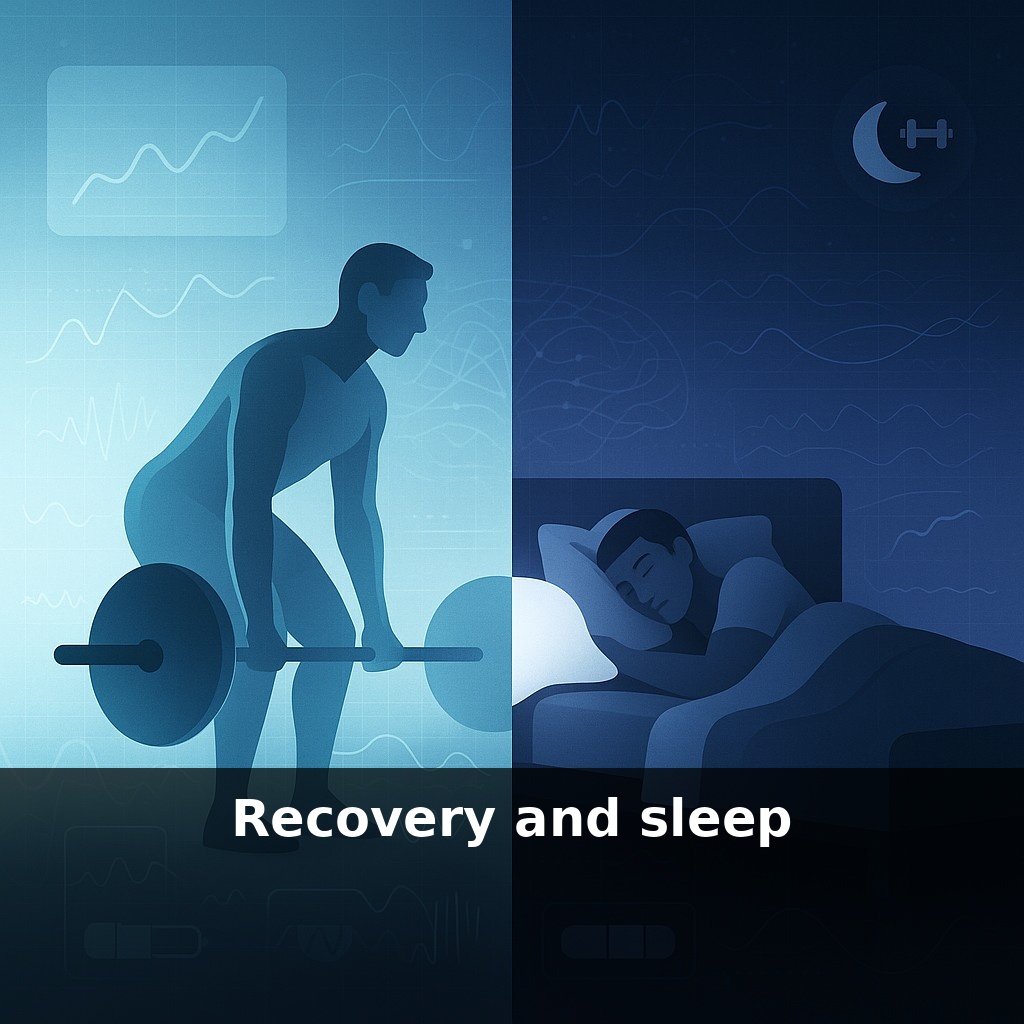
You can crush every workout and still stall your muscle growth—just by staying up too late. A forty‑five minute lift can be undone by a few hours of bad sleep. Tonight, as you turn off the lights, your body’s deciding: rebuild stronger…or just repair enough to survive.
Most people over forty still try to “out-train” bad recovery—longer workouts, more volume, an extra finisher—while quietly shaving 30–60 minutes off sleep to make the schedule work. That trade seems harmless in the moment: a bit more coffee, a bit less pillow. But under the surface, your nervous system, hormones, and connective tissues are all keeping score.
Here’s the twist: your body doesn’t treat sleep as optional downtime; it treats it like a non‑negotiable maintenance window. Cut it short often enough and it doesn’t just slow progress—it changes *what kind* of progress you get: more fatigue than strength, more aches than muscle, more stubborn fat than performance.
In this episode, we’ll zoom in on what “high‑quality recovery” actually looks like after forty, how to spot when you’re under‑recovering, and how small changes in your nights can finally make your training days pay off.
Most people think “recovery” means a foam roller session and a protein shake. For adults over forty, it’s closer to a 24‑hour strategy than a post‑workout add‑on. What you do in the 2–3 hours before bed, how you stack stress during the day, and even how hard you push on “easy” days quietly shapes how much muscle you actually keep from each session. This is where timing matters: late‑night screens, heavy meals, or a 9 p.m. intense workout can shift deep sleep later or shrink it altogether, so you wake up having technically slept, but without the rebuilding you trained for.
Most people over forty assume that as long as they’re in bed for “about seven hours,” they’re covered. But two people can both log seven hours and walk away with totally different results from the same workout. The difference isn’t just *how long* you’re asleep; it’s *what kind* of sleep you’re getting, and what you’re doing in the 12–16 hours leading up to it.
Start with timing. Your body’s rebuild window is tied to a roughly 24‑hour rhythm. When you slide your bedtime later and later, or shift it around night to night, those deeper stages of sleep get squeezed or pushed into the early morning—exactly when alarms, kids, or notifications tend to cut things short. Stabilizing your sleep and wake time (even on weekends) quietly locks in more of the “good stuff” from the same total hours.
Next is intensity across the week. If every session feels like a test, your system never gets a clear signal of when it’s safe to allocate resources to building. Paradoxically, sprinkling in truly easy days—where you leave the gym feeling *better* than when you walked in—often leads to better strength gains, because your body isn’t stuck constantly paying off a fatigue debt.
Daytime stress plays a similar role. Back‑to‑back meetings, commuting, caring for family, blue‑light screens—it all adds up. Your body doesn’t tag these separately from hard sets of squats; to your system, it’s all stress, all drawing from the same budget. This is where short, deliberate “down‑shifts” matter: a 5‑minute walk outside after work, two minutes of slow nasal breathing between calls, stepping away from your phone during lunch. Tiny, boring habits, but they lower the baseline so your night work can go to growth, not just damage control.
Think of it like crafting a good music mix: the heavy tracks (hard sessions, busy days) only sound powerful if they’re balanced with quieter ones. Your week needs that contrast for adaptations to stand out instead of blending into one long, noisy blur.
Think of your nights like arranging a travel itinerary for adaptation. The “flight times” are your bedtime and wake time; shift them constantly and you’re always jet‑lagged, even if total hours look okay. A few concrete examples: the person who falls asleep fast but wakes at 3 a.m. most nights isn’t “wired wrong”—they’ve usually stacked late caffeine, problem‑solving in bed, and bright screens into the last two hours of the day. Another lifter hits every workout but scrolls news on the couch until midnight under bright lights; their sleep tracker shows plenty of time in bed, but the deep phases that matter are thin. Contrast that with someone who treats the last 60–90 minutes as a cool‑down: lights dimmed, tomorrow’s to‑dos written down, maybe a brief walk or stretch. Same training, same macros, but their body has a clear “off” signal. Over weeks, joints feel less creaky, bar speed improves, and nagging plateaus start to move.
In the next decade, “training programs” will likely come packaged with sleep targets, light exposure plans, even suggested nap windows, the way we now get sets and reps. Think less bootcamp, more flight plan: apps quietly adjusting your schedule after a red‑eye, late meeting, or sick kid night. Gyms may rent out dark, cool “sleep booths” post‑session. When employers and insurers see fewer injuries and sick days, sleep tracking could turn into a subsidized performance tool, not just a wellness toy.
Your challenge this week: treat bedtime like a training session with a start time you don’t move. Pick a 60‑minute “cool‑down block” before bed—no work, no intense conversations, no bright screens. Use it for light reading, stretching, or planning tomorrow. Notice how your mood, bar speed, and aches shift when your nights get the same respect as your lifts.