Right now, somewhere in the world, a stranger is quietly exploring your company’s systems—not to break them, but to understand them better than you do. Here’s the twist: the mental tools that person is using are the same ones you need to defend yourself.
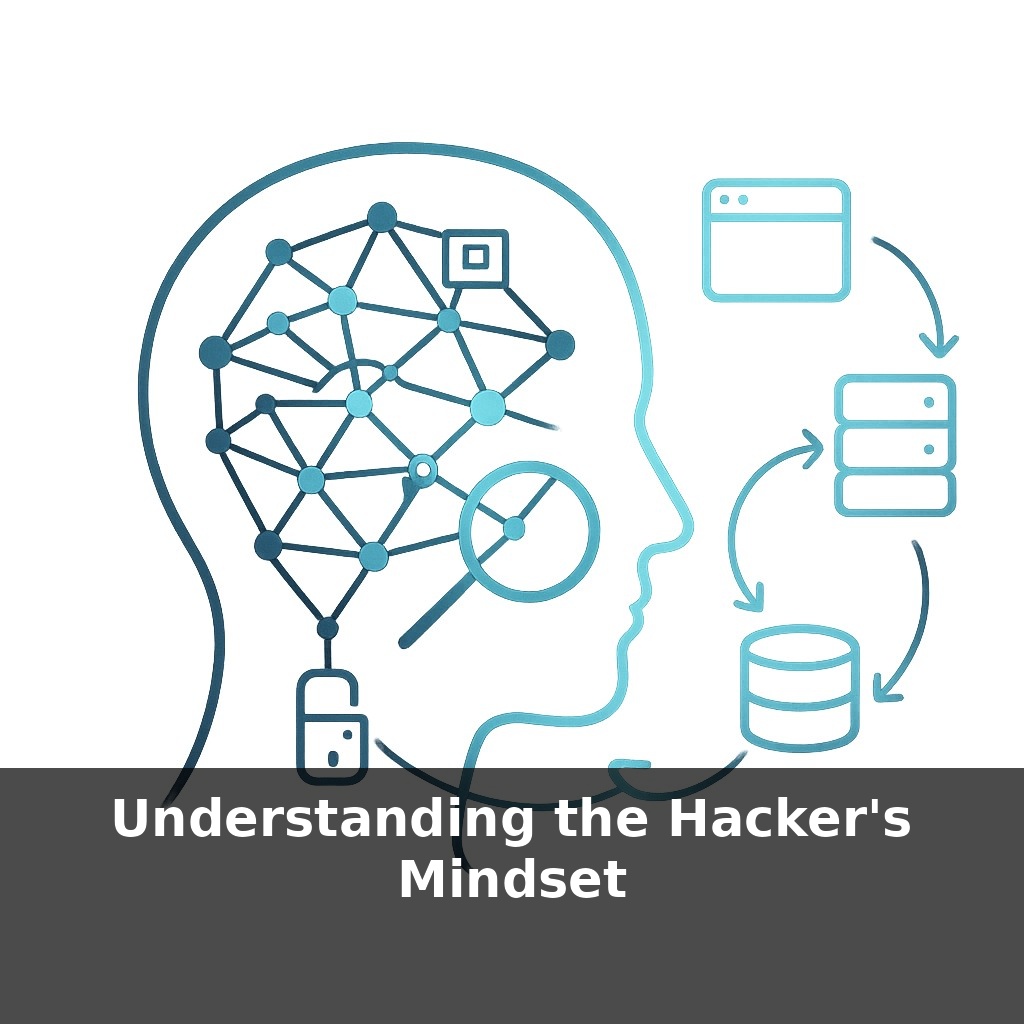
Hackers don’t start by asking, “How do I break this?” They start with, “What here is taken for granted?” That single shift changes everything. Instead of seeing a login page, they see a conversation between browser, server, database, logs, and even the person typing the password. Each part is a potential miscommunication, a tiny crack to test.
This mindset isn’t about chaos; it’s about mapping hidden structure. Ethical hackers sketch mental blueprints of networks, permissions, habits, and blind spots. They notice that the “temporary” admin account never got removed, or that a rushed marketing tool was granted far too much access.
Think of it like walking through a city at dawn: shutters half-closed, side doors propped open for deliveries, guards switching shifts. The city isn’t weaker—just momentarily unguarded in predictable ways. Hackers learn to see those moments before anyone else does.
Hackers pair that structural awareness with relentless curiosity. They’ll poke at every “normal” interaction: the way employees reset passwords, how invoices are approved, which alerts get ignored on busy days. Data backs this up: 94% of malware now rides in through email, not exotic zero-days, because people are easier to persuade than code is to crack. And once inside, over 70% of successful breaches involve rapid lateral movement—attackers racing sideways through systems within 30 minutes, turning one minor foothold into a company-wide problem. Understanding that tempo is key to disrupting it.
The first thing serious hackers do is **zoom out**. Instead of obsessing over one login form or firewall rule, they ask: *“What’s the whole attack surface?”* That means cataloguing everything that could possibly interact with your data—public websites, forgotten test servers, exposed APIs, third‑party integrations, VPNs, mobile apps, cloud dashboards, even the tools your support team uses.
From there, they build **threat models**. Not just “Could this break?” but “If this breaks, what does it unlock next?” They picture specific attackers with specific goals: the fraudster who only needs invoice data, the insider who wants quiet access after they resign, the competitor hungry for R&D documents. Each “attacker type” highlights different weak routes through the same environment.
Then comes the habit defenders often miss: **chaining “harmless” weaknesses**. A single low‑priority misconfiguration might not matter on its own. But combine a verbose error message from one app, a predictable username pattern from LinkedIn, and an overly permissive internal tool—and suddenly an attacker has a reliable path to sensitive systems without ever “hacking” in the cinematic sense.
This is why public vulnerability disclosures matter so much. Once a bug is documented, the entire world can script against it. We know from Google’s Project Zero that the window between disclosure and active exploitation has compressed dramatically; attackers treat each new CVE as a puzzle with a half‑life, racing to turn theoretical risk into usable access before it’s patched everywhere.
But that race usually doesn’t start with custom malware. It starts with **humans**. Phishing emails tuned to your industry, fake login portals cloned from your real ones, “urgent” messages that prod someone into approving a request outside normal process. Verizon’s data on email‑delivered malware isn’t about attachments alone—it reflects that inboxes are now the front door to most compromises.
Once inside, attackers think in **paths**, not points. They hunt for single‑sign‑on portals that grant broad access, shared credentials in team wikis, overlooked monitoring gaps between systems. Every system they touch is evaluated for *pivot potential*: “Does this help me move closer to payroll? To production data? To backups?”
Not all of this happens in the shadows. Bug bounty platforms have turned that same creativity into a competitive sport: who can turn a tiny overlooked detail into a demonstrable, high‑impact finding—fast. The skill is identical; only the direction of the report changes.
A practical way to see this mindset is to watch how small signals add up. An ethical hacker might start with a harmless‑looking 404 page that leaks a software version. That version hints at a specific framework; now they know what documentation to study. In bug bounty programs, reports often begin with something this mundane: a slightly unusual redirect, an autocomplete field that behaves differently when given odd input, a status code that doesn’t match the UI.
From there, they branch. Could this feature be abused across tenants? Does this debug message reveal internal hostnames? Does a mobile app talk to a test endpoint that the main site forgot about? Each clue is like finding another trail marker in a dense forest, suggesting where the next step might lead.
Sometimes the most interesting discoveries come from “failed” attempts. A blocked request that triggers a particular error might confirm the presence of an internal service. A login that rate‑limits differently for VPN users versus public users can hint at different trust zones and policies.
Attackers won’t just probe laptops and servers; they’ll pressure every “smart” object that talks, listens, or moves. As AI helps them sift noise for patterns, tiny quirks in behavior—how a sensor fails, how a chatbot responds off‑script—become new footholds. Quantum‑safe protocols and AI‑driven defense will matter, but so will curiosity about how complex systems fail together, not just alone. The real shift: security becomes less about walls, more about ongoing negotiation with risk.
Instead of treating this as secret knowledge, treat it as a skill you can practice. Start small: trace how a single support ticket moves through tools and people; note every place it could be sidetracked, forged, or overheard. Like learning a new language, the more “sentences” of system behavior you read, the more hidden meanings start to surface.
Your challenge this week: pick one everyday digital interaction you use constantly—expense report, CI/CD pipeline run, calendar invite—and map **every** system and person it touches. Don’t judge, don’t fix; just trace the path, note surprises, and ask: “If I were motivated, where could I bend this flow to my advantage?”