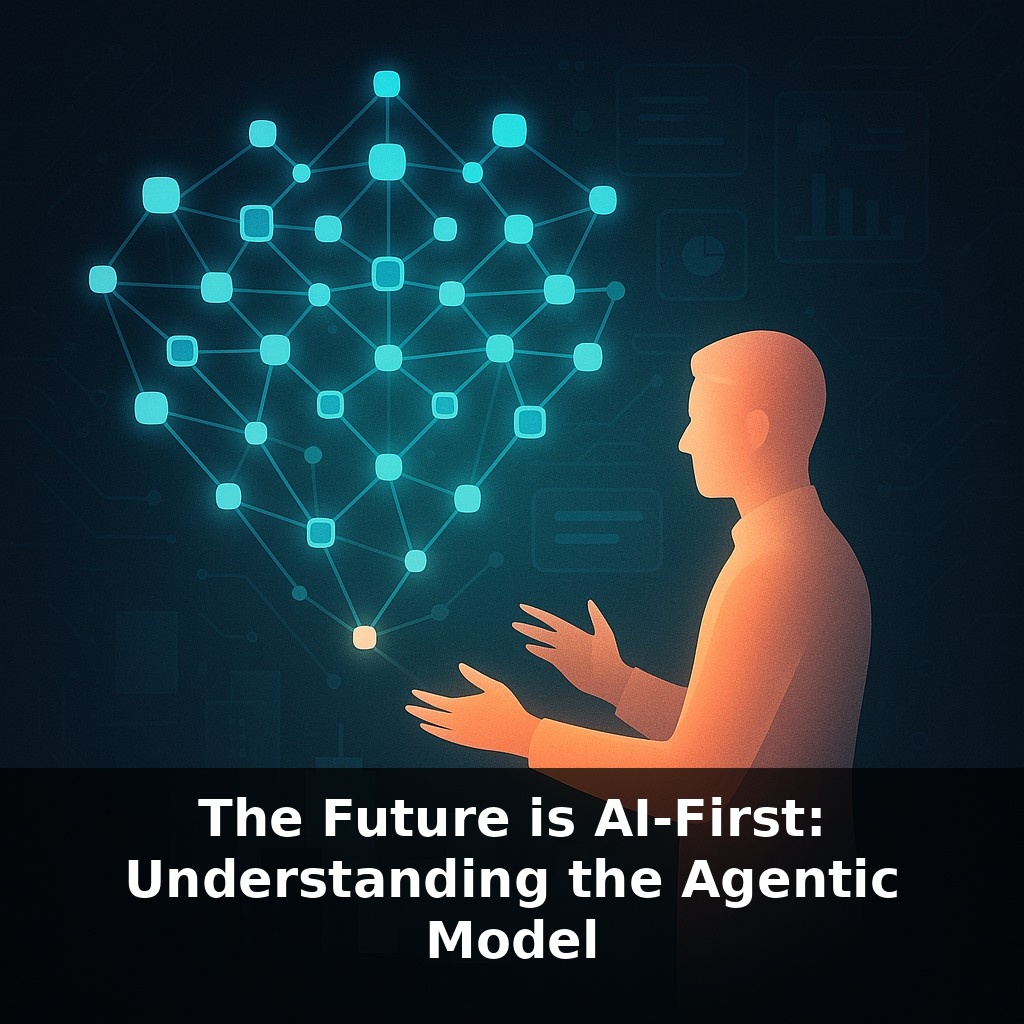
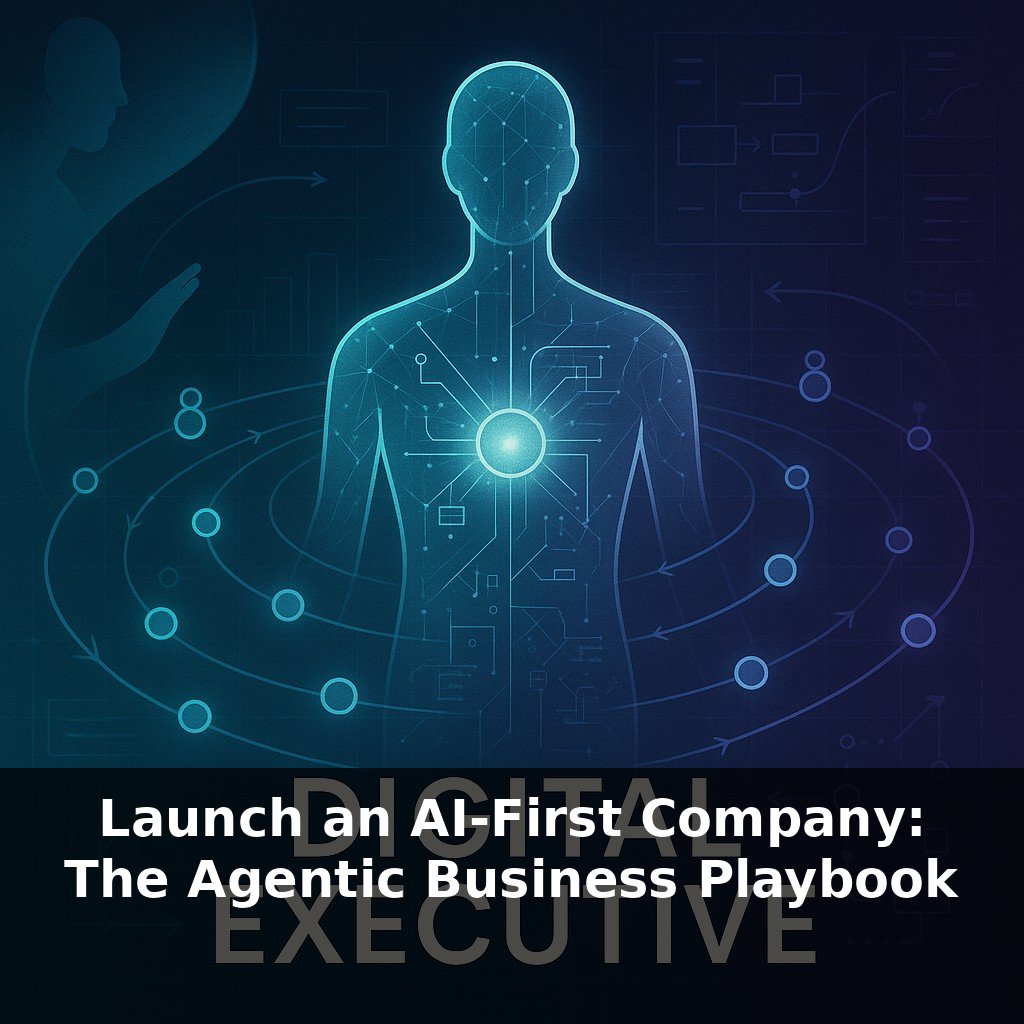
“There will be a trillion agents someday,” NVIDIA’s CEO said. Now, jump to a near‑future workday: your “colleagues” are fleets of AI systems launching products, answering customers, even testing strategy—while the human team mostly decides what should exist next.
Most founders still design org charts like it’s 2010—roles, headcount plans, reporting lines—then sprinkle AI on top. An AI‑first, agentic company inverts that logic: you design the “machine” of agents first, then decide where rare, expensive human attention plugs in. Think of it as drafting a playbook where software runs nearly every play, and people step in only for calls that change the game. This shift isn’t about replacing your team; it’s about refusing to spend human creativity on work that a reasoning, learning system can handle. In this episode, we’ll unpack what it means to treat agents as your primary workforce: how to scope their responsibilities, connect them into end‑to‑end workflows, and redesign your roadmap so that every big bet assumes AI is doing the heavy lifting from day one.
To make this real, stop thinking in terms of “features” and start thinking in terms of “jobs the company must get done.” Every job—ship a release, qualify a lead, onboard a user—can be decomposed into steps that are either judgment‑heavy or pattern‑heavy. Pattern‑heavy steps are your candidates for agents. The surprise is how many white‑collar tasks fall in that bucket once you write them down plainly, like listing every brushstroke in a painting rather than just calling it “art.” In practice, that list becomes the blueprint for where agents plug in next.
Here’s where the model shifts from theory to architecture.
Once you’ve listed the work your company must do, the next step is to define *roles* for agents the way you’d define positions on a sports team: not just “do tasks,” but “own a zone,” play well with others, and hand off cleanly.
Three patterns show up in most AI‑first orgs:
1. **Specialist agents** Narrow scope, deep context. A “release note drafter” that ingests Jira tickets and design docs; a “churn risk watcher” that scans events and flags at‑risk accounts. These excel when the rules and artifacts are well‑structured.
2. **Coordinator agents** They don’t do the heavy work; they route it. For example, a “support triage” agent that reads every new ticket, tags intent, pulls context, and decides who (or what other agent) should respond, with what priority.
3. **Governor agents** Their job is *saying no*. They enforce constraints: brand voice, regulatory rules, rate limits, even simple budget caps. These agents review the work of others, not end‑users.
An AI‑first stack usually chains these: a specialist proposes, a governor checks, a coordinator decides where it goes next. That chaining is what turns isolated automation into a resilient, semi‑autonomous system.
To make this safe, you bake in **guardrails and observability** from day one:
- Every agent logs its reasoning, inputs, and outputs in a structured way. - You define “red lines” as tests: forbidden phrases, pricing bounds, compliance rules. - You sample outputs automatically and route edge cases to humans, then feed those decisions back as training or fine‑tuning data.
Over time, you’ll notice three useful metrics:
- **Agent coverage**: share of a workflow’s steps touched by at least one agent. - **Autonomy level**: fraction of outputs that ship without human edits. - **Iteration speed**: how often you can safely update prompts, tools, or policies and roll them across the fleet.
The paradox: the more agents you add, the *simpler* your human org chart becomes. Fewer titles, more “orchestrator” roles. Humans stop owning steps and start owning **standards**: what good looks like, what must never happen, which tradeoffs are acceptable.
Your challenge this week: design one small, three‑agent chain (specialist → governor → coordinator) for a real process in your company—on paper only. Specify what each agent sees, decides, and passes on. Then mark exactly where a human must stay in the loop today—and what evidence you’d need to feel safe removing that checkpoint later.
Watch a pro cycling team during a grand tour: the leader doesn’t sprint, fetch bottles, and control the pace alone. Different riders cover wind, chase breaks, or protect position—each with a tight brief and a clear handoff rule. Your agent chains should feel the same: specific roles, predictable transitions, and a shared “race plan” expressed as policies and data access, not ad‑hoc instructions.
Concretely, think about a launch-day scenario. One agent synthesizes incoming feedback into themes. Another scores each theme by impact and urgency using your metrics. A third reshapes the backlog and drafts updated release notes. A human product lead reviews just the deltas that cross a threshold. You’ve gone from drowning in noise to curating a highlight reel.
Over time, you’ll start asking: which moments *must* be live‑fire with customers, and which can be rehearsed by agents against historical data until they’re good enough to ride in the real race?
As agent chains mature, “work” starts to look less like an assembly line and more like conducting a jazz band: you set key, tempo, and guardrails, then listen for moments to step in. Expect new rituals—daily reviews of agent metrics, red‑team drills on failure modes, even “sim scrims” where you rehearse launches on synthetic data. The real leverage goes to leaders who can sketch these playbooks clearly, then let software improvise safely inside the lines.
Tomorrow’s edge won’t come from who has the biggest model, but from who can choreograph swarms of them into something coherent, auditable, and fast to change. Treat each new process as a blank canvas: start by asking, “If no one were hired here, what could still happen?” Then let humans paint the rare strokes only they can see—and feel responsible for.
Before next week, ask yourself: 1) “If I had an AI agent that could autonomously monitor, decide, and execute tasks for one part of my work (like lead qualification, incident response, or content repurposing), which single workflow would create the biggest leverage—and what exact tools, data sources, and guardrails would I give it today?” 2) “Where in my current process do I still rely on ‘prompt and reply’ behavior, and how could I redesign just one of those interactions so the agent works in the background (triggered by events, APIs, or system states) instead of waiting for me to ask?” 3) “What is one measurable outcome—like response time, cost per task, or quality score—I’m willing to let an agent own this week, and how will I monitor and compare its performance against how I do it manually now?”