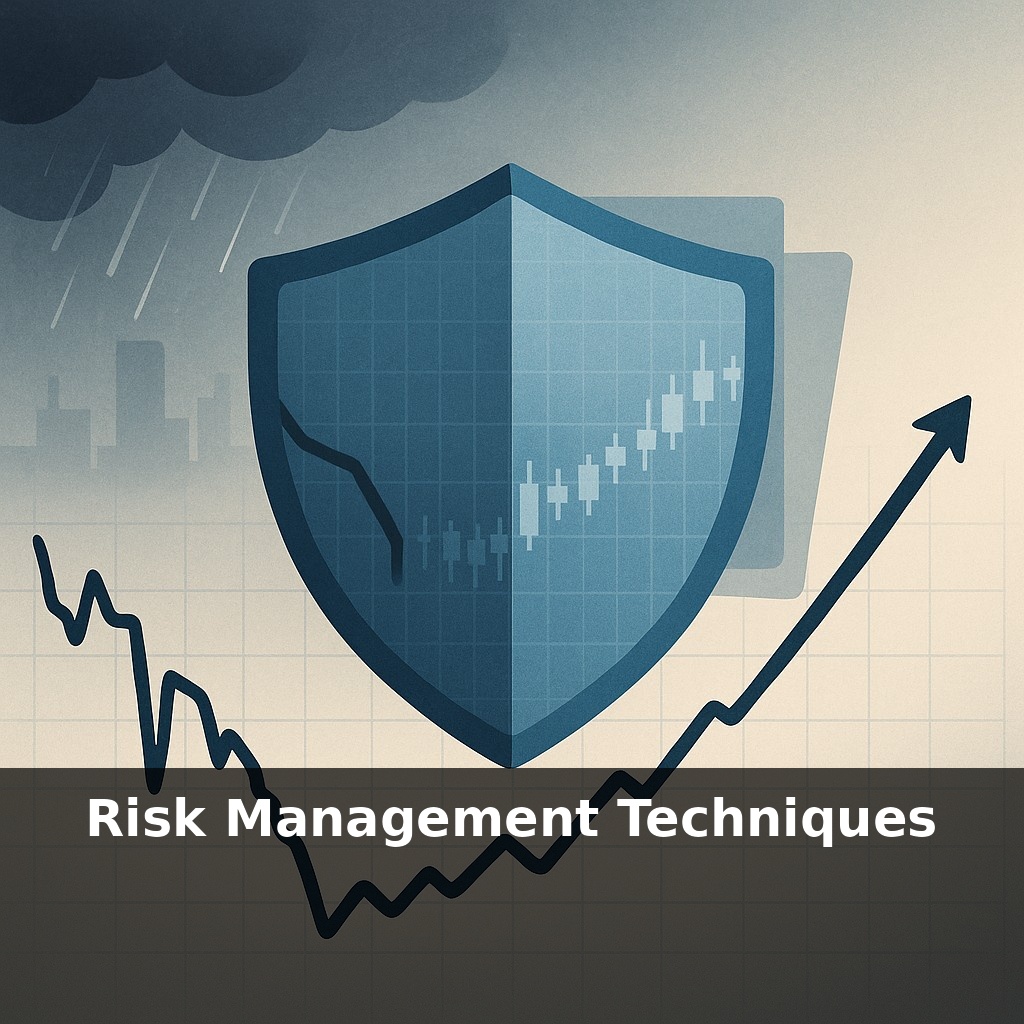
Your portfolio can drop faster in one chaotic week than it climbs in several calm years. A headline hits, your stocks sink, your “safe” bond fund wobbles. In this episode, you’ll learn how pros plan for that kind of storm *before* it shows up on your screen.
In the last episode, you saw how a bad week can erase months of quiet gains. Now we go one level deeper: *how* do skilled investors keep that chaos from wrecking their long‑term plan?
They don’t rely on one magic tool. They stack techniques.
Start with concentration risk: if 5 stocks each hold 15% of your money, one blow‑up can drag down most of your net worth. Shift to a basket of 25–30 reasonably uncorrelated stocks and you can mute roughly 90% of company‑specific landmines. Then zoom out: how much sits in stocks vs bonds vs cash vs alternatives? A 60/40 mix lost about 17% in 2022, while Bridgewater’s All Weather risk‑parity fund dropped closer to 13% by actively managing risk, not just picking assets.
In this episode, we’ll build your own risk “stack”: diversification, allocation, hedging, position sizing, and real‑time monitoring.
When markets break their usual patterns, even “balanced” portfolios can behave strangely. On 16 March 2020, the VIX hit 82.69—more than quadruple its long‑term average—while many assets that normally offset each other fell together. That’s where formal risk tools come in. Banks live by them: Basel III forces large institutions to keep at least a 3% leverage ratio and hold extra capital against risky assets. As an individual investor, you won’t run bank‑style models, but you *can* borrow the mindset: quantify, set limits, and prepare for extreme but plausible scenarios.
Start by asking a harsher question than, “How much could I lose?” Ask, “Exactly *where* could things break?” That’s what professionals do when they move from simple diversification to a full risk‑management playbook.
First layer: map your exposures. List each holding and tag it by risk type: equity (growth/earnings), interest‑rate, credit, currency, and liquidity. A portfolio that looks diversified by ticker might be 80% exposed to one macro force. For example, tech stocks, growth ETFs, and high‑yield bonds can all sink together when rates jump 2–3 percentage points.
Next, add quantitative tools. A basic Value‑at‑Risk estimate—say, “There’s a 5% chance this portfolio loses more than $8,000 in a month on $100,000”—forces you to confront the size of bad outcomes. Don’t chase false precision; instead, track how that VaR changes as you add or remove risk. Pair it with beta at the position and portfolio level. If your overall beta creeps from 0.9 to 1.3 because you kept adding cyclical names, you’ve silently dialed up market sensitivity by about 40%.
Then move beyond “typical” days. Run simple, brutal scenarios: what happens if stocks drop 25%, long‑term yields rise 1.5 percentage points, and credit spreads widen 2 percentage points *at the same time*? Plug those shocks into each position’s historical behavior. You might find that a 60/40 mix that normally swings ±1% daily can be down 20–25% in that stress case.
Now translate insights into rules. Examples:
- No single stock above 5% of total capital; no sector above 20%. - Total exposure to sub‑investment‑grade bonds capped at 10%. - Options used only to hedge, with total option premium outlay below 2% of portfolio per year. - Hard loss limits: if the portfolio drops 12% from peak, automatically cut risk by at least one‑third.
Critically, layer qualitative judgment on top. Who runs the ETF or fund you own? How did they behave in 2008 or March 2020? J.P. Morgan’s London Whale episode—over US$6.2 billion lost—wasn’t just a bad model; it was failed governance, ignored limits, and weak challenge inside the risk committee.
Think of your process like designing a software system: redundancy, rate limits, and real‑time alerts. You won’t remove risk, but you can choose *which* risks you carry, how big they are, and what happens when they start to bite.
A simple way to apply this is to walk through an actual portfolio tweak. Say you have $50,000: $40,000 in a broad equity ETF, $5,000 in a single high‑growth stock, and $5,000 in a high‑yield bond fund. On paper it looks fine, but when you tag risks you find over 80% tied to growth and credit. You run a basic stress: assume a 30% drop in growth assets and a 15% hit to high yield. That’s a $12,000 equity loss plus $750 from the bond fund—more than 25% of your capital gone in one shock.
Now apply rules: cap single‑stock risk at 3% ($1,500), trim high yield to 5% ($2,500), and move the freed‑up $6,000 into cash‑like or short‑term Treasuries. Re‑run the same stress: even if the equity ETF and high‑growth stock still lose 30% and high yield loses 15%, your total drawdown drops closer to 17–18%. Nothing “fancy” changed—just clear limits, scenario work, and repositioning based on quantified pain rather than hope.
As tools improve, your edge will come from how you *use* them. AI risk engines already scan thousands of positions in milliseconds; expect mainstream tools that flag, “A 2°C climate scenario could cut your utilities exposure by 18%,” or “Your crypto sleeve adds a 5% tail‑loss in a 2008‑style shock.” Your job: set clear limits, question model outputs, and decide *which* 2–3 big risks you’re truly willing to own over the next 5–10 years—and at what size.
Your challenge this week: take your actual portfolio and run one *extreme but plausible* scenario on it, using any online stress‑testing or risk‑analysis tool you can access. For example, shock a 25–30% equity drop plus a 1–2% rate rise. Then make one concrete change—trim, add, or hedge a position—based purely on what that scenario reveals, not on your market “hunch.”
Lock in your process now: write a one‑page risk policy with 3–5 hard limits (for example, max 4% per stock, 15% in any single sector, 10% in illiquid assets). Review it every quarter or after any 10% portfolio swing. Over 5–10 years, that simple document can prevent the kind of 30–40% hit that forces investors to abandon their plan.
Start with this tiny habit: When you open your laptop in the morning, whisper to yourself, “What’s the single thing that could derail me today?” and jot just ONE risk in your calendar next to your top task (for example, “Client might delay feedback” or “Server could go down”). Then add one five-word pre-plan right after it, like “If X happens, I’ll Y” (for example, “If client delays, I’ll refine draft” or “If server’s down, I’ll process invoices”). Do this for only one task per day, not your whole to‑do list, so it stays quick and painless.