Your brain can go dangerously off‑track long before anyone calls it “mania.” One week you’re sleeping four hours, crushing projects, overflowing with ideas; the next, your texts get riskier, your spending jumps, and friends say, “You seem…different.” Where’s the line between driven and unwell?
The tricky part is that early manic shifts rarely look like a medical emergency. They can look like “finally feeling like myself,” or “getting my spark back after a slump.” You say yes to every project, every invitation, every late‑night call. Your calendar fills, your inbox explodes, and it feels like life is finally moving at your speed. People even praise you for it: “I wish I had your energy,” “You’re on fire lately.” The social rewards can mask the warning lights—subtle changes in sleep, appetite, judgment. The same pattern that gets you promoted can also get you fired, or break a relationship. In tech especially—where hustle is a badge of honor—those early shifts can be misread as peak performance, when they may actually be the first visible signs that your brain is starting to overshoot the runway.
In this episode, we’re zooming out from labels and looking at patterns over time. Mental health clinicians talk less about single “big events” and more about trajectories: tiny shifts that, stacked together, change how your brain sets priorities, weighs risks, and reads social cues. In a fast‑moving tech environment, those shifts can hide inside promotions, product launches, or marathon coding sprints. The calendar looks impressive; the internal cost is invisible. Our goal isn’t for you to diagnose anyone, but to recognize when a streak of “on fire” starts bending toward unsafe, so help can come sooner, not after a crisis.
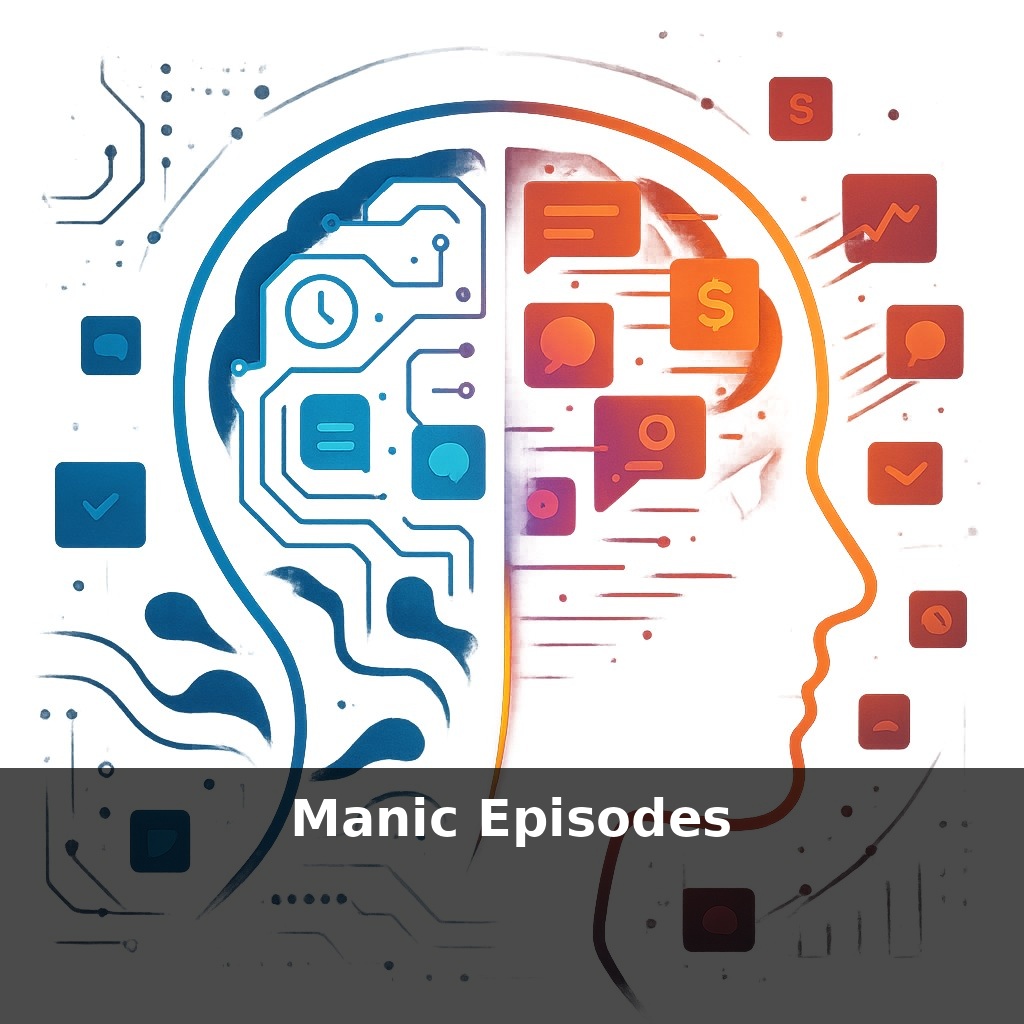
When clinicians talk about manic episodes, they’re looking for a cluster of changes that stick around and start to bend someone’s whole life out of shape. Not a wild weekend, not a launch crunch, but a sustained shift where mood, energy, and behavior all move in the same extreme direction—and don’t easily respond to normal brakes like exhaustion, feedback, or consequences.
Three threads usually weave together:
First, mood. This isn’t just “good vibes.” It can be unusually upbeat, irritable, or both—snapping at coworkers while simultaneously insisting everything is “amazing.” Criticism bounces off, or is met with anger instead of reflection. People may feel uniquely chosen, brilliant, or invincible in a way that’s out of character for them.
Second, thinking. Speech speeds up, topics jump tracks, and ideas multiply faster than they can be executed. In stand‑ups or design reviews, this can show up as derailing every agenda with new schemes, promising impossible timelines, or rewriting the roadmap on the fly. From the outside, it can look charismatic at first, then increasingly chaotic.
Third, behavior. Sleep drops off without much fatigue. Spending, risk‑taking, and boundary‑pushing climb: impulsive job quits, huge crypto bets, intense workplace flirtations, starting three side startups at once. The common thread is a sharp break from the person’s usual style, plus fallout—conflicts, financial damage, HR concerns, or safety issues.
Clinically, duration and impact matter. To count as a manic episode, these changes need to last most of the day, nearly every day, for about a week or more—or be severe enough that hospital care is needed even sooner. Shorter bursts can still be dangerous, but they’re categorized differently.
It’s also not always tied to bipolar disorder. Certain medications (like some steroids or antidepressants), substances, or medical issues can trigger an episode that looks identical on the surface. That’s why professionals check labs, meds, and physical health, not just mood.
Think of a manic episode like a complex system outage in production: you don’t just see one failing metric; multiple dashboards go red at once—performance, error rate, user complaints—and the longer it runs hot, the more collateral damage accumulates.
In tech teams, you might first notice something’s off not in someone’s mood, but in their output’s “texture.” Pull requests get longer, riskier, less tested. Slack threads stretch past midnight with confident, sweeping decisions that sidestep normal review. A founder who used to check in on burn rates starts talking only in “market domination” language, brushing off concrete constraints like runway or hiring capacity.
Sleep disruption often shows up as “I’m just in a flow state,” or “I don’t need much rest, I’m built like this.” Yet over a few weeks, calendars fill with 2 a.m. meetings, red‑eye flights, or back‑to‑back demos someone insists are “non‑negotiable.” Colleagues may feel both inspired and uneasy—pulled along by momentum but privately flagging concerns in side channels.
A manic episode is like a jazz solo that never resolves: at first it’s brilliant improvisation, but as it stretches on, the band loses the beat, the audience stops clapping, and what started as genius begins to fracture the whole performance.
Some teams are quietly piloting tools that watch for mood‑linked patterns in the background—changes in typing rhythm, late‑night log‑ins, even voice tone on calls. Not to police people, but to surface, “Hey, this might be a good week to slow down,” the way wearables nudge you about sleep debt. The frontier isn’t replacing clinicians; it’s combining digital exhaust with informed consent to give people earlier, gentler off‑ramps before things spiral.
Think of this tech as a dimmer switch, not an alarm: small nudges to step back, check in, maybe loop in a friend or clinician. Your future self isn’t just avoiding catastrophe; they’re learning their own “weather patterns.” Catching these shifts early can protect not only code and careers, but also the quieter things—trust, sleep, and the ability to choose your pace.
Before next week, ask yourself: 1) “Looking back at the last time I felt ‘invincible’ or barely needed sleep, what were the *first* subtle signs (e.g., talking faster, more spending, big new projects) that things were tipping into a manic zone?” 2) “If I started noticing those same signs this week, who are the 1–2 people I’d be willing to text or call immediately, and what exact words would I use to let them know I might be heading into a manic episode?” 3) “What is one concrete boundary I can set today—around sleep, money, or social plans—that would make it harder for a future manic mood to spiral out of control?”