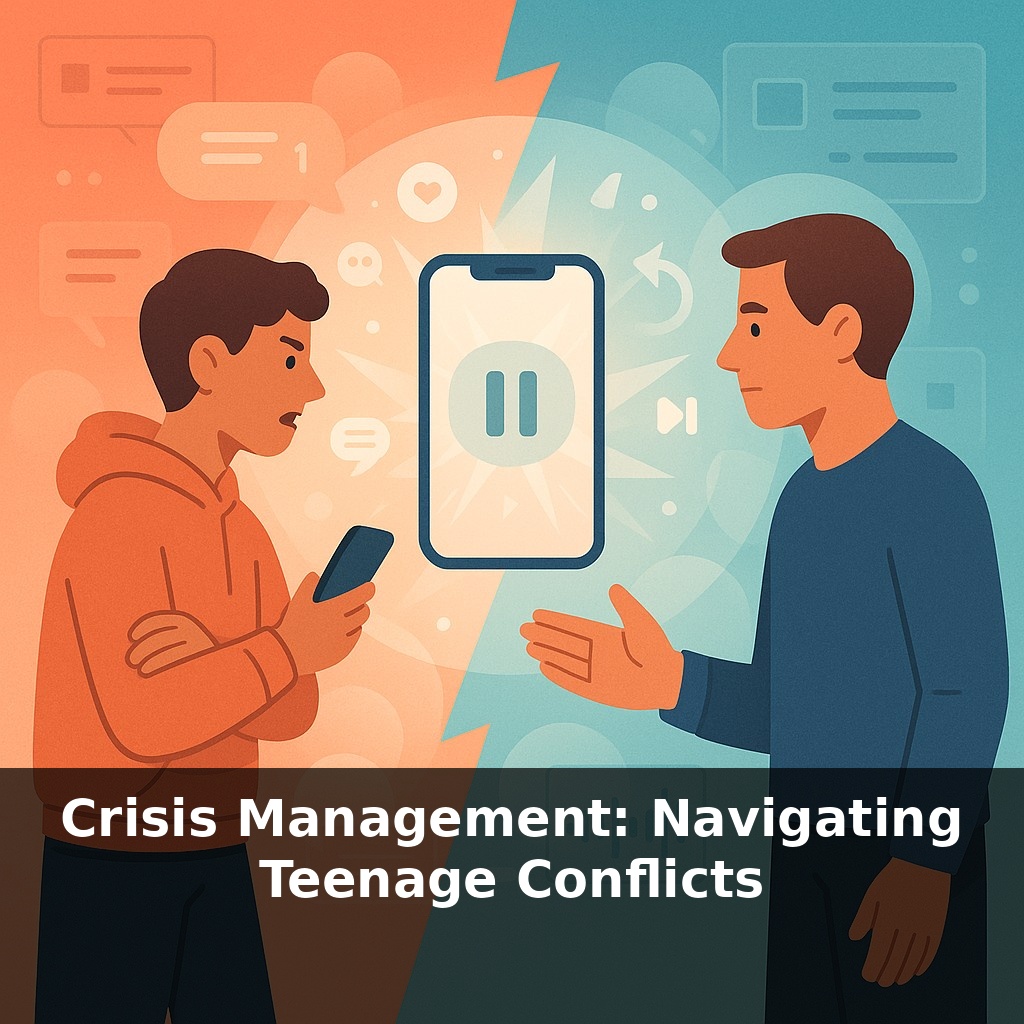
A typical teen crisis can explode in under two minutes. One slammed door, a sharp comment, and suddenly you’re in a shouting match about grades, curfews, or phones. In this episode, we’ll slow that spiral down and show you how to steer those moments instead of fearing them.
Conflict between adults and teens peaks around age 15, according to a University of Rochester study—and not just at home. Schools nationwide report thousands of discipline referrals each year, yet districts that shift from punishment to problem-solving see dramatic change. Oakland Unified’s restorative justice program cut suspensions by 47% in seven years, and similar models show drops in fights, vandalism, and chronic absenteeism. At the same time, Crisis Text Line handled over 1.5 million conversations with under‑18 texters in 2022, many describing family blowups that felt “out of nowhere.” In this episode, we’ll connect the dots: how brain changes, identity struggles, and power battles fuel these clashes—and how authoritative communication, quick de‑escalation, and collaborative repair can turn the very same crisis moments into your best opportunities for growth.
By mid‑adolescence, conflicts rarely stay “about” the original issue. A comment about homework can uncover fears about the future; an argument about screens can expose worries about friendships or safety. In one survey, 62% of teens said they “hold back” in tough talks because they expect adults to overreact, while 70% of parents said they “step in fast” to prevent disrespect. That mismatch turns routine disagreements into repeated crises. Today we’ll zoom in on the first 120 seconds of a clash—what you say, how you stand, where you look—and show how tiny shifts there change the entire outcome.
Think of the first 120 seconds of a blowup as three distinct phases: flare, fork, and frame. Your goal isn’t to “win” those two minutes; it’s to keep everyone safe enough—emotionally and physically—to solve the real problem later.
**Phase 1: Flare (0–20 seconds)** This is the slam, the “you never listen,” the eye‑roll plus muttered insult.
Your job in this window is **containment, not content**:
- Say less than 15 words at a time. Example: “I’m not okay with yelling. I’m here. Take a breath.” - Keep your volume under what researchers call “conversational level”—about 60–65 decibels. If you’re louder than a normal TV, you’re fueling the fire. - Plant your feet shoulder‑width apart, hands relaxed, about 2–3 meters away. Closer than that can feel threatening; farther can feel abandoning.
**Phase 2: Fork (20–90 seconds)** Here the conflict either escalates or starts to cool. This is where de‑escalation data really matters.
Three moves, in order:
1. **Name the emotion, not the behavior.** “You’re really frustrated,” instead of, “You’re being ridiculous.” Aim for one feeling word every 10–15 seconds.
2. **Reflect, don’t argue.** Use a simple loop: - Teen: “You don’t trust me.” - You: “You feel like I don’t trust you.” That extra sentence costs 3 seconds and often buys you 30 seconds of lowered intensity.
3. **Offer one clear choice.** “We can talk in the kitchen now, or take 10 minutes and come back.” Not five options. Two. Brains under stress handle binary choices better.
When done consistently, trainers in school crisis programs report that about 8–9 of 10 incidents stop worsening in this phase.
**Phase 3: Frame (90–120 seconds)** Now you’re setting up what happens after the storm.
Use a short script with three parts:
1. **Boundary (1 sentence):** “I won’t keep talking while we’re swearing at each other.”
2. **Bridge (1 sentence):** “I do want to figure this out with you.”
3. **Time anchor (specific number):** “Let’s pause for 15 minutes, then meet at the table.”
Notice the numbers: fewer than 40 words total, a concrete time, and a specific location. Vague promises (“We’ll talk later”) leave teens anxious or resentful; specificity lowers uncertainty, which lowers adrenaline.
Across families and classrooms that train these skills, supervisors often see measurable change within 4–6 weeks: fewer office referrals, shorter arguments at home, and more problems resolved in under 10 minutes instead of dragging on for hours or days.
A high school counselor I worked with tracked one student, “J,” for 30 days. In the previous semester, J had 12 office referrals and 3 in‑school suspensions. After the staff agreed to use the flare–fork–frame steps with him every time, his referrals dropped to 4 that month, then to 1 the next. At home, his caregiver used the same script: in week 1, they logged 9 major blowups; by week 4, they were down to 3, most resolved within 8–10 minutes.
You can run a mini‑experiment like this. For the next 14 days, pick one recurring conflict—maybe curfew or gaming. Each time it starts, silently tag which phase you’re in and apply just one new behavior: fewer than 15 words, one feeling word, or one clear choice. Jot down three numbers right after: length of argument (in minutes), number of insults on each side, and how long it takes before anyone apologizes. After two weeks, compare your “before” and “after” averages. Even a 20–30% drop on any one of those is meaningful progress—not perfection, but a clear signal the process is working.
De‑escalation skills don’t just calm tonight’s argument; they future‑proof your teen. Longitudinal data show that students in conflict‑skills programs are up to 30% less likely to drop out and 25% more likely to report good mental health at 5‑year follow‑up. At home, families who practice structured cool‑downs at least 3 times a week often report shorter conflicts within 2–3 weeks and more self‑initiated repairs from teens after about 20–25 repetitions of the same calm, consistent response.
When conflicts do blow up, treat your response like a skill you’re training, not a personality flaw to fix. Therapists often see solid change after 20–30 calm repetitions of a new pattern; in one clinic sample, families who practiced weekly for 8 sessions reported arguments dropping from 5 per week to 2 and repairs happening 40% faster.
Start with this tiny habit: When you hear your teen’s voice get sharper or louder, silently inhale once and think the words “slow it down” before you say anything back. Then, ask just one calm question that starts with “Help me understand…” and stop talking after that question. If they walk away or shut down, simply say, “I’m here when you’re ready,” and go back to what you were doing. Do this once today during even a minor disagreement, just as a low-stakes practice rep.