On Wall Street, one quiet line on a balance sheet can move billions in market value overnight. A single debt number creeps up, and suddenly analysts change their ratings, CEOs change their plans, and careers get redirected—yet most people never notice it at all.
In 2023, the typical U.S. public company had a debt-to-equity ratio of about 0.89—meaning it ran with almost as much borrowed money as owner capital. That single number sits quietly on the balance sheet, but it shapes everything from how aggressively a company can grow to how vulnerable it is in a downturn. Now layer on another shift: new lease rules (ASC 842) pulled an estimated $3 trillion of hidden obligations into the open for S&P 500 firms, instantly making many businesses look more indebted on paper, even though nothing in their actual offices or factories changed overnight. On top of that, the asset side is evolving too. Intangibles—brands, patents, software, data—have gone from a side note to the main story, now dominating the value of major companies. Reading a balance sheet today means decoding all three forces at once: leverage, obligations, and the quiet power of intangibles.
Some of the most “solid” tech giants today once looked fragile on paper: thin profits, modest hard assets, and numbers that made traditional bankers nervous. Yet investors who could read how their assets, liabilities, and equity interacted saw something different—a business model that could scale fast without collapsing under its own weight. That’s the real power of decoding a balance sheet: you’re not just checking if a company is safe, you’re asking how its financial structure will behave when growth accelerates, interest rates rise, or a new competitor appears.
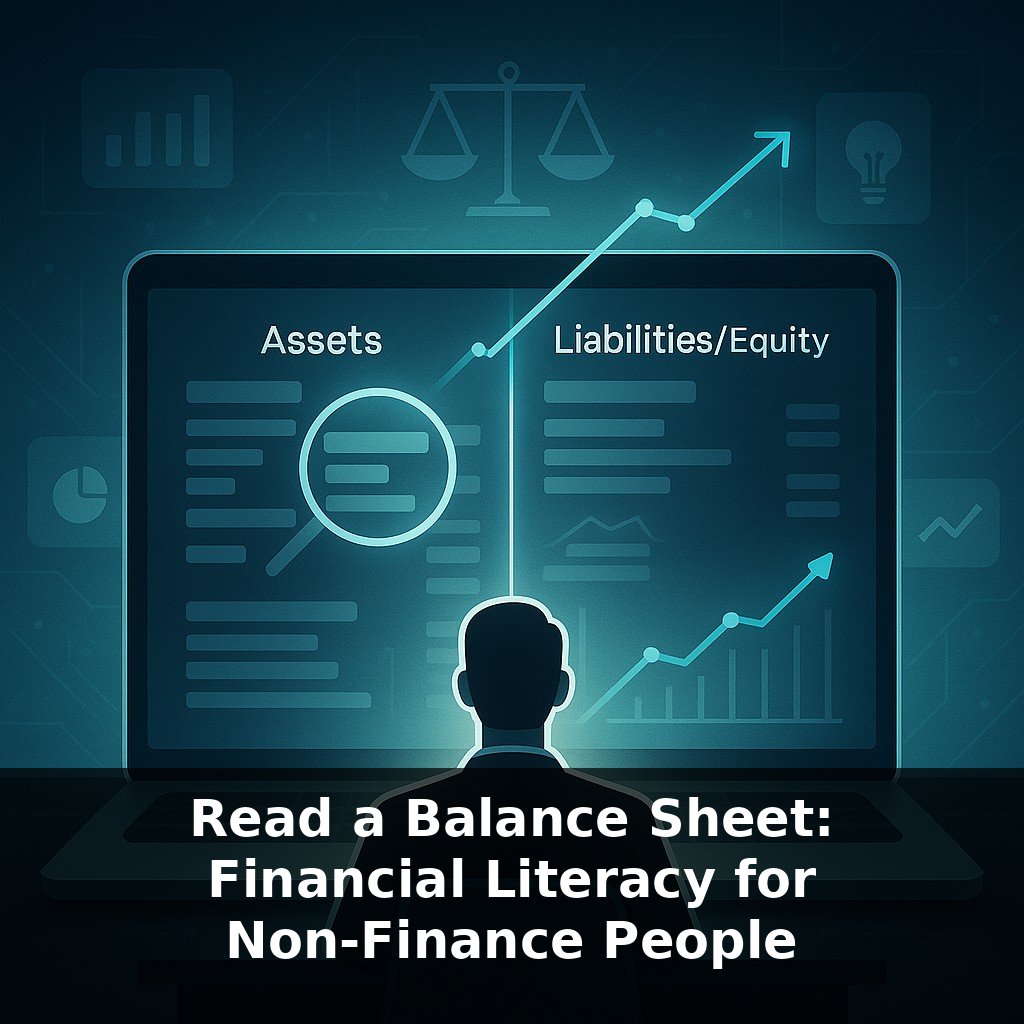
Start with the structure. A balance sheet is split into three main sections: assets at the top, liabilities in the middle, and equity at the bottom. But the real insight comes from *how* those sections are composed, not just their totals.
On the asset side, don’t just glance at the headline number—scan *what* the company owns. In tech especially, you’ll often see relatively small amounts of physical stuff (like property and equipment) and much larger lines tied to receivables, investments, or acquired intangibles. Each tells a different story:
- Big receivables? The company is effectively financing its customers—great if they pay on time, risky if they slow down. - Large cash and short-term investments? That can be a stability buffer or a sign management hasn’t yet put capital to work. - Significant acquired intangibles and goodwill? That often means the company has grown by buying others, and you should ask whether those deals are really paying off.
Move to liabilities. Break them into *current* (due within a year) and *non-current* (longer-term). The tension between current assets and current liabilities is where liquidity risk lives. Tech firms can appear flush with future potential yet be one bad quarter away from a crunch if bills come due faster than cash arrives.
Lease-related lines now matter more than ever. After the accounting changes, many firms suddenly showed higher liabilities, not because they borrowed more, but because long-term space and equipment commitments became visible. When you see large lease obligations, think about how “fixed” the company’s cost base is—how easily could it shrink if revenue dropped?
Then look at equity. It isn’t the stock price; it’s the historical residue of capital put in plus cumulative results. For high-growth companies, you might see modest or even negative equity alongside soaring market value. That gap is often where expectations, brand strength, and unrecorded intangibles are hiding.
A single tech firm can therefore look asset-light, liability-heavy, and equity-thin, yet be extremely valuable. The key is whether its assets generate cash reliably enough to service obligations without constant rescue financing.
Your challenge this week: pull up the latest annual report of a tech company you know. Skim just the balance sheet and, without reading any commentary, write down three things that *surprise* you about the mix of assets, the timing of liabilities, or the size of equity. Then check the management discussion to see how they explain those same items.
Think of two very different software firms. Company A sells perpetual licenses to big corporations; Company B runs a subscription app you pay for monthly. On paper, both might list “software” and “contracts” under assets, and both might carry similar-looking lines under liabilities. But follow the cash timing: Company A often collects large sums upfront, then recognizes revenue over years. Its balance sheet may show chunky deferred revenue (a liability), almost like prepaid rent from customers. Company B, billing month-to-month, may have tiny deferred revenue but a growing base of small, recurring receivables.
Now contrast a bootstrapped startup with a heavily funded rival. The bootstrapped firm’s equity mostly reflects retained profits; the funded rival’s equity is shaped by repeated capital raises. Both may have healthy operations, yet the second one’s cap table embeds different expectations and pressures. The numbers don’t just state “how much”; they hint at “what kind of journey” the company is financially set up for.
A balance sheet also hints at the *future*, not just the past. Watch how tech firms shift over time: rising contract assets can signal longer, stickier customer relationships, while growing “other noncurrent assets” may hide bets on AI, chips, or new regions. Think of the statement less as a static photo and more like a time‑lapse of how the firm commits resources. Subtle line‑item changes, repeated over several years, often reveal the real strategy long before press releases do.
When you revisit a balance sheet now, treat it like a weather map for financial pressure systems: clusters of short‑term payables, long leases, and thin equity are storm fronts; cash cushions, flexible costs, and renewing contracts are high‑pressure zones. Over time, tracing those systems across years shows not just where a company is, but how resilient its climate might be.
To go deeper, here are 3 next steps: (1) Download 3–5 recent balance sheets from a public company you like (via its 10-K on sec.gov or the “Financials → Balance Sheet” tab on Yahoo Finance) and walk through them line-by-line using Investopedia’s “Balance Sheet” guide open side-by-side to decode every term. (2) Open a free Excel or Google Sheets template for a balance sheet (e.g., from Microsoft Office Templates or Vertex42), then plug in your own numbers—bank balance, credit cards, loans, assets—to literally build your personal “mini balance sheet” the way they described in the episode. (3) Grab a copy of “Financial Statements” by Thomas Ittelson or “The Accounting Game,” and after each chapter on the balance sheet, pause and compare its examples to the company statement you downloaded so you can see exactly how theory maps to a real-world balance sheet.