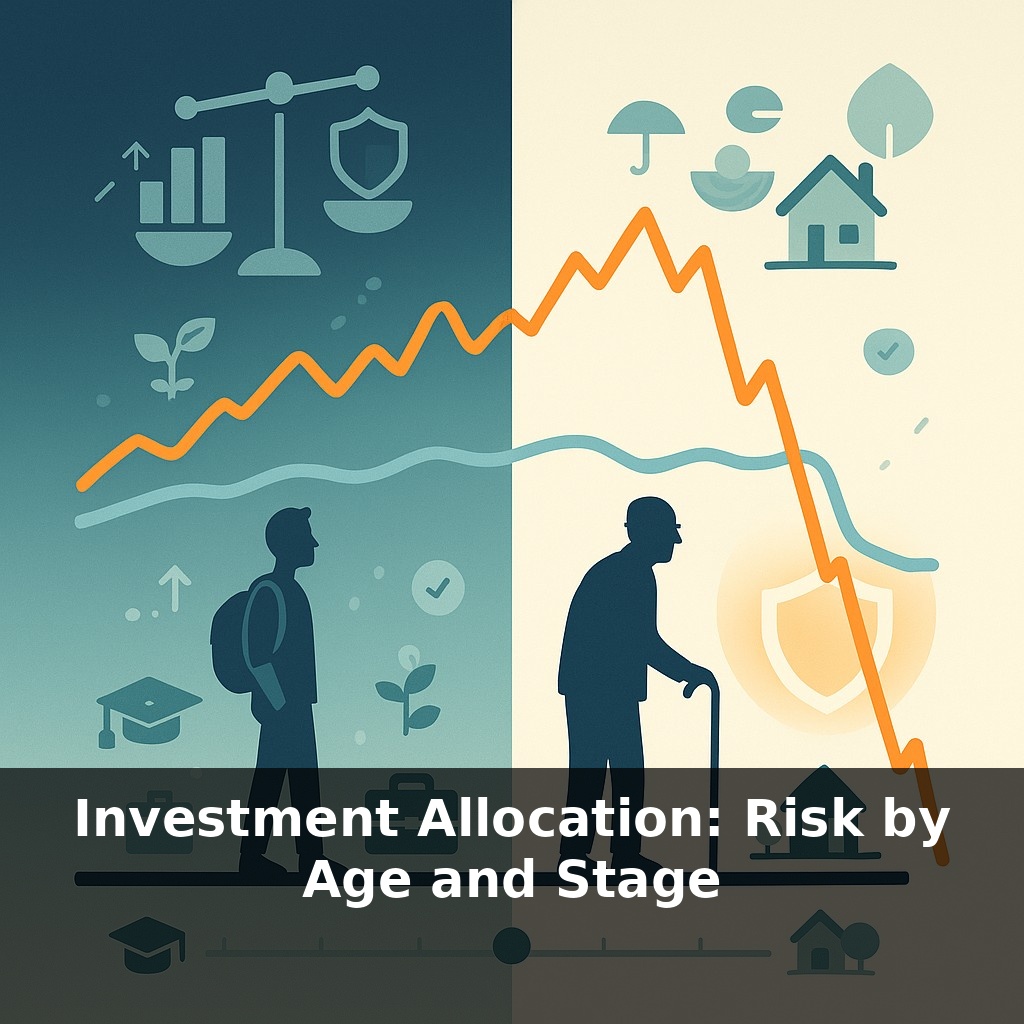
Right now, many people in their twenties hold more stock market risk than people a few years from retirement. That sounds smart—until a crash hits just before you need the money. Today, we’ll explore why “more risk when you’re young” can quietly backfire if you never adjust.
Seventy‑one out of ninety‑four times, over rolling 20‑year stretches, stocks have beaten bonds. That long‑run edge is why so many savers stay “aggressive” far longer than they should. The twist is that markets don’t care when you personally need cash: a bad five‑year window near retirement can erase the advantage of decades of great returns. So the real skill isn’t just taking risk early—it’s knowing when and how to dial it back without sabotaging growth. Think of it like a weather forecast for your money: when the storm clouds of near‑term withdrawals start gathering, you gradually pack away the beach gear and set out the raincoat, instead of waiting for the downpour. In this episode, we’ll look at how age, goals, and real‑life cash needs shape that shift, and how to avoid being caught unprepared.
So the real puzzle isn’t whether risk should change over time—it’s how *your* mix should change as your life actually unfolds. Academic “glide paths” assume a clean, linear journey, but real lives zigzag: career breaks, late‑life mortgages, caring for parents, windfalls, and health shocks all bend the curve of how much volatility you can stand. That’s why two 55‑year‑olds with the same salary might need very different portfolios. One might be stock‑heavy because a pension covers basics; the other might lean safer because every grocery bill depends on their nest egg.
Here’s where the “by age” story gets more interesting: your birth year is just one ingredient in the recipe. A better way to think about allocation is by *stage*—what your money has to do for you in the next 1, 5, and 20+ years.
One practical frame:
- Near-term bucket (0–5 years of spending) - Medium-term bucket (5–15 years) - Long-term bucket (15+ years)
The closer a dollar is to being spent, the less drama it should experience.
For someone in their 30s, the near-term bucket might just be an emergency fund and a down‑payment fund. Retirement dollars sit squarely in the long‑term bucket, so an equity‑heavy mix can still make sense. But even here, variation is huge: a tenured professor with a solid pension can stay more growth‑oriented than a freelancer whose income can vanish with one email from a client.
In your 40s and 50s, the medium-term bucket starts to matter more. College costs, catching up on retirement, maybe helping parents—these are within striking distance. That’s where a mix of high‑quality bonds, cash‑like holdings, and a still‑meaningful equity slice can smooth the path without shutting the door on growth. Notice this isn’t “turn 50, sell stocks.” It’s “as specific goals come into view, protect the dollars earmarked for them.”
By your 60s and beyond, two new variables dominate:
1. **Longevity** – A healthy 65‑year‑old might reasonably plan for 25–30 more years of investing. That argues against going ultra‑conservative. 2. **Paycheck replacements** – Pensions, Social Security, rental income, part‑time work. The more of your basics they cover, the more room you have to let part of the portfolio fluctuate.
Here’s where rules of thumb often mislead. Someone in fragile health, with no heirs and a paid‑off home, may rationally choose a calmer mix and higher spending. Another person the same age, with a family history of living into their 90s, might *need* more exposure to growth simply to avoid running short.
The key shift: instead of asking “How old am I?” ask “How long until *this pool of money* is needed, and what happens if it temporarily drops right before then?” That question, repeated for each goal, is what really sets your mix at every stage.
Think about how doctors adjust treatment over a lifetime. A child with mild asthma might get a light inhaler and yearly checkups. The same person at 65, with blood pressure issues and a slower recovery time, gets a more tailored plan: gentler meds, closer monitoring, and clearer instructions for flare‑ups. The condition’s name hasn’t changed—but the *tolerance* for side effects and surprises has.
Your investments work similarly when you line them up by purpose and timing. A 32‑year‑old saving for a home in three years may keep that down‑payment fund in very calm holdings, while pushing retirement contributions into more volatile assets. A 58‑year‑old could do the reverse with different pools: the money earmarked for spending in the next decade is treated like a fragile patient; the 20‑year‑plus pool gets the “stronger medicine” of higher‑growth assets, because it has time to recover from side effects.
Sequence risk and longer lifespans will likely push planning away from simple age brackets and toward “cash‑flow maps” that update as your life does. Expect tools that quietly watch your paychecks, medical costs, and even travel habits, then nudge each bucket’s mix without you micromanaging it—more like a nutrition app rebalancing your meals than a one‑time diet. That could make your portfolio feel less like a bet and more like an adaptive income machine.
Retirement planning, then, becomes less about nailing a perfect formula and more about staying nimble. As careers, health, and family needs shift, your allocation can shift too—like tweaking a recipe as you taste it. Over time, the real edge may come not from bravely chasing returns, but from calmly re‑balancing your mix as each new stage of life arrives.
Start with this tiny habit: When you open your banking or brokerage app to glance at your balance (like you already do), scroll once to your investment account and tap on the “Holdings” or “Allocation” view, then say out loud whether it looks “mostly stocks,” “mostly bonds,” or “mostly cash.” The next time you do this, compare that quick gut check to where the podcast suggested you *should* be for your age/stage (for example, more stocks in your 30s, more bonds in your 60s). If they don’t match, just toggle the app’s “research” or “education” tab and bookmark one article or video on target-date funds or model portfolios—no decisions yet, just the bookmark.