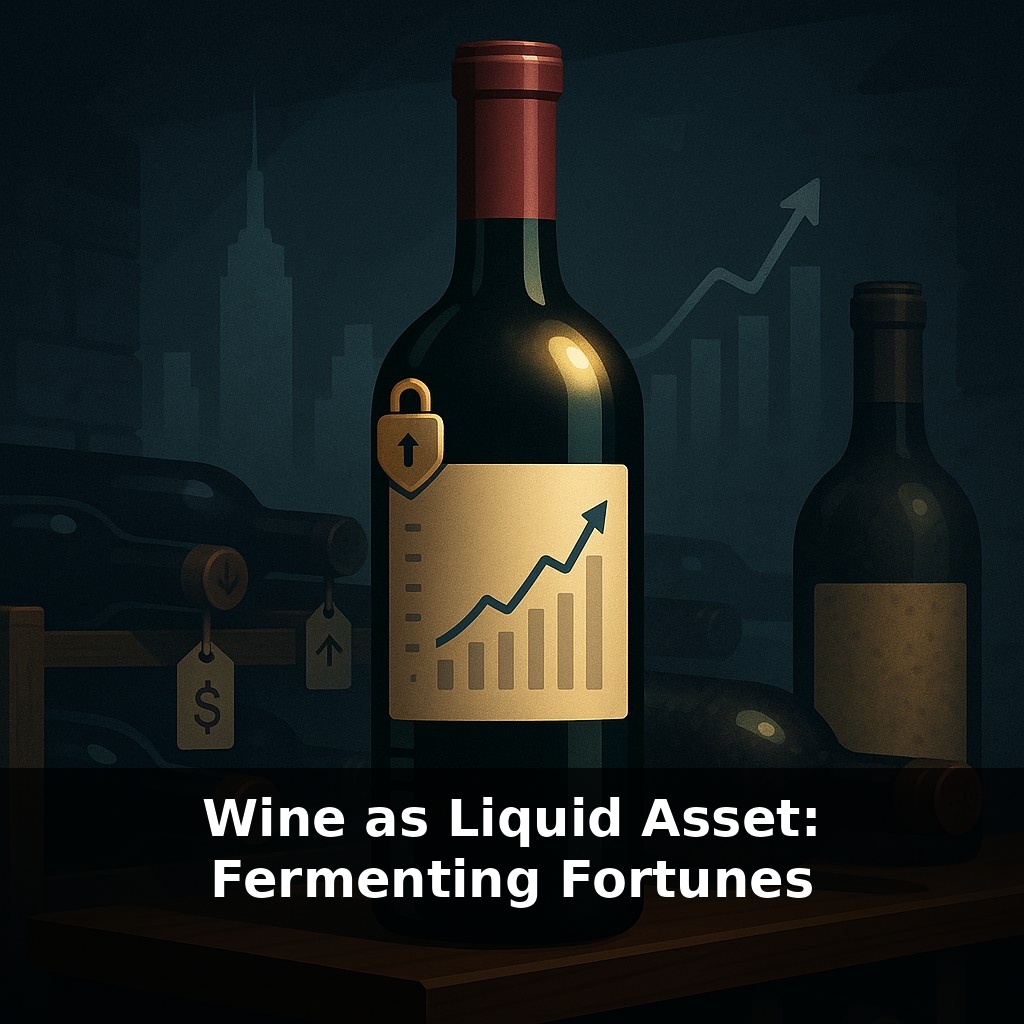
Some of the world’s wealthiest collectors store fortunes in bottles they never plan to drink. In one New York cellar, a single dusty rack quietly rivals a downtown apartment in value. Today, we step into that cool, dark world where grapes turn into a surprisingly serious asset.
Step closer to the racks and you’ll notice something odd: two bottles from the same estate, same vintage, wildly different prices. One spent its life in a bonded warehouse with climate logs and insurance; the other sat upright beside a suburban radiator. On paper, they’re twins. At auction, they’re strangers. In fine wine, the story of *where* a bottle has been matters almost as much as *what* it is. Provenance files read like travel histories, with gaps punished and precision rewarded. Overlay that with critic scores, tiny production runs, and changing weather in Burgundy or Napa, and the price chart starts to look less like a grocery aisle and more like a niche, thinly traded market with its own weather system.
Step back and the picture widens: this isn’t just rich people hoarding trophies, it’s a market with tickers, indices, and data vendors quietly humming in the background. Liv-ex screens glow in London while pallets sit motionless in Bordeaux, value changing even when nothing moves an inch. Auction houses function like quarterly earnings calls, signaling which regions are in favor and which vintages are being quietly written down. Climate risk isn’t just about harvests; shifting growing zones can suddenly anoint once-ignored areas, the way a small-cap stock explodes after a surprise upgrade.
In this strange corner of finance, almost all the “grapes” are noise and only a sliver is signal. Out of everything bottled worldwide each year, roughly one-tenth of one percent is considered investment-grade. The rest may be delicious, but it’s destined for dinner tables, not balance sheets. That microscopic slice concentrates capital in a few regions, estates, and styles, which is why a single release from a blue-chip domaine can move more like a limited IPO than an agricultural product.
Once a bottle enters that tiny cohort, the economics get very specific. Storage alone becomes a line item: professional cellars typically charge a couple of dollars per bottle per year. Over a decade, that quiet drip of cost can meaningfully erode returns on anything that doesn’t appreciate strongly. Yet cutting corners is worse. Auction data show that poor storage can knock half the value off a rare bottle, or turn it into something no reputable house will accept at all. In practice, that means serious investors outsource temperature, humidity, and handling the way a fund outsources custody.
At the top of the pyramid, the numbers turn surreal. In 2018, a single 1945 Romanée-Conti sold at Sotheby’s for $558,000—one bottle clearing for the price of a high-end house. These headline sales set psychological anchors. They shape expectations for nearby vintages, neighboring plots, and even entirely different regions, as collectors look for “the next” cult label before prices spike.
Yet for all the eye-watering records, this remains a fragile, thin market. Prices can slide sharply when enthusiasm cools or when a few big sellers hit the same label at once. It’s not just volatility that haunts this space, but authenticity. Specialists like Maureen Downey warn that as much as a fifth of rare bottles circulating privately could be fake, filled with lesser wine or even colored liquid. That risk nudges serious money toward documented channels—bonded warehouses, established merchants, and major auction houses—where each cork, label, and capsule is scrutinized.
This is also one of the few asset classes where climate nudges the supply curve every single vintage. Heat spikes, hailstorms, and shifting rainfall can squeeze the number of truly great years for a given region, re-rating old bottles when new ones disappoint, and quietly rewriting which hillsides will matter in another twenty years.
Think about how specific some bets can get. One collector might focus almost entirely on back-vintage Champagne disgorged late, another on vineyards changing hands—buying just before a legendary winemaker retires, then watching prices jump when their final vintage is declared “unmissable.” Others track shipping patterns, preferring cases that never left Europe, or even only bottles with original tissue and importer stickers intact, like tiny breadcrumbs of authenticity. A few ultra-nerds read cellar release notes the way quants read footnotes, hunting for ex-restaurant stock from three-star temples that suddenly close and quietly liquidate their lists.
Here’s where it gets stranger: you can “short” hype in a soft way by selling allocations of a hot vintage to fund purchases of a less fashionable year from the same estate, betting that critics will eventually revisit and revise. Or you can play the calendar, buying in the sleepy months when auctions thin out and merchants need to clean balance sheets. Even restaurant openings and closings become signals—when a wave of high-end venues launches in a city, certain regions suddenly drain from the secondary market, nudging prices upward.
As tech creeps into cellars, wine portfolios may start to look more like app dashboards than dusty racks. Fractional platforms could let small investors “co-own” legendary bottles, but also invite regulation déjà vu from crowdfunding. Climate winners—think upstart cool-climate regions—might become the growth stocks of tomorrow’s lists. And if fraud detection gets cheap and routine, today’s “mystery premium” could vanish, quietly repricing whole corners of the trade.
In the end, this market sits between cellar door and trading floor, where personal taste still nudges spreadsheets. Some buyers chase status labels; others quietly back overlooked regions like early-stage startups. Your edge might be a sharp palate, local knowledge, or patience—treating each cork pulled or passed as a tiny, liquid research note on value.
Before next week, ask yourself: 1) “If I treated one bottle in my rack as a ‘mini portfolio’, which specific wine (producer, region, vintage) would I consciously decide to hold for 5–10 years, and what concrete evidence—auction results, critic scores, or scarcity trends—actually justifies that choice?” 2) “Looking at my current spending on everyday drinkers vs. potential investment-grade bottles, what’s one clear reallocation I’m willing to make this month (e.g., skipping two mid-tier bottles to fund one age-worthy Burgundy or Napa Cab) that still feels fun, not restrictive?” 3) “If storage is the ‘vault’ for my liquid assets, what single, practical upgrade can I implement this week—confirming temperature stability with a cheap thermometer, researching a bonded warehouse, or reviewing insurance options—that would measurably protect the long-term value of any bottle I’m planning to hold?”