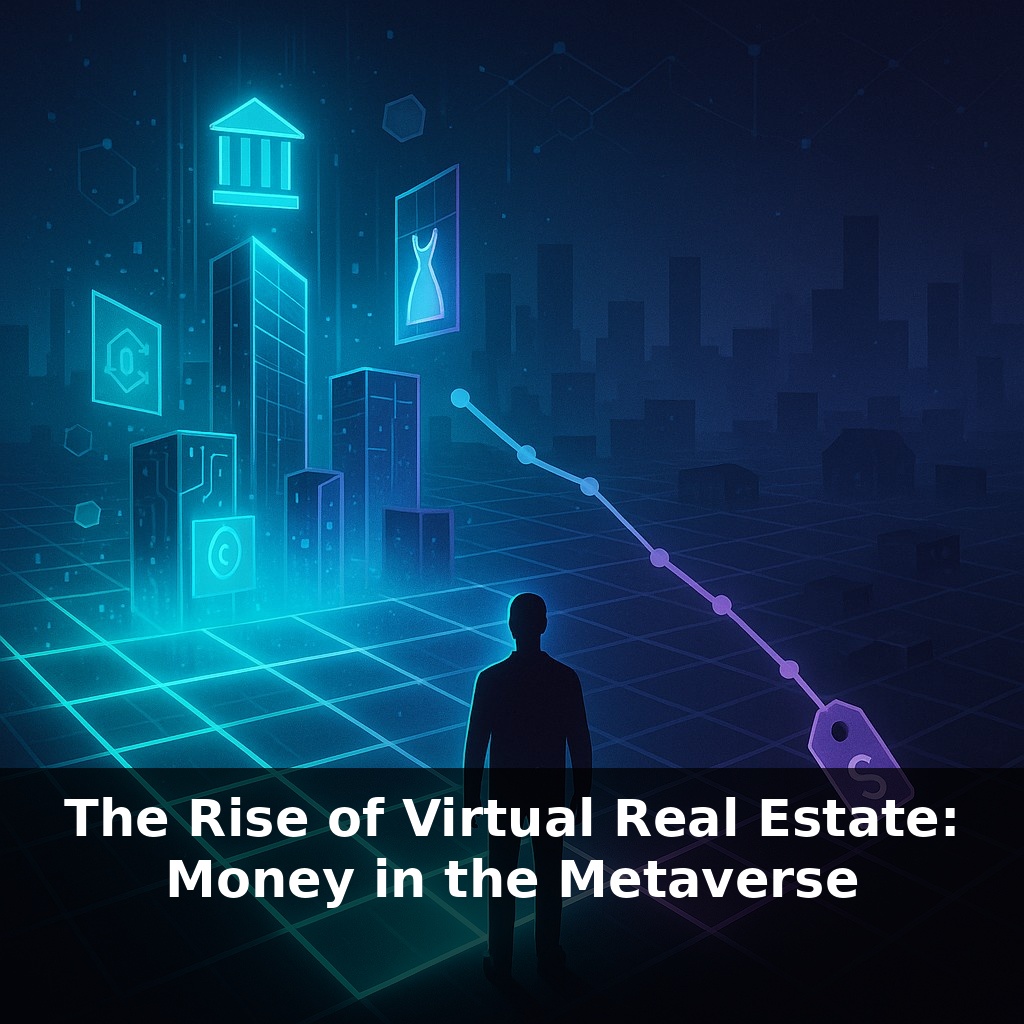
Some people paid as much for a patch of digital land as for a condo in Manhattan. Now, those same plots are worth a fraction of that. You’re walking through this virtual neighborhood, past empty lots and glowing billboards—so where, exactly, is the money here?
Step off the glowing streets for a second and follow the money. Those flashy plots weren’t just bought by crypto die‑hards in hoodies—JPMorgan set up a glowing on‑chain “lobby,” Samsung opened a branded experience, and fashion houses have staged runway shows where the front row is an avatar with a hardware wallet. The promise isn’t just bragging rights; it’s rent, sponsorships, ticket sales, and digital goods layered on top of a coordinate in 3D space.
Think of each parcel less like a static picture on a screen and more like a programmable storefront: you can charge for access, host events, lease ad space, or turn it into a mini‑game that quietly mints tokens in the background. And as brands follow attention, they’re paying a premium to sit where the virtual foot traffic flows— even if today’s “main street” feels more like a half‑finished mall at 9 a.m.
The twist is that none of this sits on a single “metaverse main street.” Instead, it’s spread across a patchwork of platforms—The Sandbox, Decentraland, Otherside and a few smaller worlds—together adding up to only a few hundred thousand parcels. On paper, that’s scarcer than many physical cities. In practice, activity is lopsided: a handful of districts buzz with concerts, NFT launches and pop‑up stores, while vast stretches stay quiet. That uneven energy is what turns some plots into high‑stakes bets and others into very expensive ghost blocks.
If you zoom in on a single plot, the money starts to look less mysterious and more like a stack of small, interlocking bets.
First comes raw location. On a map, two plots might look identical; on-chain, they can trade at wildly different prices. Why? Proximity to big brands, popular creators, or event hubs. A tiny square near Snoop Dogg’s estate in The Sandbox once sold for a premium simply because people expected spillover attention. Speculators weren’t just buying coordinates; they were buying the chance that someone else would later pay more to sit closer to the party.
Then there’s development risk. Leaving land empty is cheap but rarely lucrative. Building out a world—say, a mini music venue, NFT gallery, or game—costs real money. Studios now specialize in metaverse architecture and interactive design, charging fees closer to indie game budgets than simple web dev. That means landowners start thinking like project managers: What experience will keep strangers hanging around long enough to justify sponsorships, ticketing, or secondary sales?
On top of that sits financial engineering. Because each plot is an NFT, it can be used as collateral. The US$1.4 million Fashion Street estate wasn’t just a flex; it became something like a digital shopping district that could, in theory, back loans or revenue‑sharing deals. Some DAOs pool funds to buy high‑visibility plots, then issue governance tokens that behave like tiny shares of a virtual REIT.
Crucially, cash flow depends on people actually showing up. A branded lounge with ten visitors a month won’t command much ad spend, no matter how prestigious the buyer. That’s where analytics creep in: heat maps of avatar movement, session times, conversion from “wandered past” to “clicked buy.” If web2 obsessed over click‑through rates, web3 landowners obsess over dwell time in 3D spaces.
Underneath the hype sits a simple tension: the code can guarantee ownership, but it can’t guarantee culture. Platform devs can tweak incentives, run quests, or drop exclusive NFTs to pull crowds toward neglected corners, yet they can’t force a dead zone to become the next Fashion Street.
Here’s where it gets concrete. Think of a plot beside a crowded concert venue: during a big drop, it’s the digital version of a food truck outside a stadium. A pop‑up merch booth or a simple “teleport hub” to other cool spots can capture spillover attention and charge brands for placement. Another owner might turn their space into a rotating “seasonal” world—fashion week one month, gaming tournament the next—selling time‑limited sponsorship slots rather than permanent billboards. Others skip retail entirely and go pure infrastructure: building transit hubs, quest starting points, or guild clubhouses, then renting access to communities that don’t want to buy land outright. Some DAOs even buy quiet corners on purpose, betting that future tooling—better search, cross‑world portals, AI‑generated experiences—will make raw coordinates less important than owning interoperable, flexible spaces that can be reskinned overnight to follow the next trend.
Future implications look less like static maps and more like evolving games. As headsets shrink and browsers handle richer worlds, “land” could behave like a subscription: holders might unlock tools, data feeds, or AI NPCs that work across several worlds. Think of developers layering utilities the way fintech apps stack services on a bank account. Your challenge this week: scan one major platform, note three plots doing more than just “existing,” and ask what repeatable service they’re really selling.
Think of this less as “fake property” and more as a testbed for new business models: subscription access to creator hubs, pop‑up fan clubs that vanish after a tour, even AI‑run venues that never close. It’s closer to experimenting with recipes than buying a house—you’re paying for the kitchen where new formats for work, play, and status might quietly be invented.
To go deeper, here are 3 next steps: 1) Open a free account on Spatial.io or Decentraland and spend 30 minutes “walking” through their most popular hubs and galleries, noting which spaces are busy and how brands are using them. 2) Read Matthew Ball’s *The Metaverse: And How It Will Revolutionize Everything* alongside the Decentraland and The Sandbox whitepapers, and highlight exactly how each project defines land scarcity, ownership, and monetization. 3) Use OpenSea (filter by “virtual worlds”) or Magic Eden to compare floor prices, transaction history, and utility of at least three land collections (e.g., Decentraland, The Sandbox, Otherside), and jot down which one you’d hypothetically invest in and why based on traffic, partnerships, and roadmap strength.