You’re holding two wine bottles that look totally different… yet they taste almost the same. Here’s the twist: most people can’t actually decode a wine label, even if they drink wine all the time. Today, we’re pulling back that curtain in the simplest way possible.
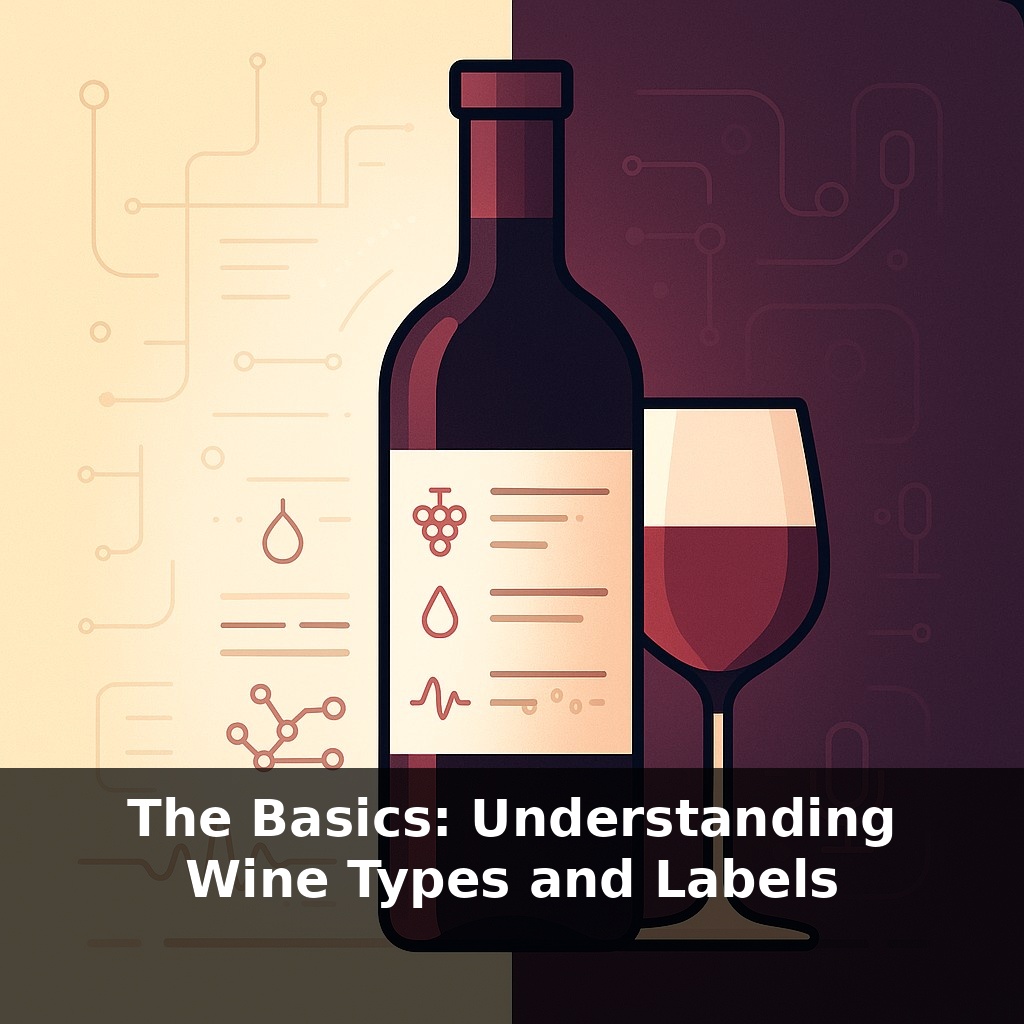
So now that you know a label isn’t just “pretty branding,” let’s go one level deeper: why do some wines feel light and zippy, while others are dark, rich, and almost chewy—before you’ve even taken a sip? The answer starts with four big families: red, white, rosé, and sparkling. They’re not just different colors; they’re built differently from day one in the cellar. Think of it like cooking with the same ingredient but changing the recipe: searing, steaming, or slow-braising the same cut of meat gives you wildly different results. Winemakers do the same with grapes—choosing how long the juice hangs out with the skins, when to capture bubbles, and how much freshness or richness to keep. When you start linking these four styles to what you already see printed on the bottle, the wall of wine at the store stops feeling random and starts to look like a menu you can actually read.
Now that those four families feel less mysterious, it’s time to connect them to what you *actually* see and buy. In a shop or restaurant, you’re not handed a grape or a barrel; you’re handed a rectangle of paper with tiny clues. That rectangle quietly answers questions you already care about: How strong is this? Will it taste crisp or plush? Is it more weeknight-streaming energy or big-celebration territory? Modern labels sneak in hints about sweetness, origin, and quality level the way a good tech spec sheet tells you what a gadget can really do—if you know which lines matter and which are just marketing noise.
Let’s zoom into that “tiny clues” idea and turn it into something you can actually use in the aisle.
Start with the **grape or region name**. If the front says “Cabernet Sauvignon,” it’s telling you the grape directly. If it says “Bordeaux,” “Chianti,” or “Rioja,” it’s using the *place* as shorthand for a typical blend and style. Old World wines (Europe) lean more on place; New World wines (U.S., Chile, Australia, etc.) usually spell out the grape. Same shelf, different language.
Next: the **vintage year**. That little number does two things. First, it hints at age: a 3-year-old bright white versus a 10-year-old structured red will feel totally different. Second, it whispers something about the weather that year—especially in regions where rain, heat, and hail can swing quality dramatically. You don’t need to memorize vintage charts, but you can notice patterns: if you loved a 2020 from one producer, their 2020s in other grapes might also hit your sweet spot.
The **appellation or region line** is where classification terms sneak in: AOC, DOCG, AVA, “Village,” “Cru.” These are basically rule-sets. Stricter rules usually mean tighter limits on where grapes can come from, how much can be produced, and sometimes how the wine is aged. That doesn’t *guarantee* you’ll like it; it just suggests someone was watching the process more closely.
Then there’s **ABV (alcohol by volume)**, usually 11–15%. Higher numbers often mean riper fruit, more body, and a richer, warmer feel. Lower numbers tend to drink lighter, fresher, and more “sessionable.” If you want a breezy dinner wine on a Tuesday, the ABV line is your friend.
For sparkling bottles, words like **Brut, Extra Dry, Sec, Demi-Sec** are sweetness codes—confusingly, “Extra Dry” is actually slightly sweeter than Brut. On still wines, sweetness might be hinted at with terms like “off-dry,” or by region styles (e.g., many German wines) rather than bold text.
Finally, the **producer name** and back-label notes: small grower? Big brand? Cooperative? Once you find a producer whose style you enjoy, that name becomes as useful as the grape itself—like following a favorite director rather than just a movie genre.
Here’s where this gets fun: take two bottles that *look* unrelated and read them side by side. Say you grab a Napa Cabernet and a Spanish Rioja. On paper they’re from different countries, grapes, and traditions, but the labels quietly hint they might scratch the same itch at dinner.
Both might show a similar ABV around 14.5%—a clue they’ll feel fuller and warmer than a 12% Beaujolais on the next shelf. Both might come from well-known sub‑regions or named vineyards, which often signals more focus and care than a broad, country‑level designation. And both might have a producer you start to recognize after you’ve seen it a few times; the day that name finally “clicks” for you, you’ve basically built your first shortcut through the wall of wine.
It’s a bit like scanning a restaurant menu: you stop reading every word and start spotting patterns—this dish is rich, that one’s light, this one’s splurgy—without the waiter giving a speech.
Only a fraction of what’s coming will fit on the glass itself. As climate pushes grapes into new territories, you might see familiar styles made in unfamiliar places, and labels will have to admit that the “map” is shifting. AR overlays and QR codes can become the deep-dive: live vineyard data, unbiased lab numbers, even side‑by‑side style comparisons—more like a nutrition label for your senses. The upside: less guesswork, more accountability; the risk: more marketing fog to cut through.
Your challenge this week: the next time you’re in a shop or restaurant, pick one bottle *solely* by reading the label details we’ve talked about—no scores, no “staff picks,” no asking for help. Before you open it, write down what you expect for body, sweetness, and intensity just from those clues. After tasting, compare notes: where did your label-based prediction nail it, and where were you off? That gap is your personal roadmap for decoding the next bottle.
The more bottles you meet, the more those tiny details start behaving like street signs instead of riddles. Over time, you’ll spot patterns the way a frequent flyer reads airport boards—quickly, confidently, and with a plan. Don’t rush it. Stay curious, keep tasting, and let each cork you pull be another data point in your own quiet experiment.
Before next week, ask yourself: “Next time I’m in a wine shop, which **one grape** (like Sauvignon Blanc, Pinot Noir, or Malbec) do I actually want to explore, and what do I already know about how it’s *supposed* to taste from the label?” When you pick up a bottle, ask: “Based on this label—region (like Bordeaux vs. California), vintage, and terms like ‘estate bottled’ or ‘DOC’—what do I realistically expect this wine to taste and feel like, and why?” After you try it, reflect: “Which parts of my guess were right or wrong, and what does that teach me about trusting (or questioning) what the label is telling me next time?”