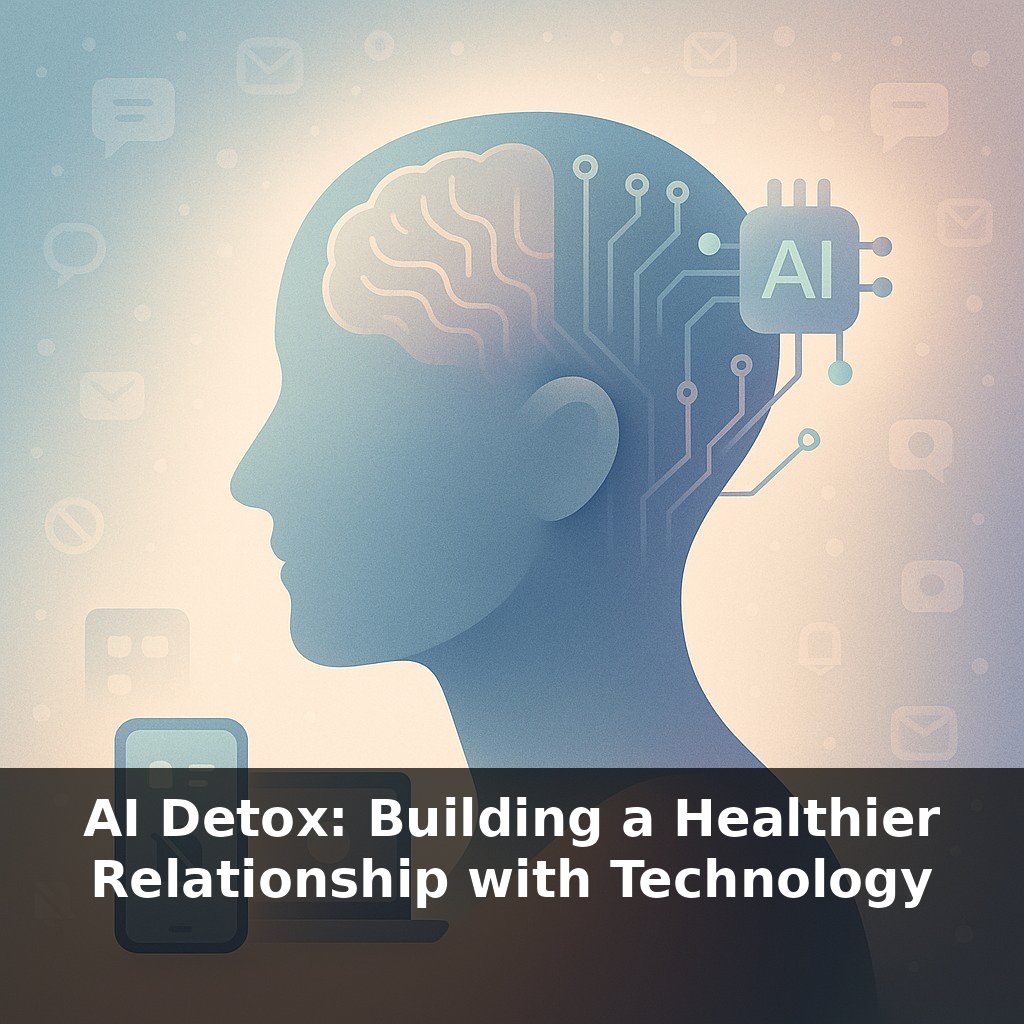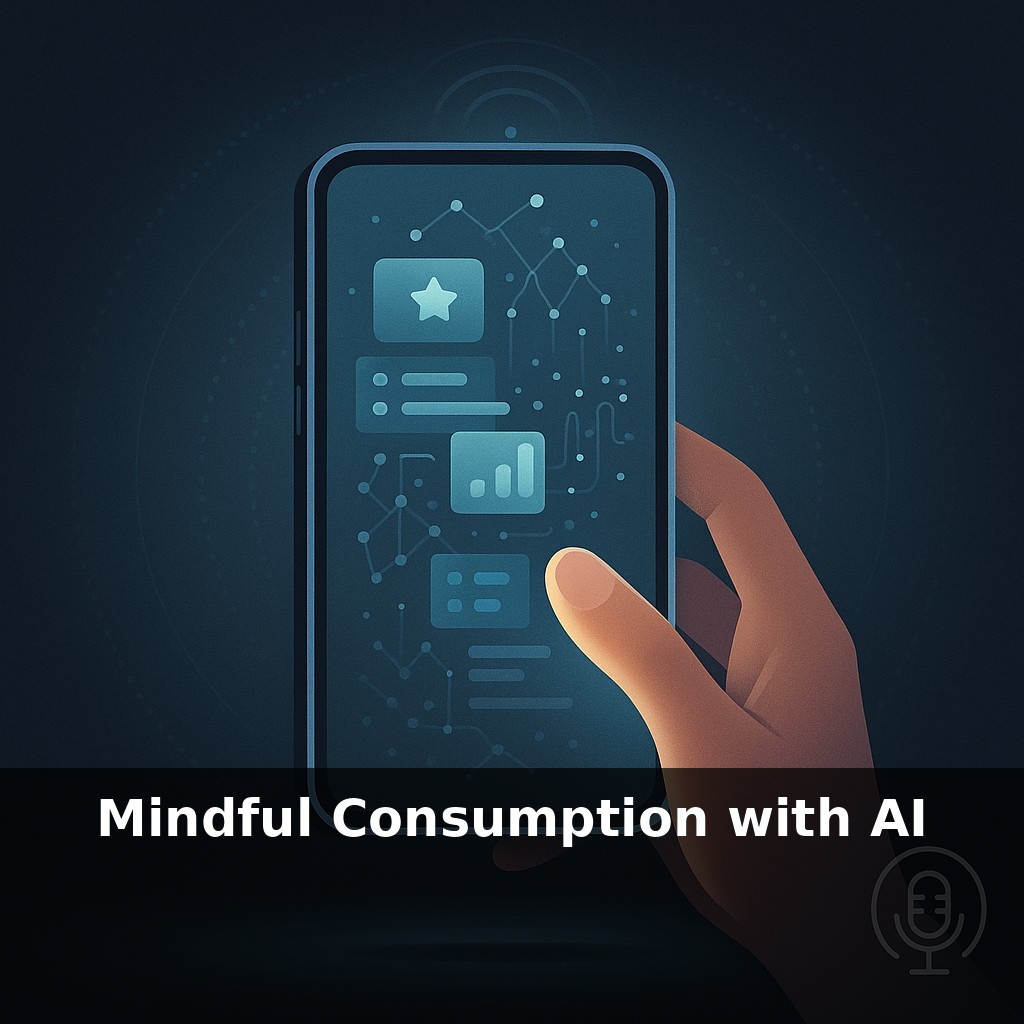
About a third of adults say they spend too much time on their phones—yet most of us still unlock them without thinking. In this episode, we step inside that quiet moment between the buzz and the tap, and ask: what if AI could protect that moment instead of stealing it?
Right after that unconscious tap, something else quietly switches on: ranking systems deciding what you see first, what can wait, and what you may never notice at all. Most feeds are tuned to amplify whatever keeps you there longest, even if it leaves you feeling drained. But a growing group of designers, researchers, and companies is experimenting with a different mandate: help you leave the app feeling better than when you arrived.
Instead of flooding you with updates, AI can reorder, hide, or even delay content so that the first thing you see actually matches your current priorities—sleep, focus, calm, or connection—rather than pure novelty. It can notice patterns you miss, like late-night doomscrolling after stressful meetings, and gently interrupt them. In this episode, we’ll explore how that invisible layer can shift from exploiting your attention to quietly defending it.
Instead of treating your screen time as one big blur, these systems can start to notice its different “modes.” A rushed check-in between meetings calls for different inputs than a slow Sunday morning scroll. That’s where AI-driven wellbeing features come in: not to scold you for being online, but to help your apps respond differently when you’re tired, stressed, focused, or just bored. Some platforms already experiment with this, nudging users toward sleep content at night or surfacing calming tools when certain search patterns spike. The frontier now is giving you a simple, human way to steer those shifts.
Most people never touch the settings that quietly shape their feeds, which is why “wellbeing” tools only work when they’re almost invisible and still meaningfully under your control. The interesting shift isn’t just swapping one ranking formula for another; it’s teaching the system to treat your time and mood as success criteria, not just your taps and swipes.
On the technical side, the building blocks are already familiar from recommendation engines—only the objectives change. Collaborative filtering, which usually predicts “people like you also clicked this,” can instead learn “people like you tended to feel better and stop scrolling sooner after this kind of content.” Reinforcement learning, normally tuned to maximize watch time, can be trained to maximize healthy patterns: more breaks, fewer late‑night spirals, more returns to a small set of personally meaningful creators instead of endless novelty.
That’s what’s behind some of the early numbers. YouTube’s 70% drop in borderline content views didn’t come from hiring an army of new moderators; it came from telling the system that keeping you inches away from conspiracy videos no longer counted as a win. Pinterest’s 88% reduction in self‑harm content relied on machine‑learning models that got better, over time, at spotting risky images and queries and quietly rerouting those moments toward coping resources instead.
Crucially, these systems don’t have to decide “for everyone.” A wellbeing‑oriented design can expose dials you can actually understand: “Show fewer heated political debates,” “Limit recommendations from channels I binge but regret,” “Prioritize educational videos on weekdays.” Natural‑language processing makes this far more flexible; you can describe what you want in plain language rather than hunting through obscure menus.
This is also where break prompts and session‑length nudges become smarter. Instead of a one‑size “You’ve been watching for 30 minutes” pop‑up, the system can notice that after three short, focused visits you usually feel done, whereas long, late sessions correlate with searches linked to stress. That doesn’t mean locking you out—it means offering a well‑timed suggestion when you’re most likely to appreciate it, and staying out of the way when you’re deliberately immersed.
If these patterns continue, Gartner’s prediction—that a sizable share of consumer brands will ship with digital wellbeing defaults—looks less like a niche trend and more like baseline hygiene. The open questions now are less about what’s technically possible, and more about trust: who sets the goals, how transparent the trade‑offs are, and how easily you can opt out or reshape what “time well spent” means for you.
Consider how this could look across different apps you already use. A news app might quietly learn that you feel better skimming one in‑depth explainer and a local update than twenty outraged hot‑takes, then start treating that calmer pattern as a success. A music service could notice that certain playlists consistently help you transition out of work mode, and automatically float them to the top right before your usual log‑off time. A learning app might detect when you’re hitting cognitive overload and offer a quick review module instead of pushing a brand‑new concept.
Some teams are even prototyping “wellbeing profiles” you can switch between—focus, unwind, connect—each with different rules for what gets boosted or muted. Here, AI acts less like a DJ taking random requests and more like a sound engineer for your day: adjusting levels, cutting background noise, and making sure the main track—the thing you actually care about—stays audible.
As these tools mature, they may start coordinating across your whole digital life: one system noticing your energy dips, another reshaping your calendar, a third softening the tone of feeds when you’re under pressure. Like city traffic lights syncing up to keep cars flowing, your apps could share just enough context to prevent pile‑ups of stress. The tension will be how far you let them collaborate without feeling like your day is being quietly autopiloted.
As more brands bake this in by default, the question shifts from “Can tech calm down?” to “What role do you want it to play?” You might lean on it like a running coach, testing pacing and rest, or keep it as a quiet safety net. Either way, the next frontier isn’t quitting screens, but teaching them to meet you at the life you’re actually trying to build.
Try this experiment: For the next 48 hours, every time you’re about to ask an AI a question, pause and add one sentence that clarifies your real intention (e.g., “I want reassurance,” “I’m avoiding a hard decision,” or “I genuinely need data I don’t have”). Then, for three of those prompts, run a “human-first vs. AI-first” test: once, handle it without AI for 10 minutes, and another time, go straight to AI—afterward, compare which approach left you feeling clearer, calmer, and more empowered. Finally, pick one recurring AI use (like news summaries, meal ideas, or productivity hacks) and set a playful limit—such as “only 3 prompts per day”—and see whether your reliance, stress level, or satisfaction with the results changes by the end of the two days.