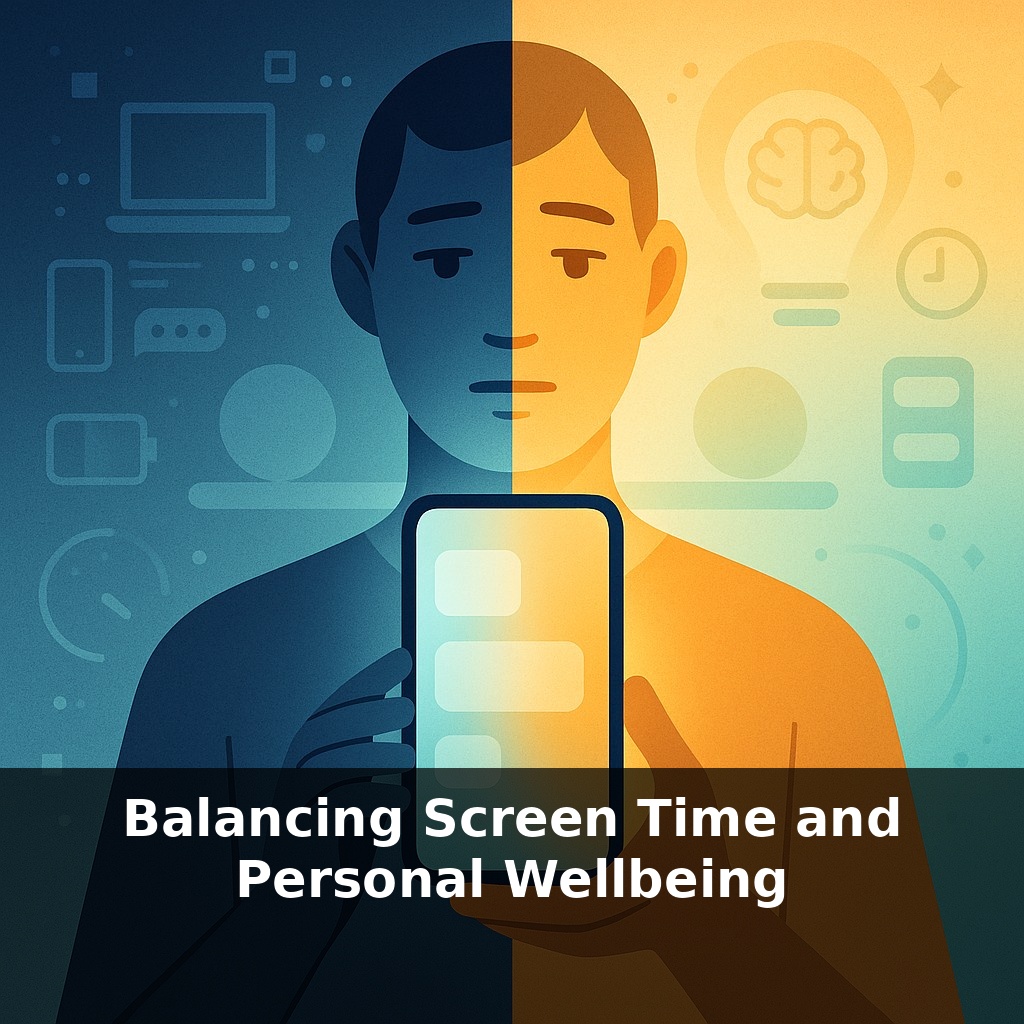
About half your waking life now happens through a screen—scrolling, streaming, working, “just checking one thing.” Yet here’s the strange part: screens can leave you drained or genuinely restored… and it’s often the same apps. So what quietly tips that balance each day?
Seven hours and four minutes. That’s how long the average adult in the U.S. spent in front of screens each day in 2023—nearly half of every waking day routed through glowing rectangles. Yet research keeps saying the same awkward thing: the problem isn’t simply “too much screen time.” Content, timing, and your own habits matter far more than the raw number of hours.
We now know that late‑night blue light can quietly delay sleep, but a carefully chosen online course can sharpen your career. A doomscrolling session can drain you, while a 20‑minute call with a friend can lift you for hours. The difference isn’t the device; it’s *how* and *when* you use it, and what supports or sabotages your intentions.
This is where design—of your tools, your routines, and even your spaces—comes in. Instead of relying on willpower alone, you can set up a kind of “digital auto‑pilot” that nudges you toward what actually leaves you feeling better after you disconnect.
Think of this episode as shifting from “I should use my phone less” to “How do I want my *day* to feel?” Instead of counting minutes, researchers are looking at patterns: when you’re most likely to slip into doomscrolling, what tends to protect your sleep, and which digital choices actually leave you more energized after. That’s where self‑monitoring and AI‑powered nudges become useful: not as strict parents, but as quiet dashboards. Like a smart thermostat learning your preferences, they can help you spot tiny tweaks—notification timing, app order, screen locations—that add up to a calmer, more intentional routine.
If the earlier sections were about *why* your days feel hijacked, this part is about *where* it quietly happens.
Researchers keep noticing the same pattern: it’s not usually the big decisions (“I’ll watch a movie”) that derail you, but the small, automatic ones—unlocking your phone in line, opening “just one tab,” checking messages between tasks. Those micro‑choices cluster around specific situations: when you’re tired, bored, avoiding a task, or seeking a quick hit of connection.
So instead of trying to “use devices less” in the abstract, it’s more useful to map your **high‑risk moments**:
- Transitions: finishing a meeting, getting off a call, stepping away from deep work. - Low‑energy pockets: late afternoon dips, just before bed, right after waking. - Emotional spikes: after stressful emails, conflicts, or unsettling news.
What’s new in the research is how **substitution** and **time‑boxing** work best when aimed precisely at those points. For example, swapping 30 minutes of passive scrolling with a walk isn’t about moral virtue; that University of Michigan meta‑analysis found a nearly 20 % drop in depressive symptoms with that single trade. But the swap actually sticks when you pre‑decide *where* it goes: “The 15 minutes after lunch are for a walk, not my feed.”
This is also where AI‑driven focus features help most: not as general productivity tools, but as *contextual breakers* of your default patterns. If focus modes automatically kick in during your known slump hours, you’re less likely to ping‑pong between work, chats, and news. Fewer task switches mean your brain gets to stay in one lane long enough to feel completion, not perpetual fragmentation.
Think of it like re‑architecting a city’s traffic flow: instead of banning cars, you add better signals, clearer lanes, and well‑placed detours. You still move through the same terrain, but with far fewer jams and collisions between your intentions and your attention.
Think about three moments in a typical day where things quietly slide off track. Maybe it’s the 10 minutes between meetings that regularly turn into 40, the “quick check” after dinner that consistently pushes bedtime, or the mid‑afternoon dip where you bounce between tabs instead of finishing anything. Those are your “leverage points”: small windows where tiny changes pay off disproportionately.
For example, a software engineer I worked with set a rule: the first 15 minutes after each meeting are for writing a two‑sentence summary and one next step—nothing else. Paired with an AI focus mode that muted alerts during that short window, her follow‑through on projects jumped, even though her total online hours barely changed.
Or consider a parent who noticed their mood crashed during post‑work scrolling on the couch. They created a simple swap: headphones on, one podcast episode while cooking, messages only afterward. Same devices, same household—just a different script for that fragile hour.
Your challenge this week: pick **one** recurring moment where you feel most derailed—right after lunch, late at night, or when a task feels intimidating. For the next 7 days, design and test a tiny “default script” just for that slice of time. Examples:
- After lunch: 12 minutes of walking or stretching before you open any feeds. - After work: 20 minutes of offline decompression (shower, short workout, or reading) before you touch your phone. - Before bed: last 30 minutes are “low‑light, low‑input”—only calming audio, paper, or journaling.
Lock it in with one concrete support: schedule an automatic focus mode, move one tempting icon off your home screen, or set a single reminder that pops up exactly at that vulnerable moment. At the end of the week, ask: did this micro‑tweak leave me feeling more rested, more present, or more in control? If yes, keep it and design the next one.
Soon, your devices may feel less like billboards begging for attention and more like a good coach on the sidelines—tracking strain, spotting overload, and quietly adjusting your “game plan” in real time. As laws push for healthier defaults and AR spreads interactions across your surroundings, the question shifts from “How do I use this less?” to “How do I want this to shape my day?” The opportunity—and risk—is that the next interface will be your nervous system itself.
The real experiment isn’t using less, but using *deliberately*. As you tweak one fragile moment at a time, patterns emerge—like adjusting a soundboard until the mix fits your day. You might notice which online spaces reliably energize you, or which drain you. Follow that trail with curiosity, and let your routine become a living prototype you keep refining.
Start with this tiny habit: When you pick up your phone to scroll social media, first tap your settings and turn on the 15‑minute app timer for the platform you’re about to open (Instagram, TikTok, or YouTube). Then, before you hit “Later” or “Ignore,” take exactly one slow breath in and out while your thumb rests still on the screen. If the timer pops up again, gently close the app once—no debating, just a quick “okay, I’m done for now.”