A hospital patient with sickle cell disease walks in for an experimental treatment… and walks out months later free of crisis for the first time in years. The tool behind that quiet miracle? A gene editor so cheap and precise it spread through labs in just a few years.
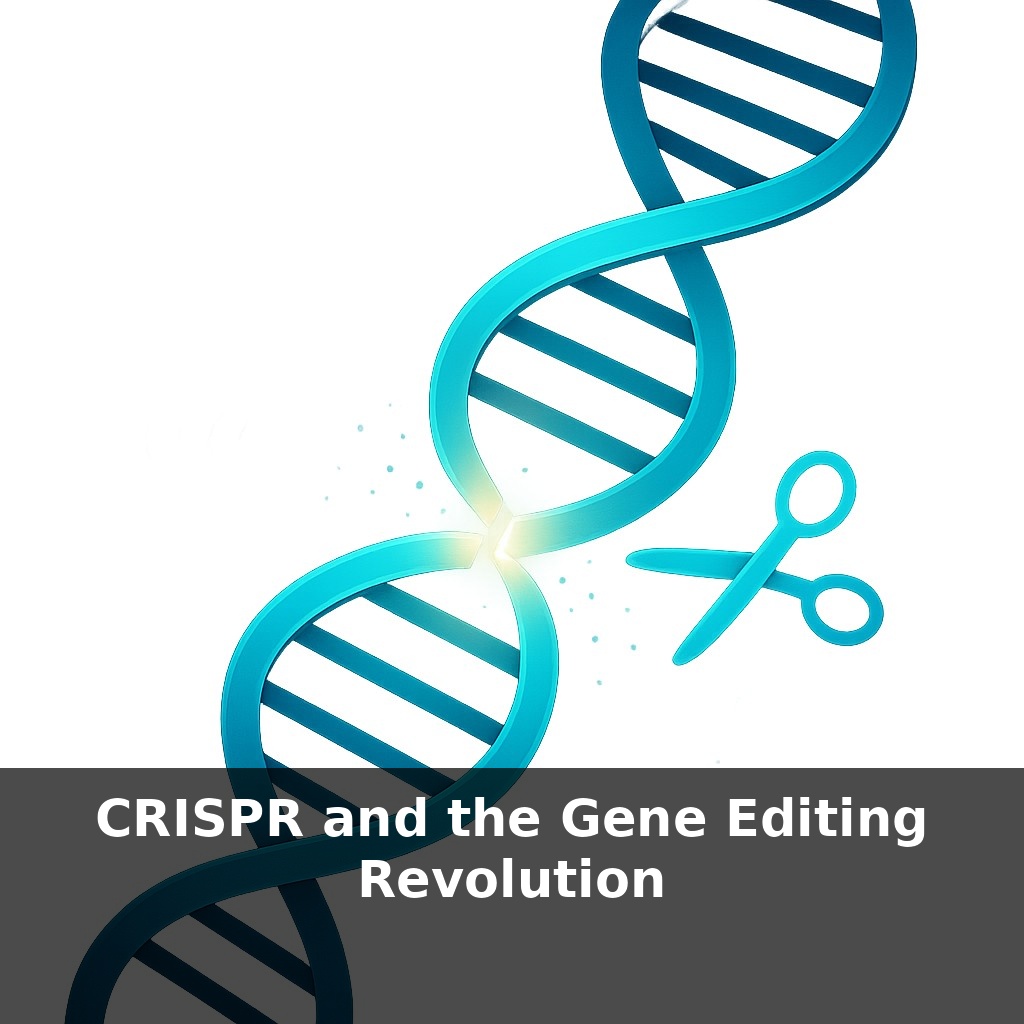
CRISPR didn’t begin in a sleek biotech lab; it started as a weird pattern in bacterial DNA that most scientists ignored. Rows of repeated genetic “signatures” looked like clutter—until a few curious microbiologists realized they were battle scars from ancient viral attacks. Bacteria were keeping receipts on every virus that tried to kill them.
Once researchers decoded that defense system and bent it to human purposes, biology shifted from passive observation to active rewriting. That’s why you now see CRISPR everywhere: in startups editing pigs so their organs won’t be rejected by humans, in crops tuned to survive drought, and in labs quietly rerunning classic experiments in weeks instead of years.
This episode, we’re going to zoom out from the hype and look at what this shift really means: scientifically, economically, and ethically—especially once editing moves from rare diseases to traits, and maybe, one day, to embryos.
But before we jump to designer babies or dystopian food systems, it’s worth grounding this in what’s already real. In labs, CRISPR is less sci‑fi and more like a standard power tool: students use it to probe why a single mutation derails heart cells, or to switch off genes one by one and see which changes let cancer cells slip past drugs. Farmers and seed companies are testing crops that shrug off heat waves or salty soils, not by importing foreign DNA, but by tweaking what’s already there—more like careful pruning than grafting on a new branch. And in hospitals, clinicians are cautiously moving from fixing cells in a dish to editing cells inside the body itself.
When people say “CRISPR,” they usually mean one celebrity protein, Cas9—but that’s like judging all of computing by a single laptop. In reality, researchers are assembling a whole stack of molecular tools, each tuned for a different job. Cas12 prefers slightly different DNA landing sites and makes staggered cuts that can be handy for certain edits. Cas13 doesn’t touch DNA at all; it targets RNA, the fleeting messages cells use to turn genes on and off. That opens doors to temporarily silencing a viral infection or dialing down an overactive immune signal without permanently altering anyone’s genome.
Then there are the “surgical” upgrades. Base editors don’t slice through the double helix; they chemically flip one letter at a time, more like correcting a typo than rewriting a sentence. Prime editors go a step further, swapping in short stretches of new text with far less collateral damage than an ordinary break-and-paste. These refinements matter because the closer CRISPR gets to real patients, the more unforgiving biology becomes. A messy cut tolerated in a lab dish can be catastrophic in a bone marrow transplant.
Delivery is now the bottleneck. Editing blood cells outside the body is relatively straightforward: extract, modify, check, reinfuse. Editing inside—the retina, the liver, the brain—means smuggling these proteins and guide RNAs past the immune system and into the right cell types. Companies are experimenting with viral shells, fat bubbles called lipid nanoparticles, and even engineered protein “capsules” that act like targeted couriers dropping off genetic cargo at specific cellular addresses. Each delivery route has trade‑offs: permanence vs. reversibility, dose vs. safety, precision vs. cost.
All of this is happening against a surprisingly pragmatic backdrop. Many of the 60‑plus ongoing trials aren’t chasing super‑intelligence or designer physiques; they’re going after narrow but devastating conditions: inherited blindness, certain leukemias, cholesterol pathways that drive heart disease. Regulators have drawn especially bright lines around work that could pass changes to future generations, while being more flexible for severe, otherwise untreatable illnesses in living people.
Yet as the toolbox gets cheaper and more efficient, the frontier will creep. Editing embryos is already banned or tightly constrained in most countries—but editing sperm or eggs in a dish for research, or making subtle tweaks in stem cells that persist for decades, sits in a grayer zone. That’s where the “who decides?” questions stop being theoretical. It’s not just scientists and ethicists anymore; it’s insurers, parents, investors, and eventually, patients weighing which risks feel acceptable when the alternative is watching a disease unfold in slow motion.
In practice, the frontier looks less like sci‑fi and more like a series of careful, high‑stakes hacks. One trial dials down a single cholesterol‑regulating gene in the liver, aiming for a one‑time injection that replaces a lifetime of statin pills. Another edits immune cells so they recognize a patient’s tumor while ignoring healthy tissue—like retraining a security team with new facial‑recognition software. And in agriculture, developers are quietly pushing forward wheat that resists devastating fungi and tomatoes that stay firm longer on the shelf, without the regulatory baggage of older GM labels.
Sometimes the most interesting work isn’t about cures at all, but diagnostics: CRISPR‑based tests that light up in the presence of viral RNA, turning a simple strip of paper into a lab‑grade detector. The paradox is that as these tools get cheaper and more versatile, the line between “experiment” and “application” blurs. When every lab can run edits for under a hundred dollars, deciding which projects should proceed becomes a cultural choice, not just a technical one.
As costs fall, editing starts to look less like rare surgery and more like routine maintenance. Health systems could one day schedule single‑shot fixes for conditions we currently manage for life, forcing insurers to rethink premiums the way solar power reshaped utility bills. Nations might treat biodiversity like a shared investment portfolio, debating which species to “rebalance” after climate shocks. The risk is a patchwork world where some populations are upgraded, while others remain biological “legacy systems.”
We’re early in this story, closer to dial‑up than fiber‑optic biology. The next twists may come from unexpected corners: community labs, startup garages, or countries betting big on bio‑industry. Your challenge this week: map one part of your life—food, health, or work—where a single genetic tweak could quietly rewrite the rules.