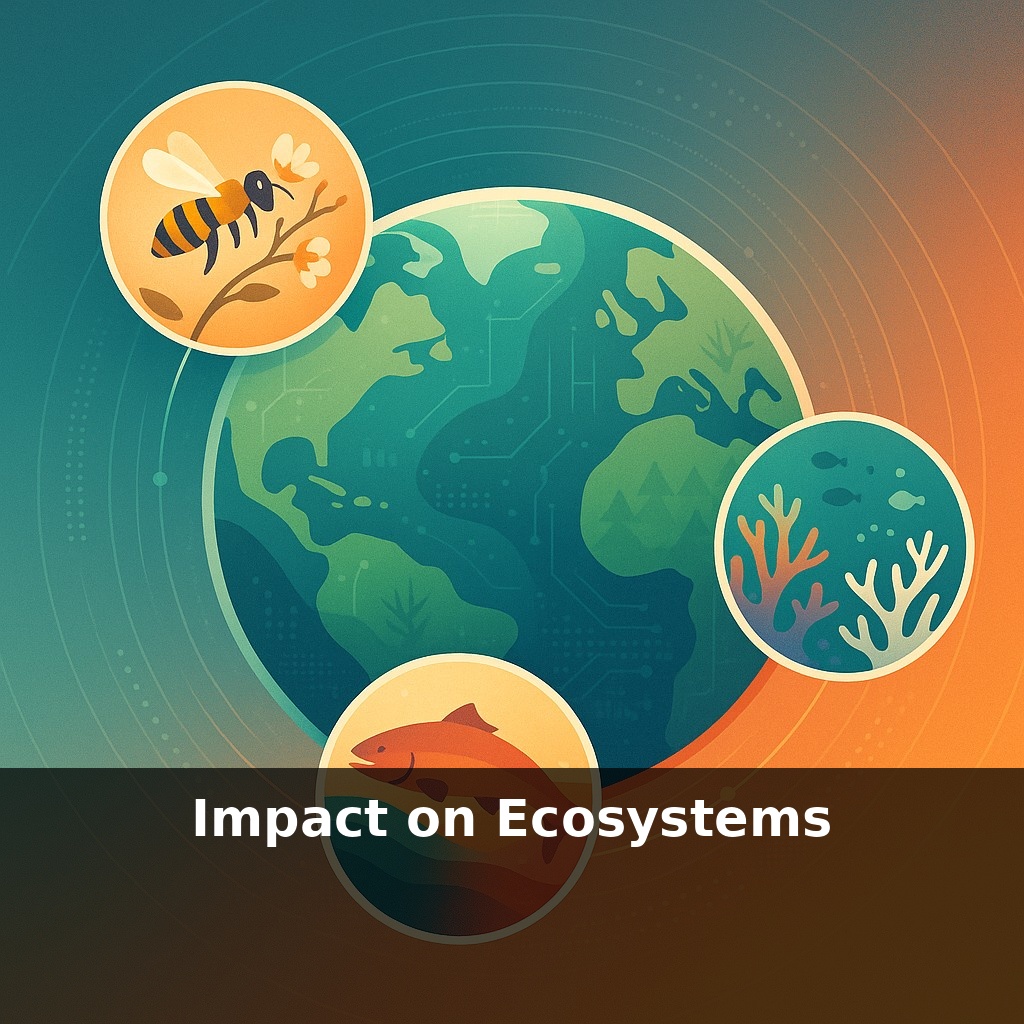
Right now, nearly a million species are standing at a crossroads between survival and disappearance. A bee searching for flowers that bloom too early. A salmon meeting warmer rivers. A coral reef turning ghost-white. Each scene is tiny—but together, they’re rewriting Earth’s living map.
Some of the biggest climate shocks to nature are happening in places most of us never see. High above tree lines, plants and animals are running out of mountain to climb as temperatures rise. In the ocean, heatwaves now last long enough to turn once-colorful coral cities into silent ruins, taking with them nurseries for fish that feed millions of people. On farms, shifting rains and stressed pollinators quietly change what ends up on our plates. Scientists call the benefits we get from nature “ecosystem services,” but they’re less like a bonus and more like our planet’s life-support settings: clean water filtered by wetlands, crops boosted by insects, coasts shielded by mangroves, carbon stored in forests and soils. When climate pressure pushes one part out of tune, others follow—sometimes far from where the damage began.
Climate change doesn’t just “hit nature”; it shifts *where* and *how* life can exist. Warmer oceans are driving fish toward cooler poles, redrawing fishing grounds and national boundaries at the same time. On land, earlier springs lure birds north before insects peak, like a concert where the band and the audience arrive on different nights. As mountain snowpacks shrink, rivers pulse differently through the year, confusing spawning cues for fish and irrigation plans for farmers alike. These mismatches cascade outward, turning local climate quirks into global supply, health, and security risks.
When scientists say “1 million species face extinction,” they’re not talking about a distant future museum label—they’re describing shifts that are already measurable in field surveys, satellite images, and fishing logs.
Start with heat. Marine heatwaves—now about 20 times more frequent—don’t just bleach corals; they reorder entire oceans. As corals die, the fish that depend on their nooks and crannies decline, and predators lose hunting grounds. Coastal communities from the Great Barrier Reef to parts of the Caribbean are already seeing tourism drops and smaller catches as once-reliable reef fisheries thin out.
On land, the pattern is just as stark but plays out differently in each landscape. In mountains, species are climbing higher to chase suitable temperatures, but the available area shrinks with altitude. That’s why a 1 °C rise can cut mountain habitat roughly twice as fast as in lowlands. Alpine plants, insects, and mammals increasingly find themselves boxed in—“nowhere to go” isn’t a metaphor here; it’s a map problem.
Tropical ecosystems, which evolved in relatively stable climates, are especially exposed. Many species there live near their thermal limits, so even small shifts can push them past physiological breaking points. Coral reefs in particular are a hotspot of loss: they occupy less than 1% of the ocean floor yet host roughly a quarter of marine species. With more than half of live coral cover gone since the 1980s, we’re losing not just biodiversity but vital coastal protection and food sources for hundreds of millions of people.
Ecosystem services put a price tag on these changes, and the numbers are staggering: US$125–140 trillion a year—more than global GDP. That includes wild pollinators supporting crops, forests sequestering carbon, wetlands filtering water, and fisheries feeding billions. When climate stress degrades these systems, it quietly shows up as higher food prices, more flood damage, new disease risks, and costlier infrastructure.
A common misconception is that species will simply adapt or move. Many can’t: cities, roads, farms, and fragmented habitats block migration routes, and evolution operates more slowly than the current pace of warming for most organisms. Extinction itself isn’t new—but today’s rates are estimated at 100–1000 times natural background levels, driven largely by human-caused climate change interacting with habitat loss and pollution.
Your challenge this week: pick one local ecosystem—a river, park, shoreline, or field—and learn how climate is already affecting a *specific* service it provides (like flood control, pollination, or cooling shade). Then find one concrete action your community is taking—or could take—to strengthen that system, and share it with one other person.
Think about how this plays out in places you might recognize. In cities, hotter summers don’t just make sidewalks uncomfortable—they push street trees past their limits. Some species that once shaded playgrounds now struggle with longer droughts and new pests, forcing planners to test hardier varieties and redesign parks as “cooling islands” for entire neighborhoods. In farming regions, vineyards are creeping poleward and uphill, while coffee growers in parts of Central America and East Africa are already abandoning lower, warmer slopes. Along coasts, mangroves are marching inland where they can, but seawalls and development often block their retreat, so natural storm buffers simply vanish. And in the Arctic, thawing permafrost is draining ponds that migratory birds depended on for breeding. It’s less a single disaster than a quiet redrawing of the world’s living boundaries, sometimes faster than policies, culture, or economies can adjust.
As these shifts deepen, expect more “silent failures” before obvious collapses: forests storing less carbon, bees skipping certain crops, rivers carrying more sediment after storms. Laws and markets weren’t built for living systems that keep changing the rules mid-game. Insurance models, zoning codes, even recipes will have to flex. The upside: when cities restore wetlands or redesign farms for wildlife, they often discover bonus gains in jobs, health, and local resilience.
In the end, this isn’t just about “saving nature” somewhere far away; it’s about redesigning how we live so our homes, farms, and cities can keep playing in tune with the living systems around them. Think of local climate action plans as draft sheet music: incomplete, sometimes off-key, but open to revision—and needing more players, including you.