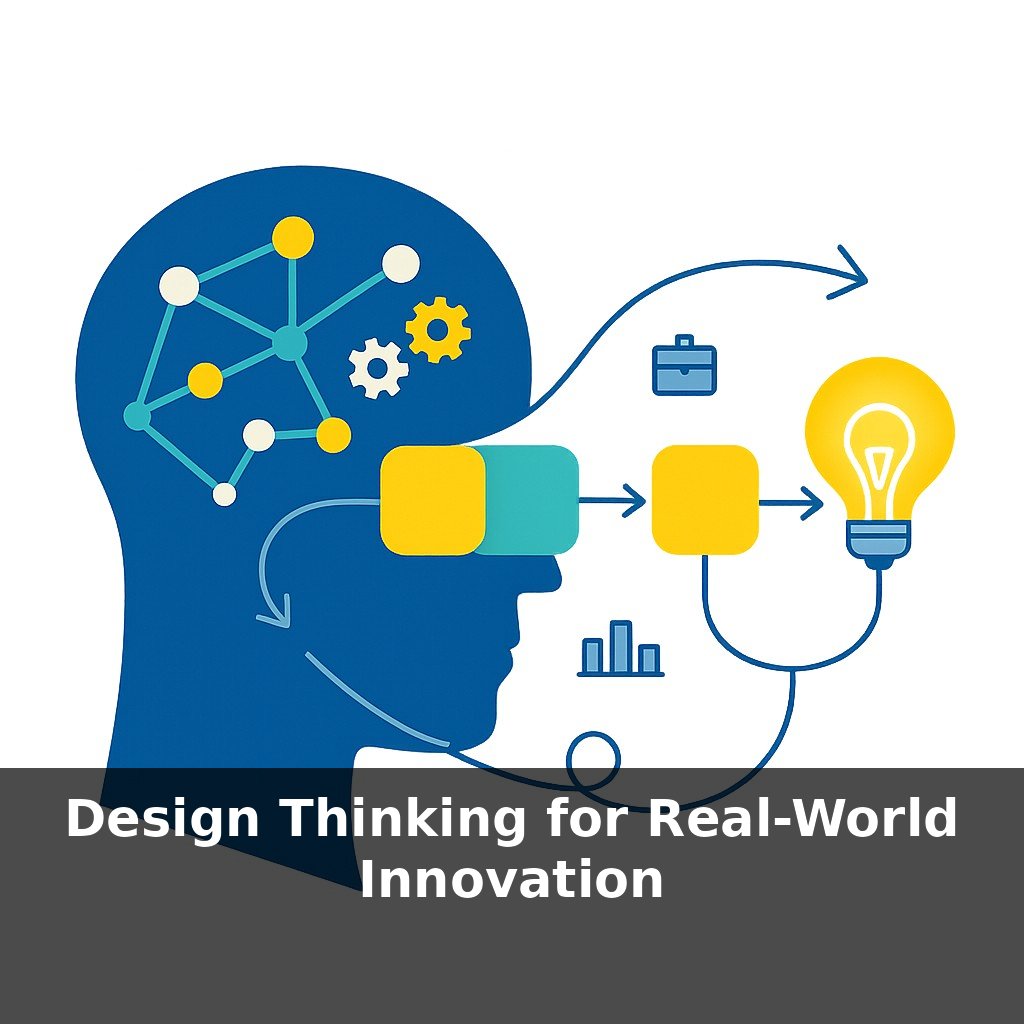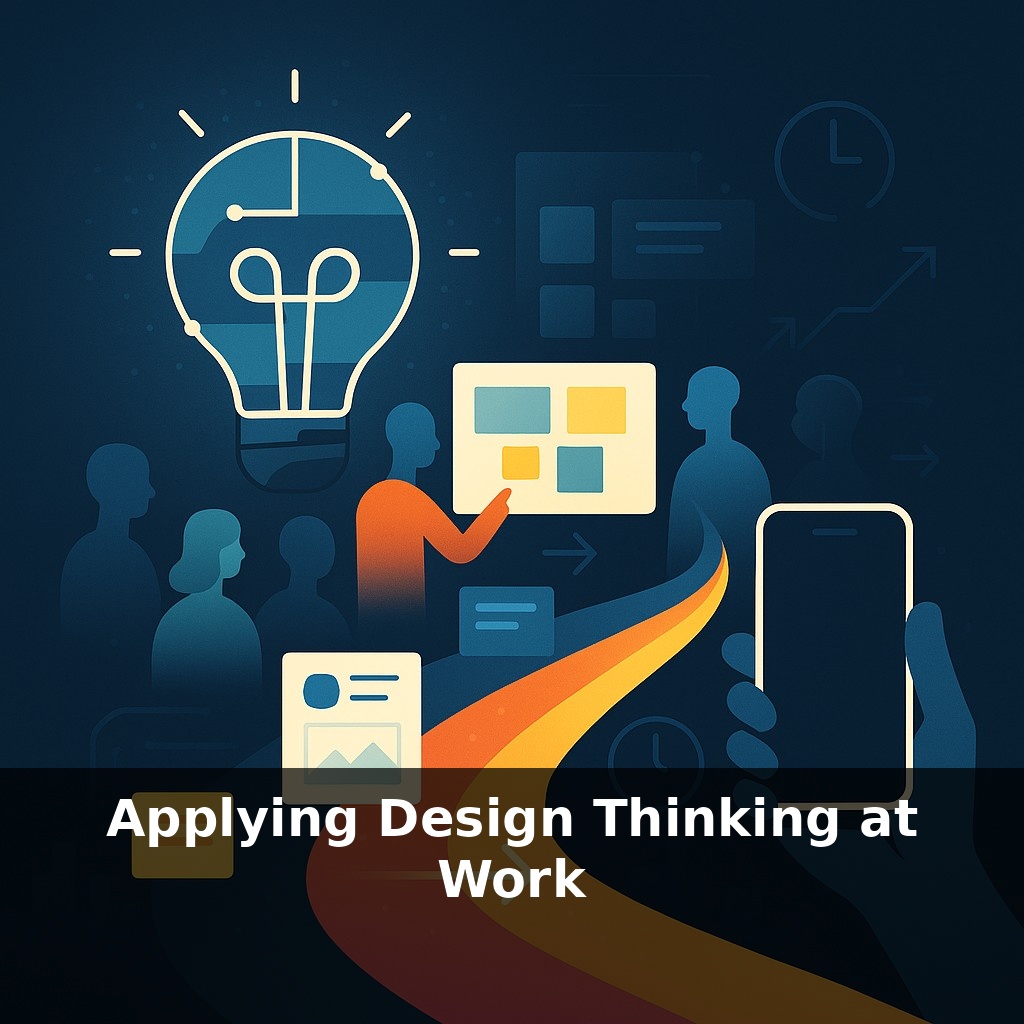
In one global tech company, a single mindset shift cut the time between “idea” and “in customers’ hands” by about half. Now, jump to your own workday: endless meetings, slow decisions, half-finished projects. How is it that we’re busier than ever, but real progress feels slower?
About 200,000 people at IBM have already been trained in Enterprise Design Thinking—and one ripple effect was cutting design–developer handoffs by 75%. That’s not a workshop victory; that’s a calendar-changing result.
So why does this matter to you, in your actual workday?
Because most teams still treat Design Thinking like a guest speaker: it visits for a training, everyone nods enthusiastically, and then the old habits quietly reclaim the calendar. The real unlock is when it stops being an event and starts being the way you run a meeting, shape a project brief, or clarify a messy request from your boss.
Instead of adding “do Design Thinking” to your to‑do list, the shift is to weave small, concrete behaviors into work you’re already doing—like micro‑experiments, rough sketches, and rapid check‑ins with real users before you commit to a big plan.
So the question becomes: where, exactly, does Design Thinking sneak into a normal Tuesday? Not just in “innovation projects,” but in routine stuff: that status meeting, the quarterly planning doc, even how you write a Slack message asking for help. Think of your calendar as a crowded city map: some streets are always jammed (approvals, email), others are side alleys no one uses (quiet focus, reflection). We’re going to reroute a few of those daily “traffic flows” so they pass through empathy, exploration, and quick validation—without adding extra hours. The goal isn’t bigger projects; it’s better habits, hiding in plain sight.
Here’s where this gets concrete.
Start with the most ordinary artifact in your week: the meeting invite. Most invites encode a solution: “Review final plan,” “Decide on tool,” “Sign off on roadmap.” To work differently, rewrite just the purpose line so it reflects a problem *from someone’s point of view*:
- From “Finalize Q3 initiative list” - To “Understand why onboarding tickets spike in week 2 and what would make that week feel smoother for new hires”
That subtle rewrite changes who you invite (suddenly ops and support matter), what data you bring, and how success is judged. You’ve now used your calendar as a quiet lever to pull more user reality into the room.
Next, hijack status updates. Instead of “green/yellow/red,” have each team member share three things:
1. One real person they affected this week (customer, colleague, partner) 2. One surprise or contradiction they noticed 3. One small bet they’re willing to try before the next check‑in
You haven’t added a ceremony—you’ve repurposed a ritual. Over a month, you’ll notice the conversation drifting from “How busy are we?” toward “What are we learning?” That shift is exactly what lets companies cut time‑to‑market by 50%: decisions move when learning is visible.
Now, pull this into project work. At the moment when you’d normally polish a deck for senior stakeholders, pause and carve out a rough, 30‑minute prototype *first*—a clickable mock, a sample email sequence, a sketch of a new policy with blanks for edge cases. Treat it as something to provoke reactions, not admiration. Stanford’s wallet exercise shows how many more ideas surface once something tangible is on the table; you’re borrowing that same effect for “boring” internal work.
Across all of this, the pattern is simple: don’t add more work—*reshape* existing work so that uncertainty shows up earlier, when it’s cheaper. Just as a trail hiker checks the ground every few steps instead of waiting until they’re lost to consult the map, you’re putting more “where are we, really?” moments into the flow of normal tasks, long before the big launch or big decision.
Think about the last time a project quietly derailed—not with a dramatic failure, but through a series of tiny, unnoticed decisions. Maybe marketing rephrased a message, legal tightened the wording, ops tweaked the flow. Each move made sense in isolation, but together they nudged the work away from what users actually needed. This is where applying Design Thinking in the “boring middle” of work matters most.
Consider a product manager at a bank who drafts a new feature spec, then pauses and spends 20 minutes collecting three short voice notes from frontline staff: “Tell me about the last customer who got stuck doing X.” Those snippets become the opening slide of the spec, reframing the whole discussion from “feature parity” to “real friction.” Or a People Ops lead who turns a policy update into a one-page story from a future employee’s first week, then circulates it for comments before writing any legal text. You’re not slowing work—you’re quietly upgrading its source material.
2050’s most valuable “software” inside your company may be the way teams choose and frame problems. As AI starts drafting options by default, the scarce skill will be asking sharper, more human questions—who benefits, who’s ignored, what trade‑offs we accept. Expect performance reviews to factor in how often you initiate learning, not just deliverables shipped. Like a city that regularly redraws its bus routes based on how people actually move, orgs that revise rituals by real usage patterns will adapt fastest.
Instead of waiting for “innovation days,” treat your next ordinary task as a tiny studio: redesign a form, rewrite an error message, reframe a request from your boss. Your challenge this week: pick one recurring task and alter just *one* step so it reveals more about what people truly need—then note how the work, and the mood, subtly shifts.