“You’re wrong.”
In most workplaces, those two words are the spark that turns a simple disagreement into a full-blown conflict. Yet here’s the twist: research shows that when people feel understood *before* being corrected, they’re far more likely to shift their view—without a battle.
“So what do I say *instead* of ‘You’re wrong’?”
This is where applied empathy moves from a nice idea to a practical tool. We’re not talking about being “soft” or avoiding hard truths. We’re talking about learning to *sequence* your responses so that the other person’s nervous system stops bracing for impact and starts opening to information.
Think of it like learning a new keyboard shortcut at work: the buttons are the same ones you’ve always had, but pressed in a different order they unlock a smoother workflow. Your listening, your questions, your disagreement—they’re all still there. But when you lead with curiosity and emotional recognition, tense conversations stop feeling like a verdict and start feeling like joint problem-solving in real time.
In real conversations, this isn’t a script—it’s more like learning a reliable play you can run under pressure. The core moves are surprisingly simple: notice what *they* seem to care about, show you’ve actually heard it, then share your view without trying to “win” in one shot. When you do this well, people often reveal the thing they *didn’t* say upfront: the deadline they’re scared of missing, the past slight they’re still carrying, the risk they feel they’ll be blamed for. That’s where empathy becomes practical: once the real constraint is visible, you can negotiate around it instead of clashing head‑on.
“Okay, walk me through this from your side.”
That single sentence can flip a tense exchange from positional (“I’m right / you’re wrong”) to exploratory (“What’s actually going on here?”). To make that flip reliable, it helps to zoom in on *specific* behaviors rather than a vague intention to “be more empathetic.”
Think of applied empathy in tough conversations as three micro-skills you can rotate through, depending on what’s happening in front of you:
1. **Active listening that proves you’re tracking the *right* thing** Most people listen for errors to correct or holes to fill. In a hard conversation, shift your listening target: tune in to stakes, fears, and hopes hidden inside their words. Instead of “So you’re saying the numbers are fine,” you might say, “It sounds like you’re worried that changing course now wastes the last three months of work.” You’re spotlighting what matters to *them*, not what’s convenient for you to respond to.
2. **Perspective-taking that you actually say out loud** Quietly thinking “I get why she’s upset” doesn’t change the interaction. Stated perspective-taking does. Try stems like: - “From where you sit, it probably looks like…” - “Given how last quarter went, I can see why this feels risky.” You’re not conceding; you’re signaling, “I’ve walked over to your side of the field and looked at the goal from there.”
3. **Emotion labeling without making it the whole story** Naming what you see—tentatively—can lower the emotional “volume” enough for problem-solving to resume: - “I’m noticing a lot of frustration in how you’re talking about this.” - “This seems really disappointing after how much you put into it.” Key move: link the emotion to a *specific trigger* rather than their character. “Given the late change, this feels unfair” lands very differently than “You’re too sensitive about changes.”
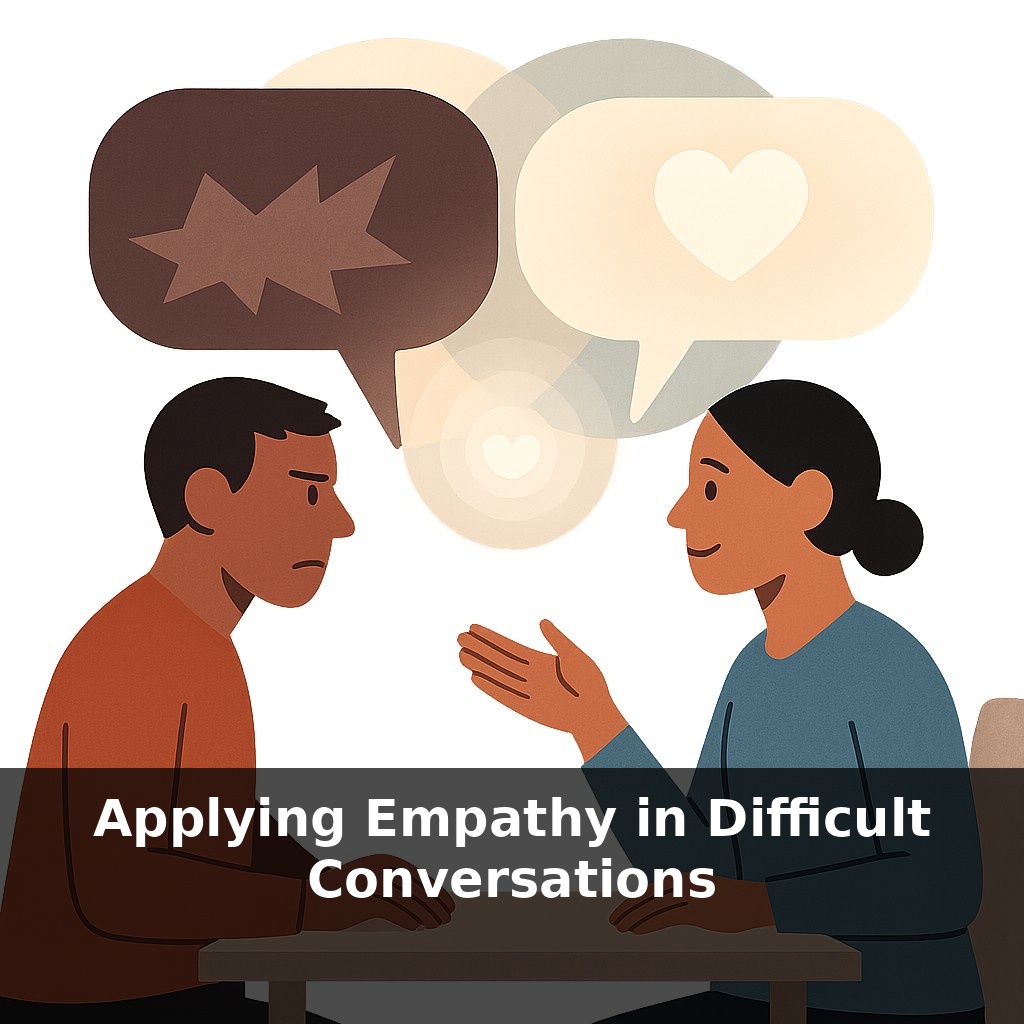
Under pressure, these three skills can be combined and stacked in a few sentences: “Given we’ve changed direction twice already, it probably feels like your team’s work isn’t being respected. And honestly, I’d be frustrated too if I’d invested that much. Can we look together at what *has* to change for the client, and what we can protect so your team’s effort isn’t wasted?”
Notice what’s happening there: you’re not backing away from constraints, but you’re also not treating the other person’s reaction as an obstacle to bulldoze. You’re treating it as data you can use to design a solution both of you can live with.
A project lead says in a tense meeting, “We’re not changing the launch date again.” Instead of arguing feasibility, you might respond: “You’ve had to re-plan twice already and your credibility’s on the line with stakeholders. I’m guessing another slip feels like you’re the one who’ll take the hit.” Suddenly, they’re not defending a date; they’re talking about reputation and trust—problems you *can* solve together (by sharing risk, adjusting scope, or adding support).
Or a direct report says, “This feedback feels harsh.” Rather than softening the message or doubling down, you could say, “It sounds like you’re hearing ‘you’re failing,’ especially after how much effort you’ve put in. Did I get that right?” Now the conversation can target how feedback is framed, not whether feedback is allowed.
Empathy here works like good debugging in software: you don’t just patch the visible bug (the argument); you trace the stack to the underlying conflict driver, then fix *that* collaboratively.
As more work moves into chat windows and video tiles, subtle tone choices become the new body language. Empathic phrasing (“sounds like,” “from your angle”) will function like guardrails on a high-speed highway, preventing small frictions from becoming pileups. Org-wide, leaders who normalize brief “emotion check-ins” before decisions can spot brewing misalignment early, much like performance dashboards flag anomalies before systems crash. Over time, this shifts culture from defensive to genuinely collaborative.
Treat these skills like reps in the gym: slightly awkward at first, but they build conversational “strength” you can rely on when stakes spike. Over time, you’ll notice less rehashing old arguments and more co-designing next steps, the way good jazz players trade solos. The real signal you’re progressing: people start bringing you harder problems, not fewer.
Before next week, ask yourself: 1) “In the last hard conversation I had (or avoided), where did I stop really listening—was it when they criticized me, raised their voice, or brought up a past mistake—and what would it look like to ‘listen past the trigger’ for 60 seconds longer next time?” 2) “If I assume their frustrating behavior is actually a protective strategy (like control, sarcasm, or shutting down), what fear or need might they be trying to protect—and how could I gently name that out loud in our next tough conversation?” 3) “In my next difficult talk, what’s one specific validation I can offer about their experience (for example, ‘It makes sense you’re worried about the deadline given how often plans have shifted’) before I share my own perspective?”