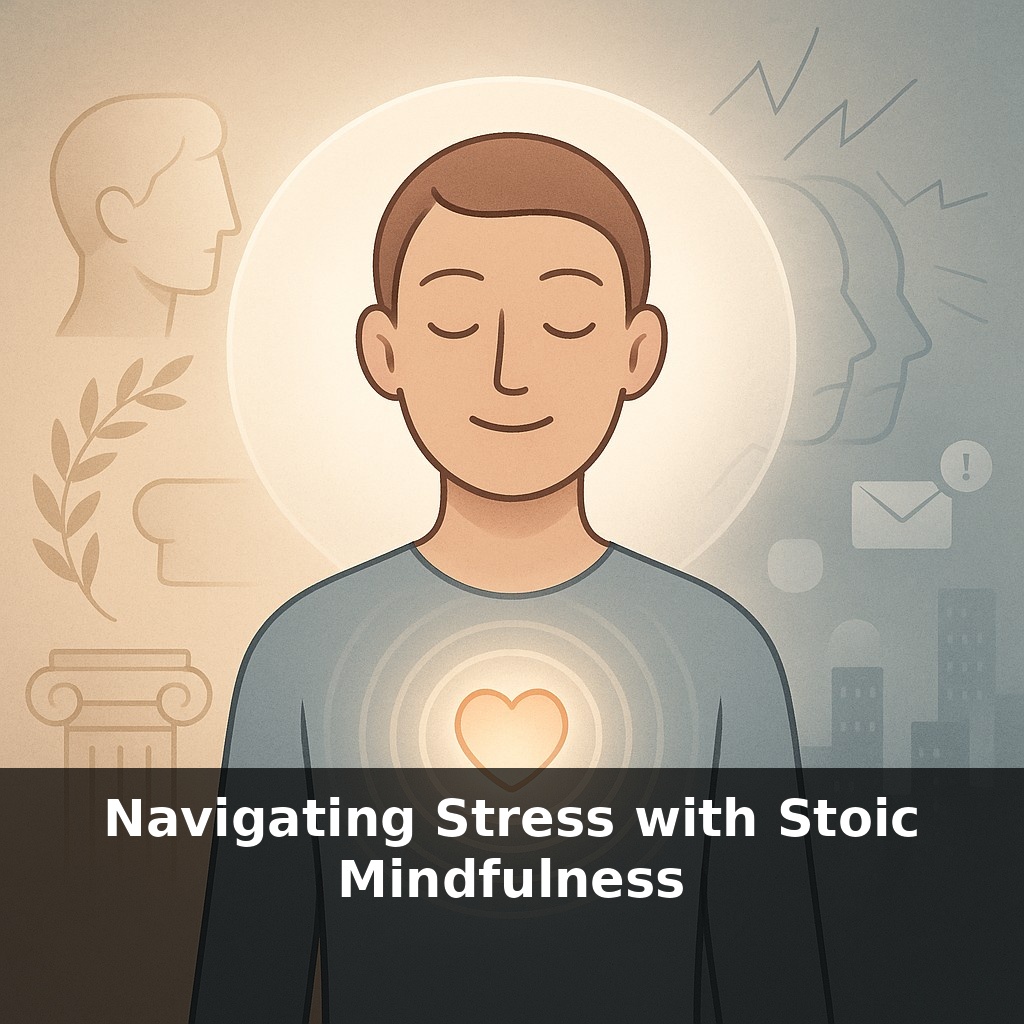
Right now, as you’re listening, your body might be reacting to stress as if you’re in real danger—racing heart, tight chest—while you’re just checking email. Here’s the twist: ancient Stoic habits, refined by modern psychology, may calm that alarm faster than any wellness app.
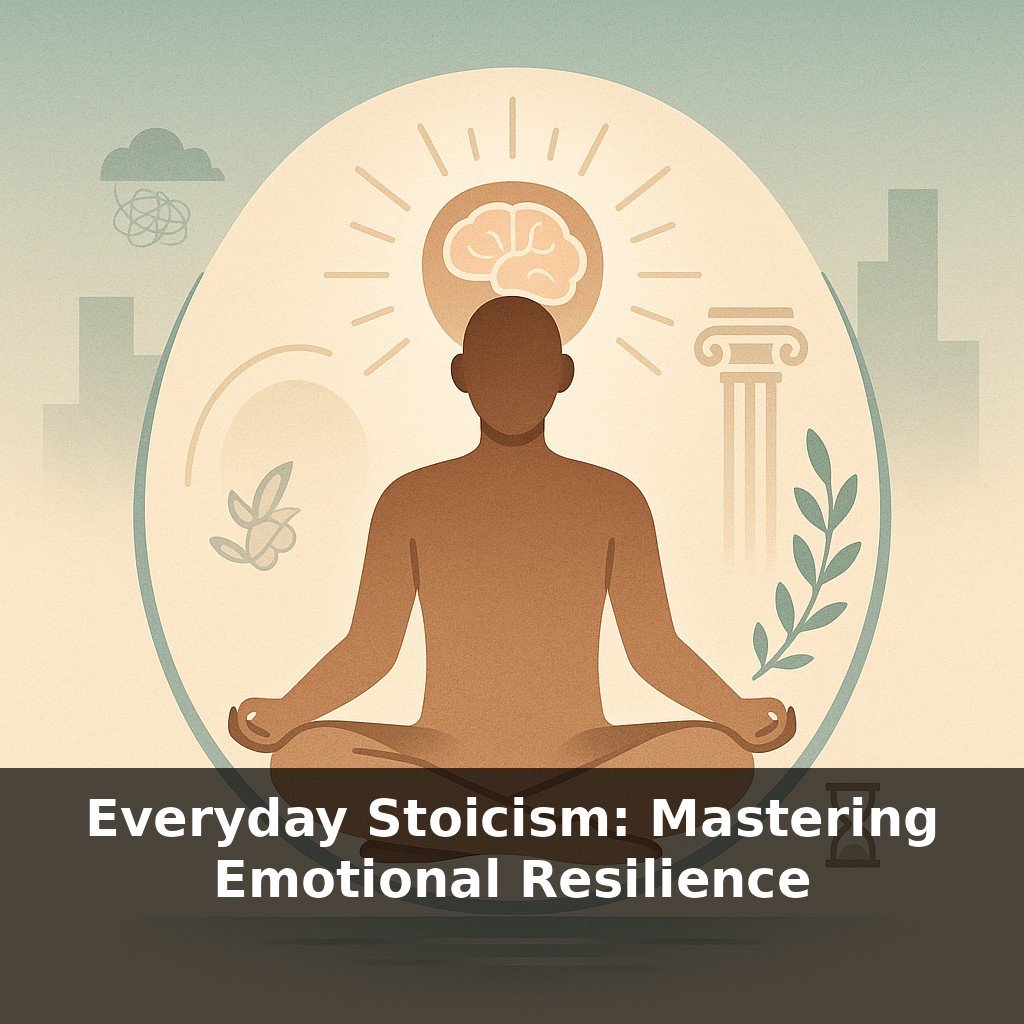
So if your body is overreacting to everyday life, where does Stoic mindfulness actually fit in? Think of it as a way of relating to your thoughts that’s both ancient and clinically informed. Instead of trying to “turn off” stress, you learn to watch it, question it, and then respond on purpose. Modern research shows that when people practice this kind of targeted awareness, their biology changes too—cortisol drops, heart rate steadies, and rumination loosens its grip.
In this episode, we’ll zoom in on three moves: noticing the exact moment stress shows up, separating what’s in your control from what isn’t, and quietly editing the story you’re telling yourself about what’s happening. Not to “positive-think” your way out of reality, but to see it more clearly, and suffer less inside it.
Instead of trying to swap stress for “calm” like changing channels, Stoic mindfulness asks a different question: what if stress could become information rather than an enemy? Modern research-backed practices treat those racing thoughts as signals on a dashboard—data you can use rather than noise to escape. This is where Stoicism adds teeth to typical mindfulness: you’re not just observing your inner weather, you’re quietly sorting it, like going through a cluttered inbox and deciding what gets action, what gets archived, and what was never yours to handle in the first place.
Here’s where Stoic mindfulness gets practical: you start building a tiny “inner protocol” for stress, the way a good team has a playbook for tight games. Not theory—moves.
First move: name the specific trigger, not the whole situation. Instead of “work is killing me,” narrow it: “I felt a spike of stress when my manager changed the deadline.” Precision shrinks vague dread into something you can work with. You’re not fighting “life”; you’re responding to one clear event.
Second move: separate facts from interpretations. Fact: “The deadline moved from Friday to Wednesday.” Interpretation: “They don’t respect my time; I’ll never catch up; I’m failing.” Research in CBT shows that simply distinguishing these layers weakens the emotional punch because you stop treating your first reaction as a final verdict. You begin to see thoughts as proposals, not commands.
Third move: run a quick “Stoic audit” on those interpretations. Ask three questions: 1. Is this thought 100% accurate, or just familiar? 2. Is it helping me act well right now? 3. What would a calmer, wiser version of me say instead?
You’re not hunting for pretty affirmations; you’re looking for truer, more useful sentences. “I’ll never catch up” might become “This is harder than I expected, but I can prioritize, ask for clarity, and do the next chunk.”
Here the Stoic dichotomy of control quietly reshapes your options. You can’t dictate your manager’s choices, the economy, or other people’s moods. You can refine your preparation, your communication, your standards for what “good effort” looks like today. When you continually redirect attention toward these levers, studies suggest your perceived stress drops because your brain experiences more agency and less helplessness.
Like a hiker checking a trail marker, you pause just long enough to orient: “Given what’s actually happening, and what I can actually influence, what’s the next small, dignified step?” Sometimes it’s sending a clear email; sometimes it’s taking a 2-minute breathing break before you respond; sometimes it’s deliberately letting a nonessential task stay imperfect.
Over time, this turns stressful moments into reps. Each spike of tension becomes one more chance to practice clarity, choice, and proportion, instead of getting dragged by the loudest thought in the room.
You can test this in ordinary moments, not just crises. Say you’re stuck in traffic, late for a meeting. Instead of collapsing it into “this whole day is ruined,” you zoom in: the trigger is the red lights and the clock. Fact: you’re moving slowly and may be late. Interpretation: “Everyone will think I’m incompetent.” The quick Stoic audit might yield: “Being late isn’t ideal, but I can message ahead, arrive prepared, and stay focused instead of rehearsing excuses.” Your body is still revved, but now that energy has a direction.
Or take social stress: you send a message, see “read,” and no reply. The familiar spiral starts. Catch it on the first turn. Fact: they haven’t responded yet. Interpretation: “They’re annoyed with me.” Your wiser edit: “There are many reasons for silence; I’ll give it time, then follow up once if it still matters.” One tiny inner shift, but measured over dozens of such moments, this is how your baseline tension quietly starts to lower.
You’re practicing more than a coping trick—you’re rehearsing a skill set the future is quietly betting on. As wearables track sleep, heart rate, and micro-stress spikes, Stoic-style prompts could arrive the moment your metrics drift, like a personalized coach: “Name the trigger. Run the audit.” Schools piloting this report fewer behavior flare-ups; some HR teams see drops in burnout. Think of it as mental infrastructure—subtle, mostly invisible, but carrying heavier loads as life grows more complex.
Treat this like learning a new language: at first you translate slowly, then one day you just understand. The same with these inner moves—clumsy now, natural later. Over time, you may notice not just fewer spikes, but a quieter baseline, like a city that still hums yet feels safer to walk through at night. That’s the long game: not zero stress, but steadier footing.
Before next week, ask yourself: 1) “The next time I feel my stress spike, which specific thought can I ‘hold at arm’s length’ and simply observe, the way the Stoics did, instead of instantly believing it?” 2) “In a stressful moment today, how can I practice a ‘Stoic pause’—even just three slow breaths—to ask, ‘Is this in my control or not?’ and then respond differently than I usually do?” 3) “Tonight, when I replay one stressful moment from my day, what would a wise Stoic mentor say about it—and how would they advise me to handle that same situation tomorrow?”