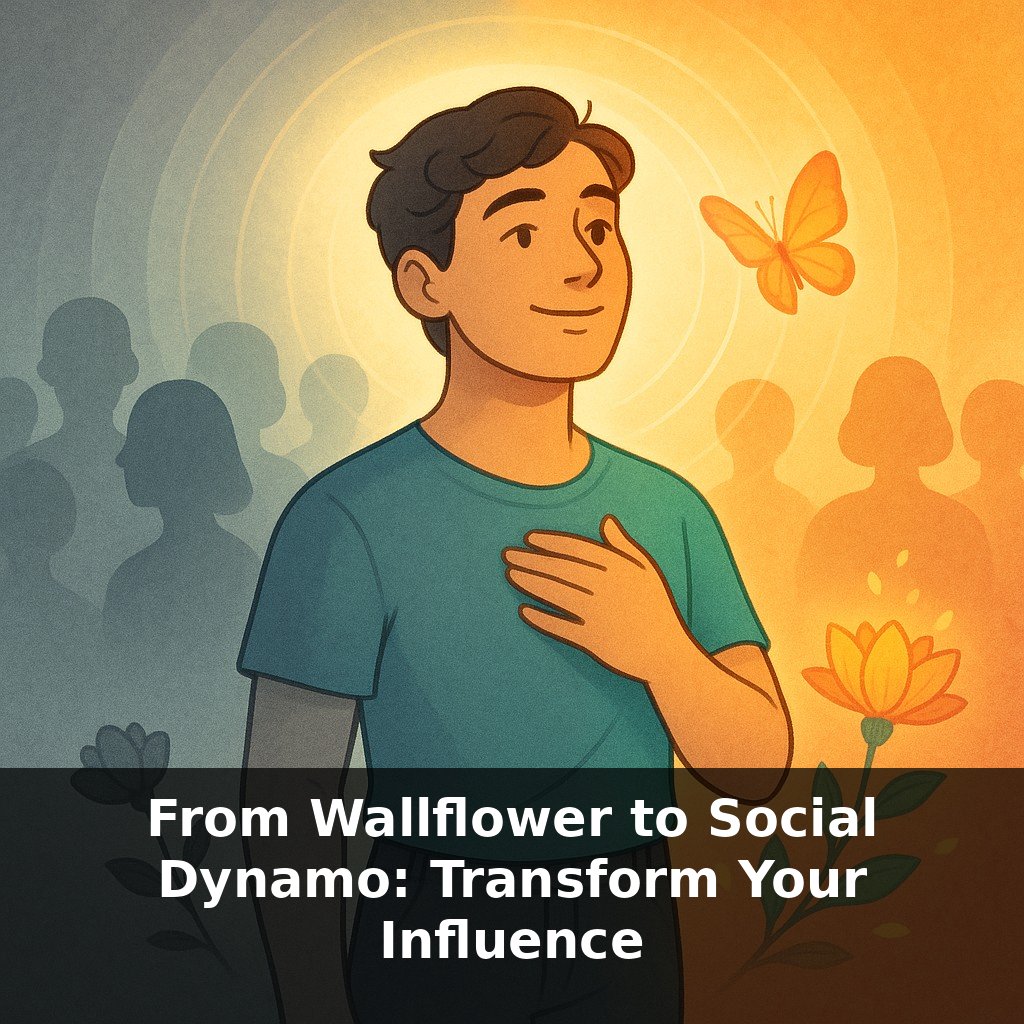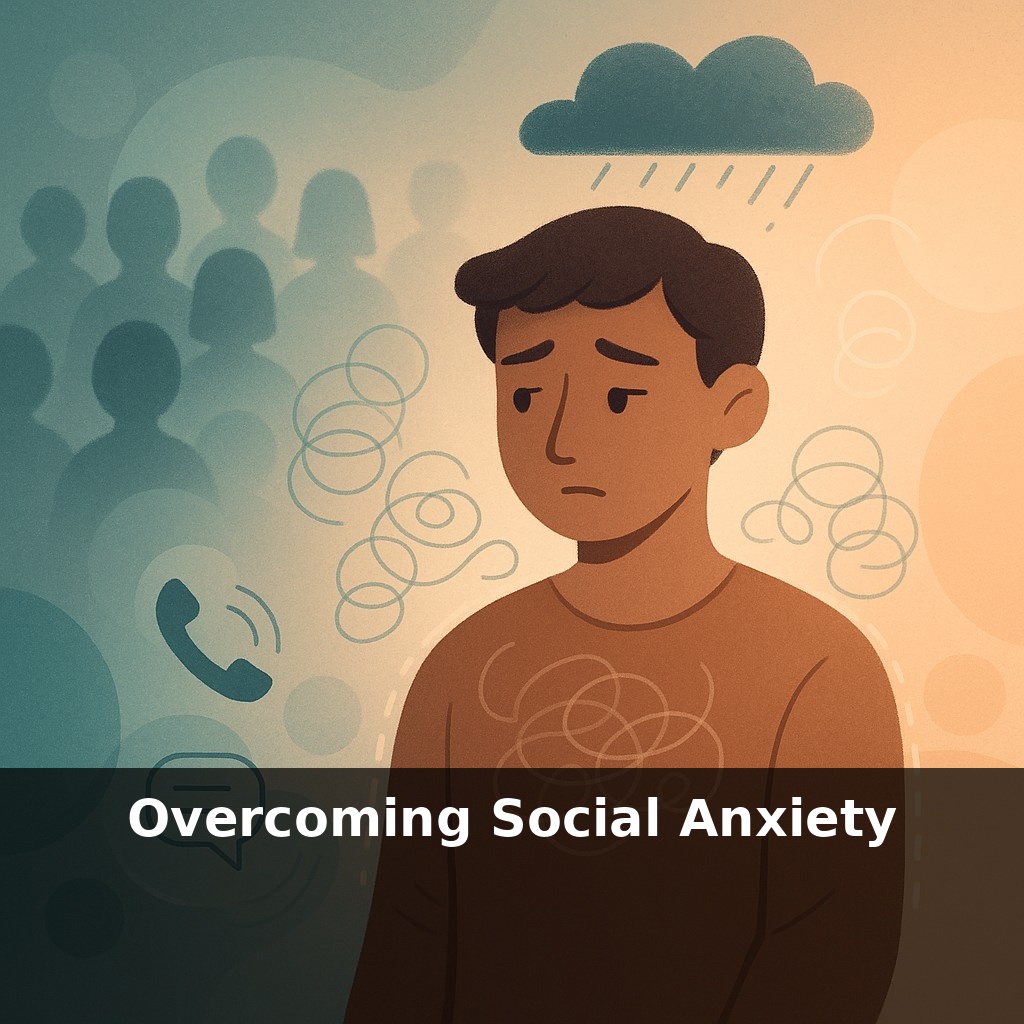
Right now, somewhere in a crowded room, at least one person is silently convinced everyone is judging them—yet almost no one will ever notice. Social anxiety hides in plain sight. In this episode, we’re going to step inside that quiet storm and start gently rewriting its script.
Maybe for you it isn’t the crowded room; it’s the tiny moments. The half-second pause before you unmute on a video call. The way your heart jumps when your phone lights up with an unknown number. The decision to say “I’m busy” when you’re actually just overwhelmed by the thought of small talk.
These aren’t random quirks of personality; they form a pattern—almost like a private weather system that predicts storms wherever people are involved. Some days it’s just a light drizzle: a bit of overthinking after a meeting. Other days it feels like a full-on thunderstorm: cancelled plans, spiralling self-criticism, and hours replaying one sentence you wish you’d said differently.
In this episode, we’ll start mapping that weather: when it shows up, what triggers it, and how to respond differently, even when the forecast looks rough.
Today, instead of trying to “fix” anything, we’re going to get curious about how your brain is trying to protect you. That jumpy feeling in your chest before you speak? That urge to rehearse every sentence? Those are signs of a threat system that’s a bit overzealous, not proof that you’re broken or “bad with people.”
Research shows this system often switches on early in life and then quietly shapes where we sit, what we say, even which careers we choose—like a subtle filter on every social moment. Our first step is to see that filter clearly, without blaming ourselves for having it.
Here’s the twist: the same brain that’s over-alert to social danger is also incredibly trainable. It learns fast—especially from repetition and emotion. Right now, it’s over‑learning from moments that *feel* like social failure and under‑learning from moments that go “okay enough.” That imbalance quietly keeps anxiety in charge.
Researchers see this in three predictable “moves” your mind tends to make under social stress:
First, **threat magnification**. Your brain scans for the worst‑case interpretation: a yawn becomes “I’m boring,” a short reply turns into “they’re annoyed,” a neutral glance feels like “they noticed something wrong with me.” The event is small; the meaning explodes.
Second, **mind‑reading and fortune‑telling**. You start “knowing” what others think (“they think I’m weird”) and “knowing” what will happen (“I’ll blank and embarrass myself”). These guesses feel like facts, so your body reacts as if danger is already confirmed.
Third, **safety strategies**. To prevent disaster, you do subtle things that seem helpful in the moment: rehearsing every sentence, speaking very quietly, avoiding eye contact, sticking to “safe” topics, or not showing up at all. The problem is that these strategies block new learning. You never get the chance to discover that you could cope, or that people might respond better than predicted.
CBT zooms in here—not to argue with your feelings, but to question the *certainty* in those interpretations and experiments. It treats your thoughts less like headlines and more like hypotheses to be tested.
Think of it like exploring a dense forest trail you’ve always walked in the dark. You’ve memorised every root and low branch by fear. CBT‑style work doesn’t bulldoze the forest; it gradually adds light and alternative paths. You keep the instincts that truly protect you, but you stop sprinting for cover every time a leaf moves.
A key insight from temperament research: if you’re more introverted, your goal isn’t to become hyper‑social; it’s to become **freely** introverted—able to choose connection or solitude, rather than having fear choose for you. That means building skills that respect your natural pacing while still nudging the edges of your comfort zone. Over time, those small, deliberate nudges start to retrain what your brain tags as “dangerous” versus “manageable.”
Think of this next step as learning to sketch quick “social snapshots” instead of full-blown disaster movies. Rather than zooming in on the worst part of an interaction, you practice capturing the whole frame. For example, after a meeting where you felt awkward, you might note: “I stumbled once, but I also asked one clear question, and two people nodded.” You’re not forcing positivity; you’re training your attention to notice data you’d normally delete.
Another experiment: treat other people like radio stations with slightly fuzzy reception. Instead of assuming you’re “hearing” their exact thoughts, you label the static: “That’s my anxious channel, not necessarily their opinion.” This frees up a bit of bandwidth to observe what they *actually* do—whether they lean in, respond, smile, or just stay neutral.
Over time, these micro‑observations become raw material: not to judge yourself with, but to understand your patterns and design gentler, smarter experiments with real people.
Social tech is changing the “rules of the room.” Group chats, video calls, and reaction emojis create new places for your old patterns to show up—but also new ways to practice. You can rehearse replies, notice triggers in slow motion, and test tiny risks with lower stakes, like commenting once in a quiet channel. Think of each online space as a different micro‑climate: by sampling several, you collect evidence about where you function best and where you want to grow next.
Progress doesn’t have to look dramatic. Think in terms of tiny “social experiments”—like trying one new sentence in a chat, or staying in a conversation two breaths longer than usual. Each attempt is a data point, not a verdict. Over time, these small tiles start forming a mosaic: not of a new person, but of you with more room to move.
Here’s your challenge this week: Pick **one low-stakes social situation** (like chatting with a barista, coworker, or classmate) and start exactly **two 30-second conversations a day** where you (1) make eye contact, (2) smile, and (3) ask one simple follow-up question instead of escaping (e.g., “How’s your day going so far?” followed by “Anything fun planned after work?”). Before each interaction, rate your anxiety from 1–10 and guess what you’re afraid will happen; afterward, rate your anxiety again and briefly note what *actually* happened. Do this for **7 days in a row**, and by the end of the week, notice which feared outcomes didn’t come true and which types of interactions now feel at least one point easier.