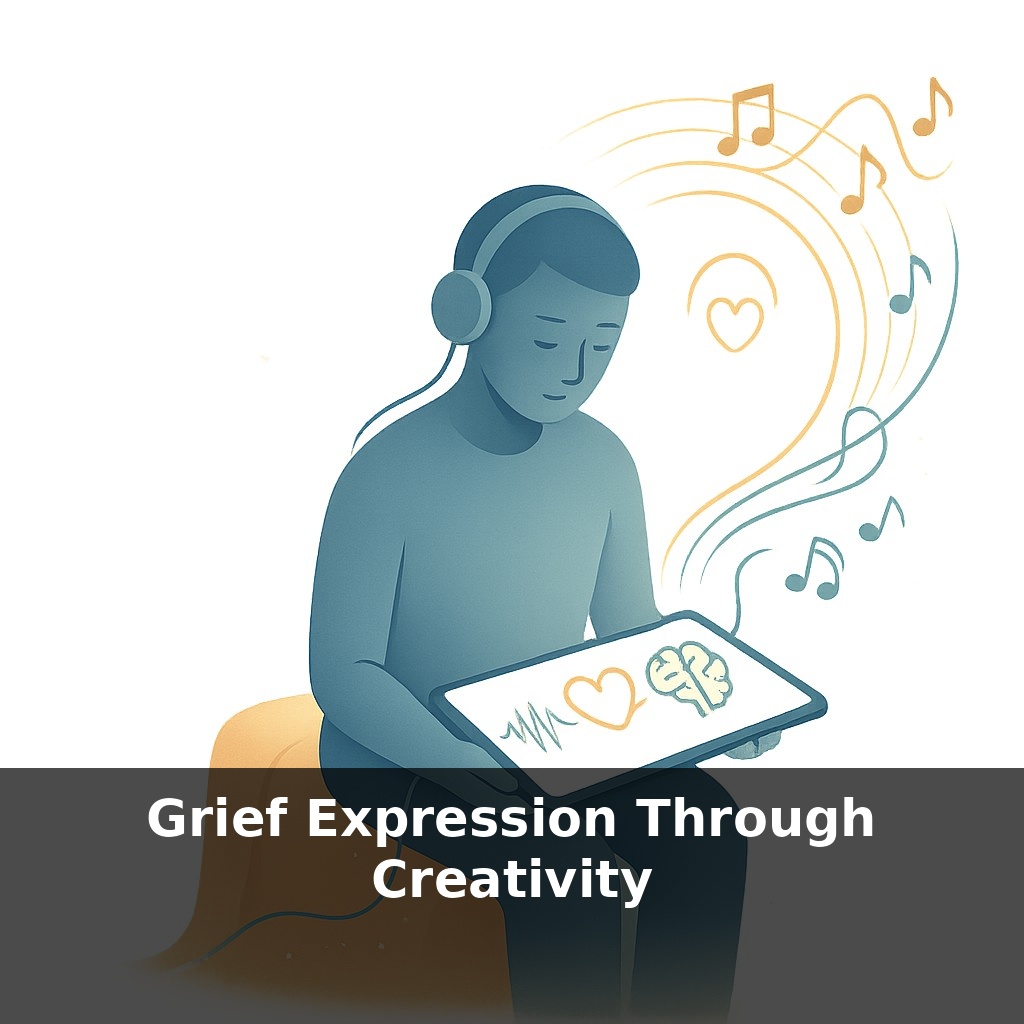
A single twenty‑minute drawing session can measurably lower stress hormones. Now zoom in: a widow sketching the empty side of the bed, a teenager turning a voicemail into a song. Grief is silent, yet these moments speak loudly. How does creativity give shape to what words can’t?
A neurologist once described grief as “a full‑body experience disguised as an emotion.” That’s why sitting in a chair talking *about* it can sometimes feel oddly flat—your body is still holding the rest. Creative expression gives that “rest” somewhere to go.
A father might paint only in shades of gray for months before a streak of red sneaks in. A software engineer could write short sci‑fi scenes where a character keeps losing and finding the same star, noticing the plot shift before their own story does. A choir member may only be able to sing harmony, never melody, until the day their voice finally wants to lead.
These aren’t just hobbies; they’re quiet diagnostic tools. The choices you make—color, volume, shape of a sentence—often change before you consciously feel different. In that gap lies a powerful opening: a way to notice movement in your grief precisely when you’re convinced you’re not moving at all.
Sometimes the first clue isn’t *what* you make, but *how* you approach making it. Do you erase constantly, or refuse to erase at all? Do you write in bursts at 2 a.m. and then avoid the page for days? Do you loop the same four chords on a guitar because anything new feels like a betrayal? These patterns can quietly map where you are: clinging, numbed out, angry, tentative, curious. Therapists who use art, music, or writing often watch these “process signatures” as closely as the final product, because they reveal shifts you might not be ready—or able—to say out loud yet.
When researchers scan the brains of people engaging in art, music, or expressive writing, they see something striking: regions involved in emotion, body sensation, and storytelling light up together. That overlap matters. Grief scrambles all three—your feelings, your physical state, and your sense of “what my life is now.” Creative work lets them start talking to each other again.
One reason this is powerful is that it slows experience down to a human pace. A song unfolds over minutes, a drawing over strokes, a page over sentences. Instead of being hit by a vague, overwhelming wave, you’re making one choice at a time: this word, not that one; this chord, then pause; this shadow, then leave it. Those micro‑decisions give your nervous system space to stay within its window of tolerance while still touching what hurts.
Research backs this up. In expressive writing studies, for instance, people who shift from “he/she/they” language to a mix of “I” and “you” over several sessions tend to show more relief. The content might stay raw, but the grammar reveals a new relationship to the loss: less distant, more engaged, and eventually more integrated. Music therapy studies show something similar when improvisation evolves from chaotic noise into loosely shared rhythms between client and therapist.
This is where narrative reconstruction begins. You’re not just “getting it out”; you’re experimenting with different versions of the story. One painting might center the hospital room; the next, a shared vacation spot; later, a self‑portrait without them at all. None of these is the final truth. They’re drafts of meaning, each one testing: Can I hold this angle on my life without breaking?
Creative practices also create a kind of embodied archive. Looking back over a sketchbook, playlist, or folder of documents, you can literally *see* or *hear* transitions you didn’t feel happening in real time: colors brightening, tempos changing, pronouns shifting from past to present. That archive becomes a quiet form of proof that “I have moved,” even when your day‑to‑day mood insists you haven’t.
Like a physiotherapist designing gradual exercises after an injury, a good grief‑informed creative practice nudges you just past your current edge—not into retraumatizing exposure, not into total avoidance, but into tolerable contact with what you miss, love, and fear. Over time, that repeated, deliberate contact helps your body and story agree: this loss is real, and somehow, I am still here.
A woman who never kept a journal before her partner died starts a “letters I’ll never send” file on her phone. At first, every entry ends mid‑sentence, like she can’t bear to land. Weeks later, her messages start closing with small, practical details: “I fixed the leaky sink today.” That tiny shift—from unfinished fragments to full updates—quietly signals her capacity to stay with her own story a little longer.
A teenager avoids talking about his brother, but spends hours editing game clips into a tribute video. The first cut is all slow motion and sad filters; later versions add inside jokes only they shared. The humor doesn’t cancel the pain; it widens the frame.
Think of these artifacts the way a coach studies game footage: not to judge the past, but to notice form, stamina, and subtle improvements over time. Returning to old drafts, playlists, or sketches with this mindset can reveal: where did I start bracing less, risk more, let in a trace of future?
An emerging question is who will “hold” all this creative data. If your VR memorial, writing app, and music platform each store fragments of your loss, do they eventually function like a distributed, digital shrine—or a mine of intimate signals for advertisers and algorithms? Your future sketch could tweak not just color, but which AI “companion” responds. The risk is turning your most private mourning into a product, while the promise is on‑demand, bespoke support at 2 a.m.
So the open question isn’t “Does this work?” so much as “How do we weave it into everyday life without turning it into another task?” A doodle in a margins-filled notebook, a voice memo recorded in the car, a half-finished playlist—these small, irregular marks can function like trail blazes, quietly pointing toward where you’re already finding a way through.
Start with this tiny habit: When you feel that familiar wave of sadness or tightness in your chest, open the notes app on your phone and type a single sensory detail about your grief—one color, one sound, or one image that comes to mind (like “the squeak of their old chair” or “the blue of their favorite sweater”). Don’t try to make it poetic or complete, just one detail and close the app. Do this once a day for a week, then pick your favorite detail and spend just two minutes turning it into a doodle, a line of a poem, or a few notes of a melody.