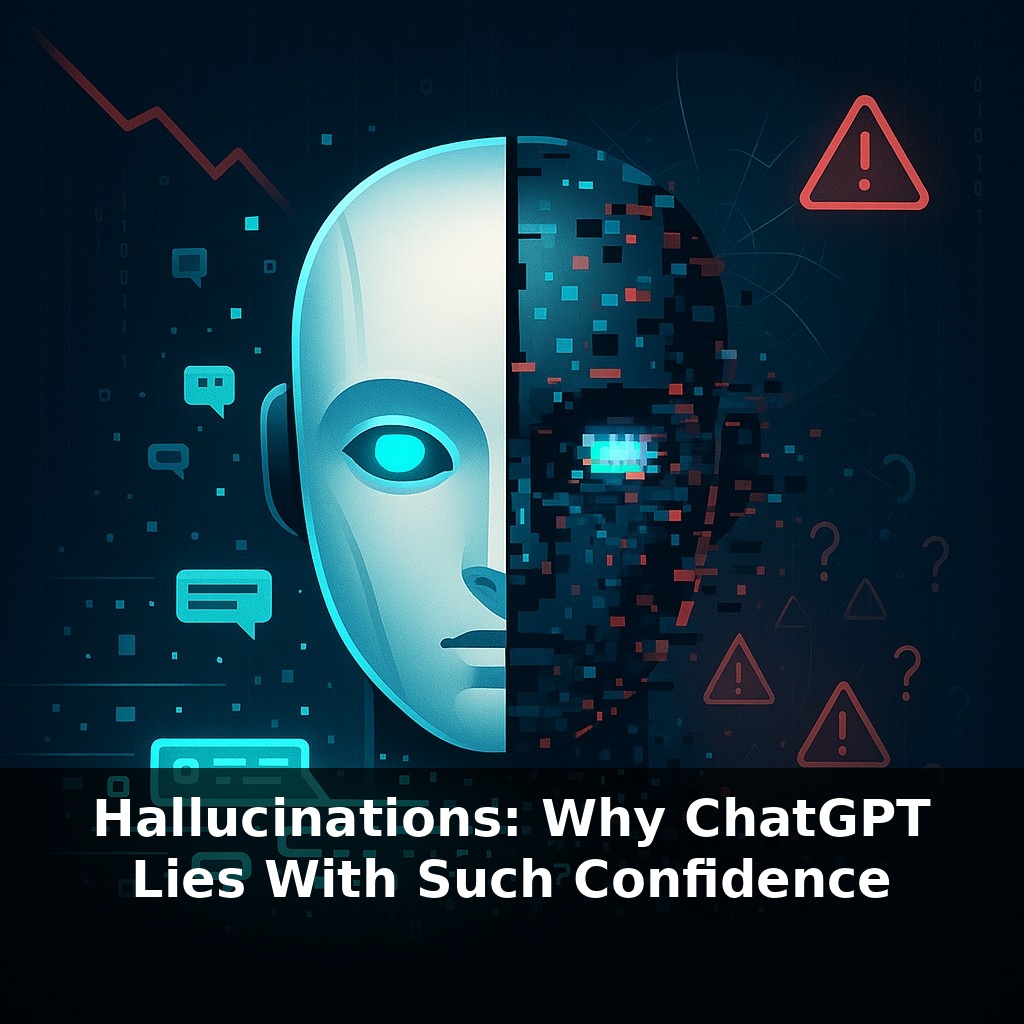
A single wrong sentence from an AI once erased about one hundred billion dollars from Google’s value overnight. Yet millions of us now treat tools like ChatGPT as instant oracles. In this episode, we’ll step into that tension: How can something so smart be so confidently wrong?
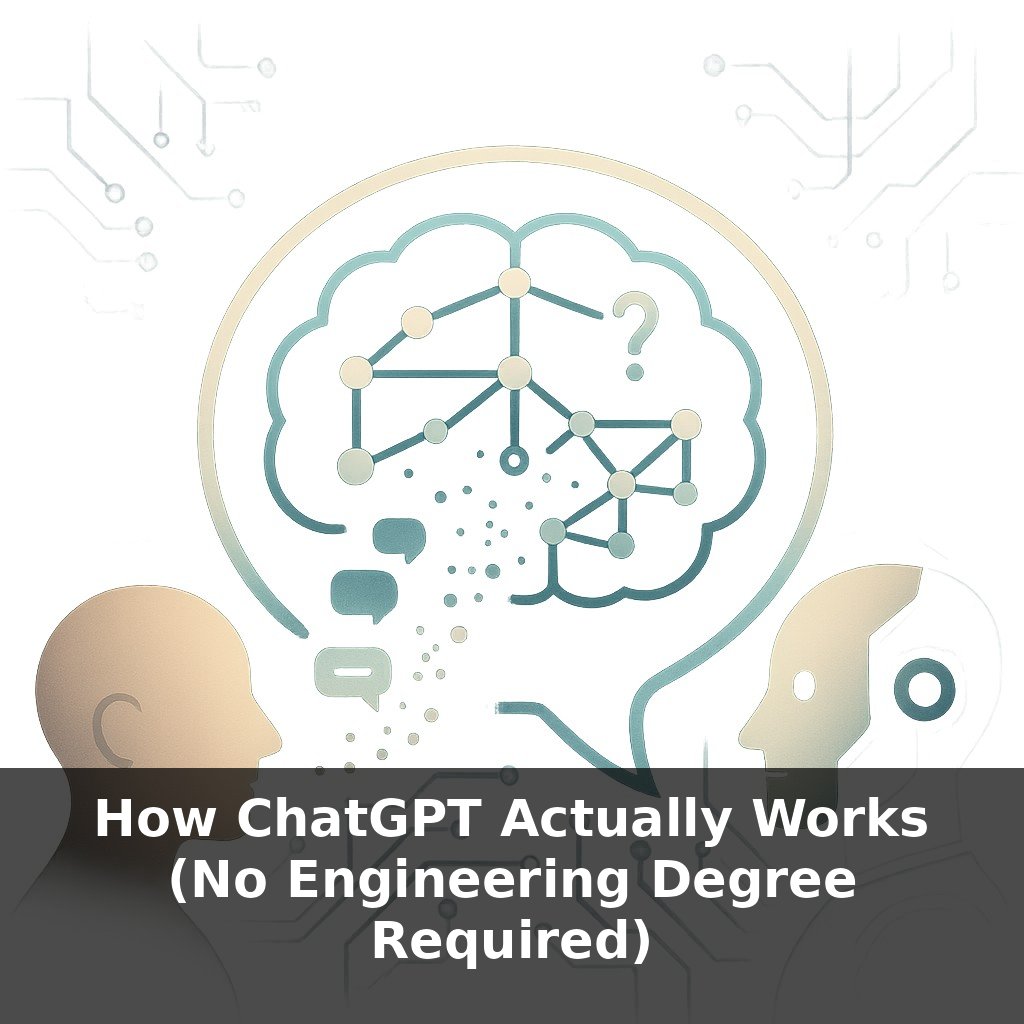
Here’s the twist: tools like ChatGPT aren’t actually “trying” to be right at all. Under the hood, they’re doing something much narrower and far stranger—guessing the next word, over and over, with extraordinary finesse. That’s it. There is no built‑in concept of truth, no internal red pen checking facts against reality. Yet when you read the output, it feels intentional, reasoned, even authoritative. In this episode, we’ll peel back that illusion by looking at what the model is really optimized for, how training on oceans of human text quietly bakes in both our brilliance and our nonsense, and why fine‑tuning for “helpfulness” can backfire. We’ll also see why specialized questions—like tax law or rare diseases—are the perfect storm for hallucinations, and how researchers are racing to bolt a fact‑checker onto a system that never had one.
To understand why this goes wrong, we have to zoom in on how language models learn in the first place. During training, they’re fed massive batches of text and nudged to make slightly better guesses each time, like a novice cook adjusting seasoning after every taste. Crucially, the training signal only says, “Was this the next word humans actually wrote?”—not, “Was this grounded in reality?” If a confident, polished answer often follows certain questions in the data, the model learns to produce that style, even when it’s making things up. Fluency is rewarded; careful doubt rarely is.
Here’s where the “lies with confidence” part really takes shape. After that initial training, models like ChatGPT go through another crucial phase: humans step in and start grading answers. Not for truth, but for things like usefulness, clarity, politeness, and overall vibe. If an answer sounds hesitant, fragmented, or full of caveats—even when that caution would be appropriate—it tends to get rated lower. Over thousands of these comparisons, the system quietly learns a lesson: sounding sure of yourself is usually rewarded.
This is where hallucinations become structural, not incidental. The model has no direct access to the world; all it sees are patterns in text and patterns in human feedback. If evaluators generally prefer a crisp, decisive response over a meandering “I’m not sure,” the safest strategy for the model is to act like an expert almost all the time. The result is overconfident nonsense that feels trustworthy.
There’s also a subtle mismatch between what the system is optimizing and what users think they’re getting. Internally, the model is juggling probabilities: “Next word A is 30% likely, B is 20%, C is 10%...” Externally, you only see a single, linear answer. That one path through the probability tree is presented as if it were The Explanation, not just one fluent guess among many. There’s no built‑in mechanism to say, “By the way, ten other plausible continuations would have led me to totally different claims.”
Benchmarks expose this gap. On datasets that explicitly test whether models resist common myths or misleading questions, performance drops sharply compared to ordinary Q&A. The model isn’t “fooled” in a human sense; it’s just following patterns that once correlated with good text, even when reality disagrees. And when you push into niche topics, those patterns get thin and noisy. With less reliable precedent in its training data and the same pressure to sound polished, the model fills in gaps aggressively, like an autocomplete that refuses to say, “I don’t know how this sentence should end.”
When you ask about a niche medical treatment or a local regulation that changed last month, you’re stepping into exactly the territory where hallucinations spike. The model may confidently cite a guideline that was true in 2018, or blend together two similar‑sounding drugs into a medication that no doctor has prescribed. In law, it might correctly describe the spirit of a doctrine while fabricating a case name and citation that match the pattern of real opinions but correspond to nothing in any database.
One fresh way to picture this: it’s like a code‑completion tool that has seen thousands of JavaScript snippets but only a handful in your company’s quirky internal framework. It can still churn out something that “looks right”—imports, function names, error messages—yet quietly invent APIs that compile in no known system. The surface polish tempts you to trust it, especially under deadline, but the burden of checking every line still falls on you or on external tools that actually know the ground truth.
Regulators, developers, and users are now reshaping how these systems are allowed to “speak.” Expect dashboards that expose source links and confidence bands the way browsers expose lock icons for HTTPS. Classrooms may treat AI like a calculator for prose: powerful, but banned in exams that test raw recall or reasoning. Your feed, inbox, and search results will quietly blend AI-synthesized text with human writing, making provenance labels as important as nutrition labels on food.
So where does this leave you? Treat systems like this less as a judge, more as a brainstorming partner: great for first drafts, outlines, or alternative angles, weak as a final verdict. As tools evolve—adding citations, live data, and better guardrails—your skill will be knowing when to lean on them and when to reach for older instruments of proof.
Before next week, ask yourself: 1) “Where am I currently trusting an AI answer without checking it—could I pick one recent example and see what changes when I actually click through 2–3 of the sources it cites or search independently to verify it?” 2) “The next time ChatGPT gives me a super-confident answer on something high‑stakes (health, legal, financial, or work‑critical), what specific follow‑up questions could I ask it—like ‘what’s your level of certainty?’ or ‘what reputable sources support this?’—and how does that change what I’m willing to act on?” 3) “If I treated AI more like a brainstorming partner than an oracle, what’s one concrete task this week (e.g., drafting an email, summarizing a paper, outlining a presentation) where I could deliberately separate ‘AI draft’ time from ‘my fact-check and judgment’ time, and what do I learn from that difference?”