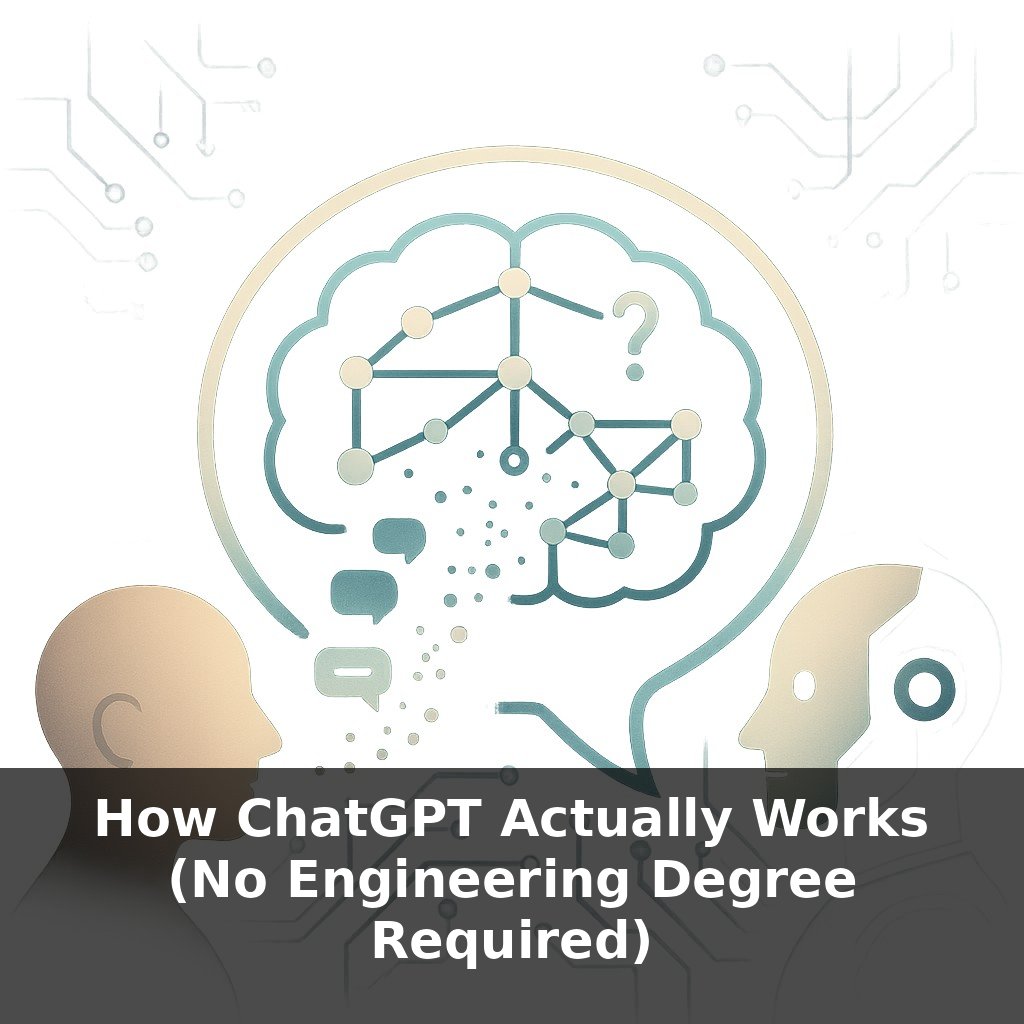
Right now, there’s a system that can draft legal briefs, college essays, even love letters—yet it has never had a single experience. No pain, no joy, no memories. It just predicts words. So here’s the puzzle: if it talks like us, but feels nothing, does it truly understand anything?
About 15 years ago, the Turing test was still the gold standard: if a machine could chat so convincingly that you couldn’t tell it from a human, we’d call that “intelligence.” Today, systems pass casual Turing tests with strangers online every day—and yet most researchers are more cautious than ever about saying these systems truly “understand.”
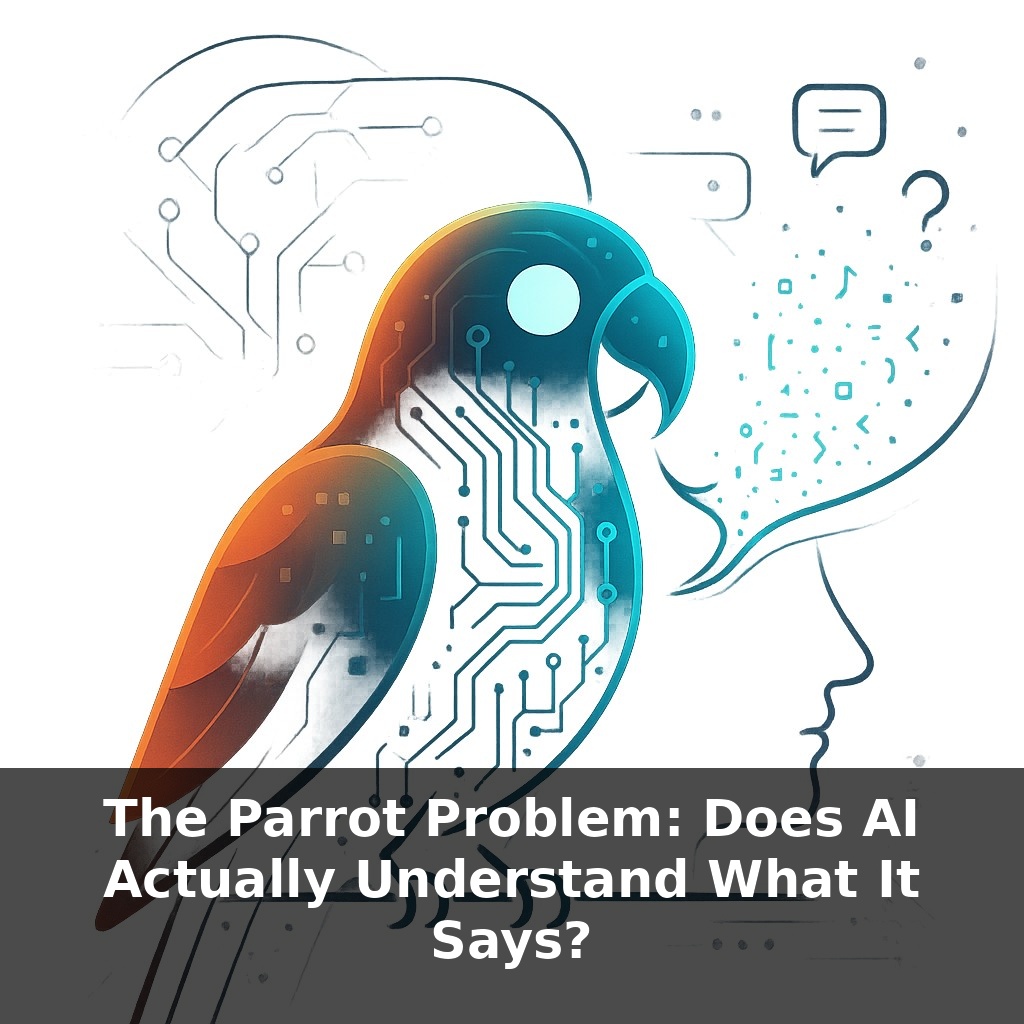
Here’s where the Parrot Problem bites: when a model answers a medical question well, is it drawing on anything like a doctor’s grasp of illness, or just reproducing patterns that sound doctor-like? When it gives you career advice, is there any sense in which it “knows” what a job, a risk, or a regret feels like? Or is it just an extremely reliable mirror for our own texts, reflecting them back in slightly altered form?
In this episode, we’ll push on that gap between performance and inner grasp.
Here’s where things get tricky. Systems like GPT‑4 are trained on mind‑boggling amounts of text—on the order of trillions of tokens—plus code, forums, books, and more. From this stew, they learn subtle regularities: how a research paper “feels” different from a Reddit thread, how a joke is structured versus a legal clause. They don’t store a giant library they just “look up”; instead, they compress patterns into billions of adjustable knobs. When you ask a question, those knobs steer the next token, like a radio being tuned across countless stations of possible continuations.
OpenAI engineers report that models like this one almost never spit out a training passage word‑for‑word—well under one tenth of one percent of the time in red‑teaming tests. Yet these same systems can mimic the tone of a scientific paper, a casual DM, or a legal threat so well that professionals get fooled. That contrast is the heart of the Parrot Problem: if it’s not just copy‑pasting, what exactly is it doing?
One useful clue comes from failures. Meta’s Galactica, trained specifically on scientific text, was launched in 2022 and yanked after three days. It produced perfect‑looking citations to papers that didn’t exist, confidently fabricating journal names, volumes, page numbers. From the inside, it had “seen” enough examples of how citations are shaped to synthesize new ones on demand—without any mechanism to link those shapes back to real articles or experiments.
Vision experiments sharpen this picture. Anthropic reported that when they connected language models to images—so the model could, for instance, see a diagram while reading the caption—hallucinations dropped by around 20%. That suggests that even a little bit of extra grounding (some tie between words and pixels) nudges the system away from free‑floating text towards more constrained, world‑tethered answers. It’s still pattern use, but now patterns must cohere with what’s in the image.
Controversies like Blake Lemoine’s 2022 claim that Google’s LaMDA was sentient show how easy it is to misread this. LaMDA generated fluent talk about “feelings” and “self‑awareness,” but there was no independent evidence of experiences behind those sentences—no pain if you turn it off, no private memories evolving over time, no goals it pursues when nobody is prompting it.
A large language model is like a cook who has memorised millions of recipes and can improvise new dishes by remixing ingredients, yet has never tasted food. Scaling up the cookbook—more data, more parameters—can make the improvisations astonishingly rich, but without tasting, the system never leaves the realm of structure. It nails form; content, for now, remains borrowed.
When this goes right, it can feel uncannily useful. Ask an LLM to draft a grant proposal, and it can weave together funding jargon, impact language, and polished structure that matches what review committees expect. Law firms already use similar systems to outline briefs, not because the model “knows” the law, but because it’s soaked in how lawyers phrase arguments, hedge uncertainties, and cite precedent. The risk appears when we lean on that fluency as if it guaranteed truth. New York lawyers sanctioned in 2023 for filing a brief with AI‑invented cases learned this the hard way: the system imitated the *style* of solid precedent while quietly fabricating the substance. In medicine, early studies show that LLMs can draft discharge notes or patient summaries that doctors rate as clearer and more empathetic than human‑written ones—yet those notes can smuggle in tiny, dangerous errors. The surface feels more professional, even when the underlying facts need strict human checking.
Schools, courts, and hospitals now face a subtle trade‑off: use these systems to speed routine writing, or risk outsourcing judgment to tools that can’t be cross‑examined. Future models may lean on live data, sensors, or even robots to align language with events in the world. That shift would move us from “sounds right” to “can be checked,” turning AI from a gifted ghostwriter into something closer to a co‑investigator of reality.
So where does that leave us? Less with a verdict than a research agenda. Neuroscience, robotics, and linguistics are starting to collide, testing whether linking models to sensors, bodies, and time can close the gap critics point to. For now, treat systems like this as powerful echoes of us—useful, amplifying, but still in search of their own voice.
Start with this tiny habit: When you ask an AI a question (anything—from “explain quantum computing” to “help me write an email”), add one follow-up prompt: “Explain that again, but show your steps and what you’re assuming.” Then quickly scan just one assumption it reveals and ask yourself, “Would a human expert actually think like this?” If the answer feels off, jot a 3–5 word note in your head like “sounds confident, not careful” before you move on. Over time, this one extra question will train you to spot when the AI is just parroting patterns instead of really “understanding” what it says.