ChatGPT’s first public tools hit about one hundred million daily uses in under a year—without touching your email, calendar, or devices. The future iteration of ChatGPT could soon be negotiating trips, drafting deals, and managing your day seamlessly before you even log in.
By the time you’re hearing this, researchers have already trained models bigger, stranger, and more capable than the one in your browser. They don’t just autocomplete text; they watch videos, read diagrams, and listen to audio—all in one stream—then decide what to do next. And they’re not alone. A parallel wave of tiny, specialized models is sneaking into your phone, laptop, and even your TV, running privately on‑device where milliseconds and privacy really matter.
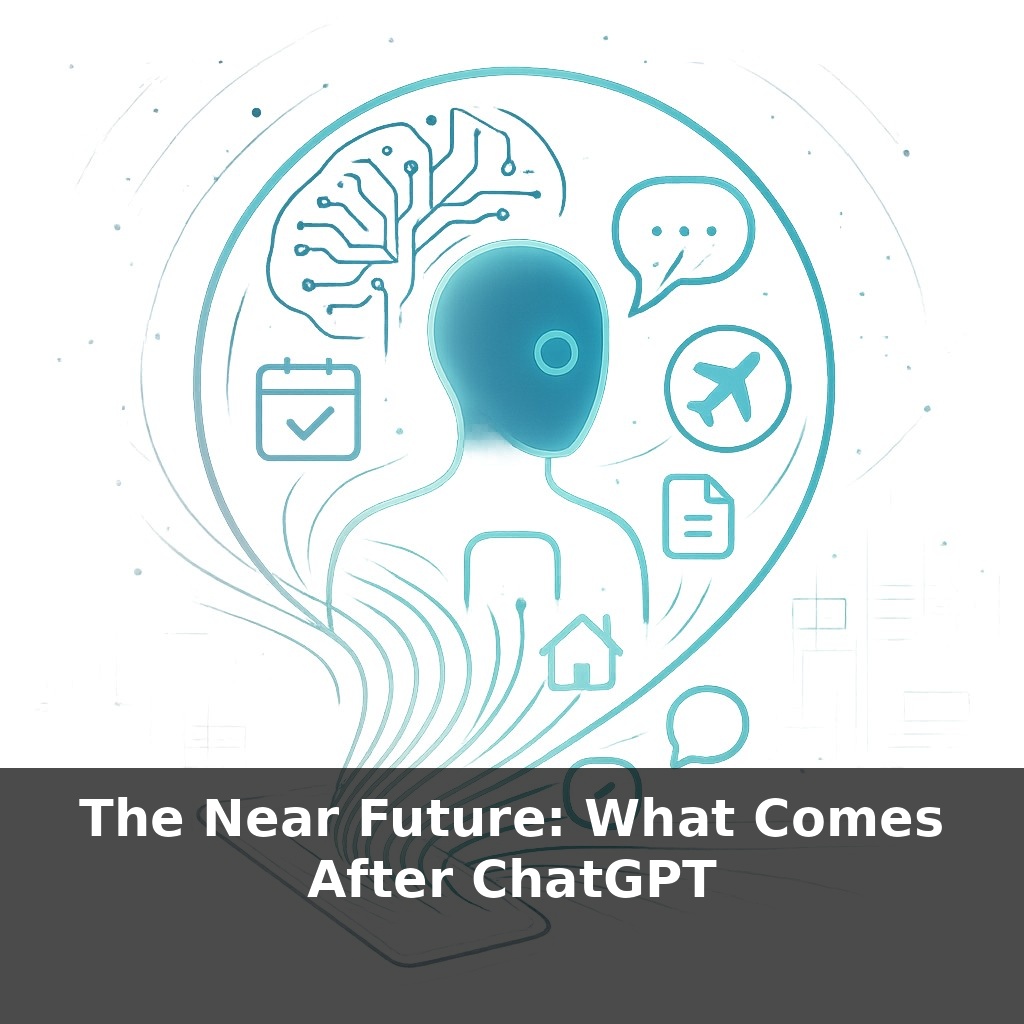
This split future—giant cloud brains plus nimble local helpers—sets up a new question: how do they coordinate? The answer is “agentic” systems that can plan, delegate, and act across your digital life. Instead of prompting one model, you’ll be orchestrating swarms of them, often without realizing it. The real shift isn’t just smarter chat; it’s software that behaves more like a colleague than a tool.
The twist is that this “colleague‑like” software won’t arrive as a single big launch. It will seep in, update by update, until your apps quietly negotiate with one another on your behalf. Word processors will ask calendar data for deadlines, design tools will query code repositories, and meeting notes will trigger follow‑up emails—without a human in the loop for each step. Meanwhile, on‑device models will guard what never leaves your hardware, acting like bouncers at the door: filtering, summarizing, and redacting before anything touches the broader network.
Stanford’s 2024 AI Index counted a 30‑fold surge in LLM papers on arXiv since 2020. That’s not just academic noise; it’s a hint that “after ChatGPT” won’t be a single product but a crowded ecosystem with incompatible ideas about what AI should do—and who it should answer to.
One camp is chasing sheer capability: larger multimodal systems trained on gigantic datasets, with training runs that may burn through more than 10 GWh of electricity in a shot. That’s the rough yearly usage of a small neighborhood, all spent teaching machines to read, watch, listen, and act. As these models climb in cost—tens of millions of dollars per run—they start to look less like apps and more like national infrastructure, raising questions about who can afford to shape their values.
The other camp is betting on many small, specialized models running close to the user. These don’t try to know everything; they try to know you. They’ll live in your laptop firmware, your spreadsheet, your car’s dashboard—tuned for a single job, constrained by tight energy and memory budgets, but fast enough to feel instantaneous and private.
The tension is obvious: giant models are centralizing power; tiny ones are decentralizing it. Yet McKinsey’s estimate—US$2.6–4.4 trillion in annual economic impact—will only materialize if these two worlds cooperate. That’s where alignment and safety frameworks become less philosophical and more operational. It’s not enough to say “don’t be harmful”; we’ll need standards for how agents negotiate access to your data, resolve conflicting instructions, and escalate decisions they’re not qualified to make.
Expect new roles to emerge around this stack. “AI operations” teams keeping fleets of models healthy and up‑to‑date. “Prompt engineers” evolving into workflow designers. Regulators moving from publishing guidelines to certifying AI behavior the way we certify aircraft or medical devices. And ordinary users? They’ll mostly see smoother products—but occasionally, they’ll notice the seams when their calendar, inbox, and AI disagree about what “helpful” really means.
Your challenge this week: pick one tool you already use daily—email, notes, or calendar—and sketch a concrete way an AI agent could safely take over a task inside it, including one rule about what it must *never* do on your behalf.
Think about your workday in terms of “who” you’d trust with what. A CFO doesn’t personally approve every lunch receipt; there’s a policy, a spending limit, and an escalation path. After ChatGPT, you’ll set up something similar for digital work: a handful of high‑authority systems with clear charters, plus lots of narrow “interns” that only touch tiny parts of your life.
One agent might handle travel but only within a budget and never on weekends unless you confirm. Another might draft code changes but is blocked from merging without human review. A writing agent could refactor documents but is barred from sending anything externally. Over time, you’ll tune these like notification settings—tight in some areas, relaxed in others.
The interesting frontier isn’t raw intelligence; it’s governance. Who gets which “spending limit” on your time, money, and data—and how do you know when those limits were crossed?
Regulation and literacy will have to accelerate in tandem. As AI slips into contracts, medical records, and schoolwork, we’ll need norms for when “the AI did it” is never an excuse. Expect audits of training data like ingredient labels on food, and trails showing which systems touched a decision. Cities, companies, and even families may start drafting “AI house rules,” turning today’s informal preferences into explicit, negotiable boundaries.
Soon, you may “hire” and “fire” agents as casually as you install or delete apps, curating a digital crew that fits your habits and ethics. The open question is who writes the rules they follow: you, your employer, your government—or all three in tension. The near future of AI isn’t just smarter systems; it’s a negotiation over who they ultimately serve.
Here’s your challenge this week: Pick ONE real task you already do (like writing emails, analyzing a spreadsheet, planning a project, or coding a feature) and rebuild that workflow with an AI “copilot” using a frontier model (e.g., GPT‑4, Claude, or Gemini) for every step except final approval. For one full workday, force yourself to: have the AI draft first versions, ask it to critique and improve its own output, and then have it generate a “playbook” of the steps it followed. At the end of the day, score the AI-assisted version vs. your old way on time saved, quality, and number of mistakes caught—then decide one part of this AI copilot workflow you’ll keep permanently.