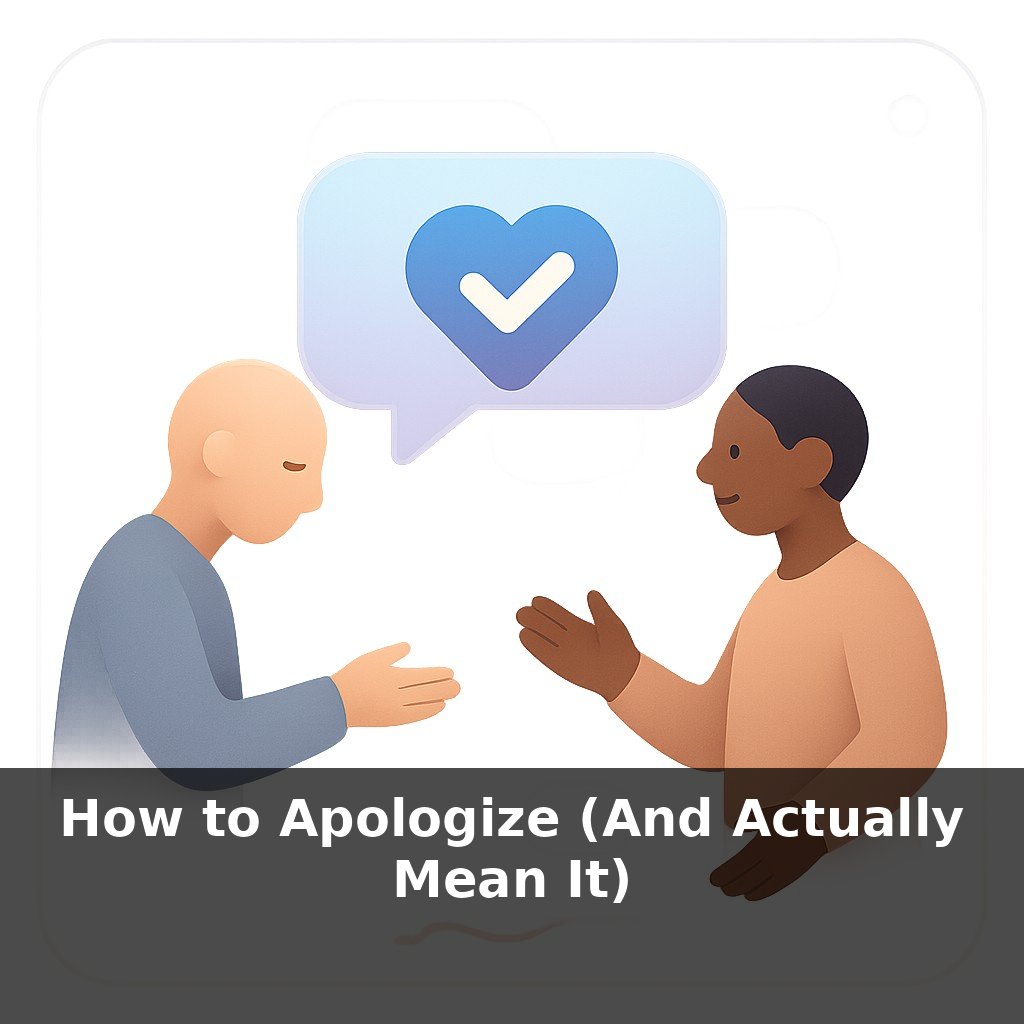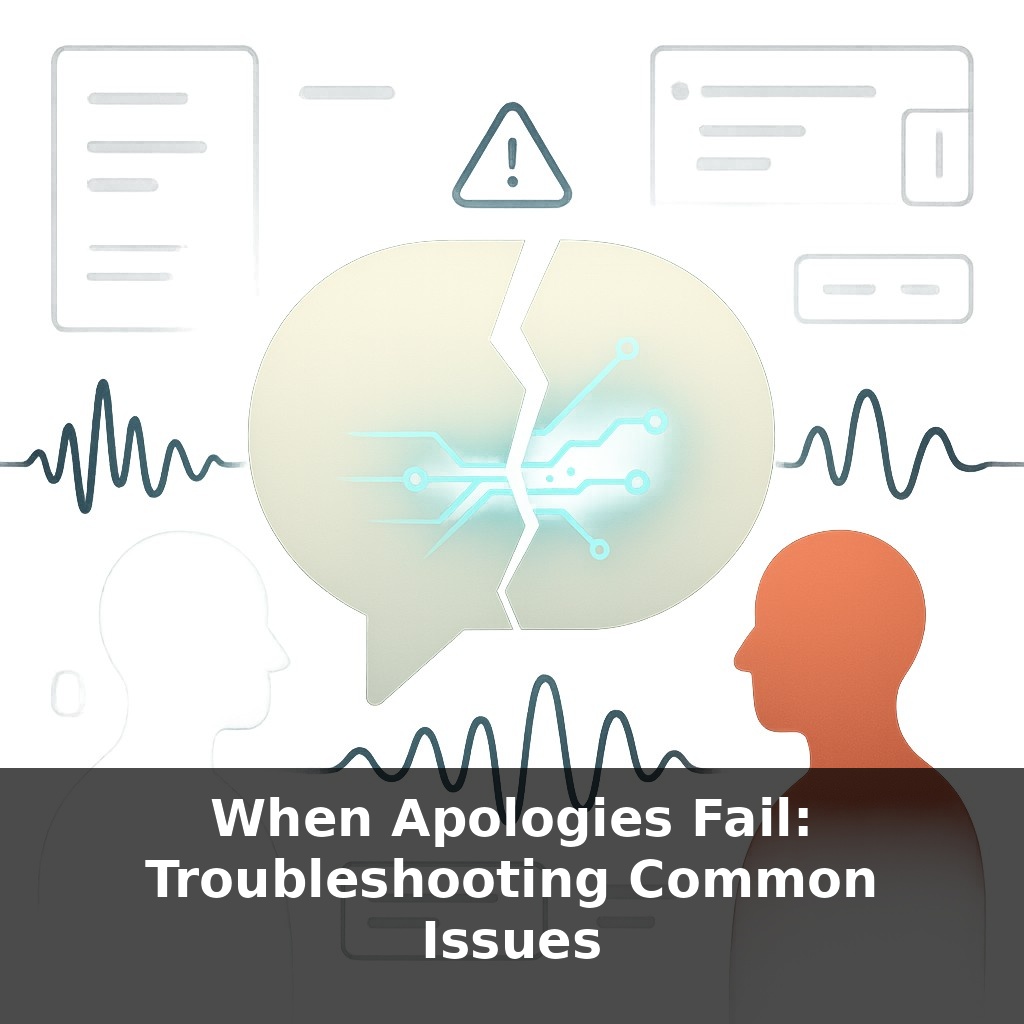
An apology can fail even when you say all the “right” words. Someone hears “I’m sorry,” nods politely… and trusts you less. In this episode, we’ll step inside those broken moments and trace why a repair attempt sometimes cracks the relationship even further.
“Sorry” fails surprisingly often. In that 2020 meta‑analysis of 183 studies, the most powerful ingredient wasn’t “I’m sorry” at all, but a concrete offer of repair—yet it’s the step people skip most. In this episode, we’re not adding more theory; we’re debugging apologies that already went wrong.
Sometimes the flaw is obvious, like sending a rushed “my bad” text after a serious breach. Other times it’s subtle: the timing is off, the tone sounds defensive, or the person you hurt comes from a culture where self‑criticism is a sign of sincerity—and you avoided it.
We’ll treat failed apologies like a misfiring app release: identify which “module” crashed (acknowledgment, responsibility, remorse, repair, or change), then walk through concrete ways to patch, relaunch, and slowly regain real trust.
Sometimes an apology doesn’t explode; it just quietly… sinks. The other person says “it’s fine,” but their replies get shorter, meetings feel colder, or your messages sit on read. That’s the version we’re exploring now: when nothing obviously “wrong” happens, yet trust keeps leaking out.
We’ll look at subtle failure modes—like when your timing clashes with their coping style, or when your tone hits a cultural nerve you didn’t know existed. Think of this as running diagnostics on social “error logs,” learning to spot tiny signals that your last attempt didn’t actually land.
Start by assuming the apology *did* something—it just may not have done what you hoped. Instead of “that didn’t work,” think: “what *did* it change?” Did tension drop a little, even if warmth didn’t return? Did the other person stop arguing but start avoiding you? Those shifts are your first diagnostic clues.
Psychologists often look at three dimensions when apologies misfire: *fit*, *sequence*, and *saturation*.
**1. Fit: was your apology the right “shape” for their hurt?** A curt “sorry” for a complex breach can feel like paying with the wrong currency. Some people care most about emotional alignment (“you *get* how I feel”), others about practical correction (“this won’t happen again”), others about fairness (“you’re bearing a real cost too”). When an apology lands flat, try mapping where you over‑indexed. Did you rush into problem‑solving with someone who first needed you to sit in their anger? Or did you stay in feelings while they were scanning for concrete steps?
**2. Sequence: did you skip a step *for them*?** On paper, your message might include every ingredient. But order matters. Many recipients need to hear a clear naming of impact *before* any explanation. Reverse it—lead with context, then tuck impact into the middle—and it can sound like you’re minimizing. Others need a cooling‑off gap before they even want to hear from you; coming in too quickly feels like pressure to “move on.” Troubleshooting here means asking yourself: “If I replay this from their vantage point, what did they hear *first*? What did they never get around to hearing because they’d already shut down?”
**3. Saturation: did you flood, or did you trickle?** Overlong, heavily qualified messages can feel like standing under a firehose: too many words, not enough clarity. The opposite—two sentences after a major breach—can feel like a form letter. Notice how much “bandwidth” the other person has. In high‑stakes or public situations, it’s often better to send a lean, emotionally honest first pass, then follow with shorter status updates on what you’re changing, rather than a single dense manifesto.
Here’s your single analogy for this episode: think of troubleshooting like adjusting a travel itinerary after a delay. You’re not scrapping the trip; you’re re‑sequencing legs, swapping connections, and sometimes upgrading one part (like giving more time at the layover) so the whole journey still gets you where both of you need to go.
Think of two coworkers after a blown deadline. You send a careful message that hits every element, but they respond with “OK” and never loop you in early again. That’s a *fit* problem in disguise: they might value shared risk more than extra apologies. A better follow‑up is, “For the next project, I’ll take the first draft and own the timeline—does that actually help you?” Now you’re testing what “repair” means *to them*, not to you.
Or consider timing: you call your sister the same evening after a tense argument. She snaps, “I can’t do this right now,” and hangs up. Instead of assuming the apology failed, treat it like bad scheduling. A text the next day—short, specific, and asking when she’s open to talk—respects her pacing without withdrawing your intent.
You can also *prototype* small fixes. Like updating buggy software, send one small patch (“I’ve already changed X”), then watch how they use it before rolling out a bigger change.
Future-facing troubleshooting may look less like a one‑off “sorry” and more like tuning a live system. As AI and biofeedback tools spread, you might literally see a graph of tension dropping—or spiking—as you speak. Think of it like watching a stock chart while you’re trading: you’ll adjust your “apology strategy” in real time, not weeks later. Done well, this could normalize follow‑up conversations as routine maintenance rather than proof something is broken.
When an apology stalls, treat it less like closing a book and more like revising a draft. You can still add missing lines, clarify muddled parts, or change the ending by how you follow through next week and next month. Over time, those edits form a track record—more like a season’s stats than a single game—that quietly shifts how safe it feels to trust you again.
Start with this tiny habit: When you catch yourself thinking “But I didn’t mean to hurt them,” silently add the sentence, “and impact matters more than my intent” before you say anything else. Then, if you’re already in a conflict, ask just one concrete question: “What was the moment that stung the most for you?” and pause to listen without defending. End by saying exactly one sentence that takes ownership, starting with “It makes sense you felt ___ when I ___.”