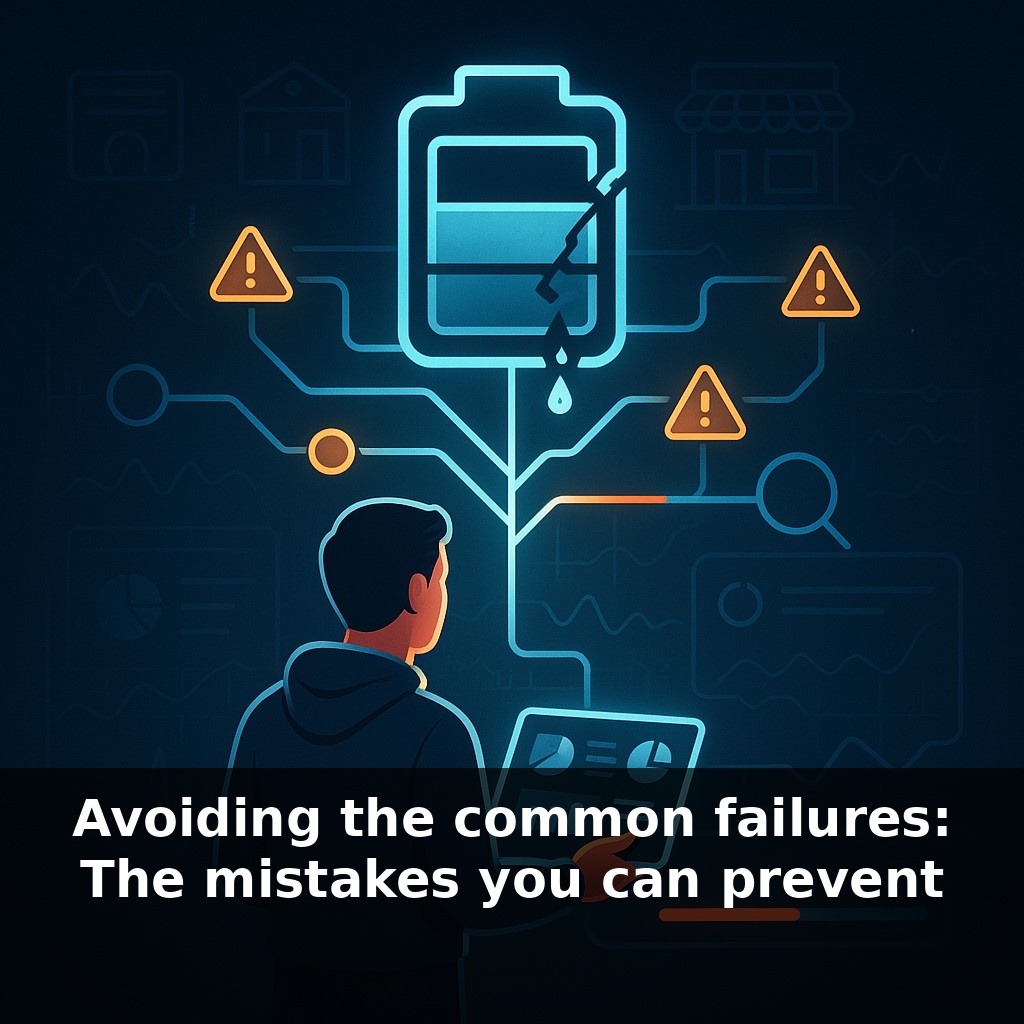
About half of new small businesses quietly disappear within a few years—yet most don’t fail from some giant disaster. They bleed out from small, boring mistakes. In this episode, we’ll zoom in on those tiny decision points where survival is lost—or won.
Forty‑two percent of startups that fail say the same thing on the autopsy report: “Customers just didn’t need what we were selling.” Not “the idea was terrible,” but “we never proved real demand before we bet the house.” In this episode, we’re going to strip away the drama and look at failure as a pattern of preventable choices—not bad luck.
We’ll zoom in on five specific traps: launching without hard evidence of demand, flying blind on cash, assuming nothing big will go wrong, chasing growth you can’t fund or staff, and ignoring how quickly customers and partners are shifting toward sustainability. Each of these shows up as a small, “reasonable” decision in the moment.
Think of this as a diagnostic session: we’ll map these patterns, show you how they appear in everyday operations, and outline simple, low‑friction ways to spot and correct them early—before they quietly sink the business you’re building.
Most owners don’t “decide” to make these mistakes; they drift into them. A discount here, a rushed hire there, a quick guess instead of a quick test—it all feels normal in the moment. The real danger is that these choices usually look reasonable right up until the numbers stop working or the phone stops ringing.
So in this episode, we’ll treat your business like a live case study. We’ll connect those five traps to everyday moves: how you price, who you listen to, what you measure weekly, and which opportunities you turn down. The goal isn’t perfection—it’s building habits that quietly pull you away from the edge.
Twenty percent of small businesses in the U.S. never see their first birthday. Half don’t make it to year five. Those stats aren’t meant to scare you; they’re a reminder that “default mode” is failure. Survival is an active choice, built into how you design, test, and run the business day to day.
Start with fit. Instead of asking, “Do people like my idea?” ask, “What painful, recurring problem will they pay to remove?” That tiny wording shift changes your behavior: you stop looking for compliments and start looking for evidence—reorders, prepayments, contract renewals, referrals. When a segment doesn’t buy, don’t just tweak the pitch; log it as data and ask why. Was the problem too weak, the buyer wrong, the timing off, or the offer unclear? Over time you’re building a live map of where real demand actually sits.
Next, turn cash from a rear‑view mirror into a radar. A simple rolling forecast—12 weeks is plenty—forces you to notice patterns: which customers pay late, which expenses creep up, which months are naturally thin. Instead of reacting to a crisis, you’re experimenting: What happens if we invoice five days earlier? Offer a small discount for upfront payment? Push nonessential spending one cycle out? Tiny levers, pulled early, buy you months of extra runway.
On risk, swap vague fears for specific scenarios. List the five events most likely to hurt you this year: a key supplier failing, a channel drying up, a founder getting sick. Then, for each, define one prevention move and one backup move. It’s like a musician carrying a spare string: cheap insurance that keeps the performance going when something snaps mid‑show.
Sustainable practice fits the same pattern. Instead of treating it as a moral add‑on, treat it as an efficiency and trust exercise. Where are you wasting materials, energy, or time? Where are customers or partners already asking for more transparency? Owners who track this often discover savings first, reputation boost second.
The through‑line: don’t trust vibes, trust small, repeated tests. Every week, you’re either drifting toward the statistics—or quietly rewriting them.
A founder running a small dev agency noticed a pattern: every “exciting” custom project ended with stressed weekends and thin margins. Instead of blaming scope creep in general, she tagged each project in a simple spreadsheet: green (on budget), yellow (tight), red (loss). Within a quarter, a rule emerged—anything without a clear owner on the client side went red. Her fix wasn’t heroic; she added one screening question to sales calls and walked away from fuzzy projects. Revenue dipped for a month, then profits and sleep both improved.
Another owner, selling hardware to local schools, quietly tracked which proposals won. The surprise: wins weren’t tied to price but to whether maintenance was included. That insight nudged him to package support contracts up front. Cash became smoother, and district renewals felt less like fresh battles and more like routine upgrades.
Your version might be different: color‑coding customer segments, labeling which marketing channels produce second purchases, or logging which supplier delays actually hurt. The point is to surface the patterns your gut is already half‑noticing.
Regulation and tech are turning “good management” into a competitive weapon. As reporting rules tighten, those treating ESG like taxes—handled last minute—will scramble, while others weave it into daily ops and attract better contracts, talent, and lending terms. Think of upcoming AI tools less as crystal balls and more as weather apps: they won’t stop storms, but they’ll give small firms enough advance warning to choose the safest route instead of sailing blind.
Survival, then, becomes a craft: noticing weak signals, adjusting the mix, and treating each month as a fresh experiment, not a verdict. Like a band tuning between songs, you refine your set based on how the room responds—quieter here, louder there. The aim isn’t perfection; it’s staying in the game long enough to compound every small, smart correction.
Before next week, ask yourself: 1) “Looking at my current project, where am I skipping ‘pre-mortems’—honestly listing the top 3 ways this could fail—and what would I change today if I assumed one of those failures was guaranteed to happen?” 2) “Where am I relying on optimism instead of numbers—like not checking actual user behavior, cash flow, or response rates—and what specific metric could I start tracking this week that would quickly expose whether I’m on the wrong path?” 3) “Who is the one person (a skeptical colleague, customer, or mentor) I’ve been avoiding because they might poke holes in my plan, and how could I intentionally invite their toughest feedback in the next 48 hours so I can fix weak spots before they become fatal?”