About 1 in 5 new freelancers quietly pay a “surprise tax fine” their first year. You’re invoicing clients, money’s finally flowing… and then a notice shows up saying you didn’t pay enough *during* the year. Not more tax—just a fee for bad timing. Why is the timing so strict?
Here’s the twist: the IRS doesn’t actually care if your income is “messy” and unpredictable—only that your payments look steady and predictable. That’s why freelancers use estimated taxes: you’re turning your uneven cash flow into a smooth pattern the IRS understands. But “just pay something each quarter” isn’t a plan; it’s a guess. And guesses are what lead to those quiet penalty letters later.
This is where safe‑harbor rules, smart percentages, and automation come in. Think of them as the rails that keep your freelance money train from sliding off the track when income spikes or dips. Instead of reinventing the wheel every quarter, you can plug your real numbers into a simple framework, let software do the heavy lifting, and know *before* you hit “pay” whether you’re on target or heading for a shortfall.
Nearly 20 % of first‑year freelancers still get hit with penalties even after “trying their best” to send money in. The missing piece isn’t willpower—it’s turning vague intentions into a concrete system you can actually follow when you’re busy, tired, or your income jumps without warning. That’s where due dates, self‑employment tax, and the penalty math start to matter, not as scary jargon but as guardrails you can plan around. Like a hiking trail map, they don’t change the terrain—you’ll still have steep months and slow months—but they show you exactly where the cliffs are so you don’t step off one by accident.
Nearly 20 % paying penalties tells you something: most freelancers are *trying* to do this right, but their system falls apart in real life. So instead of one “perfect” formula, think in layers: a backup plan, a working plan, and a calibration plan.
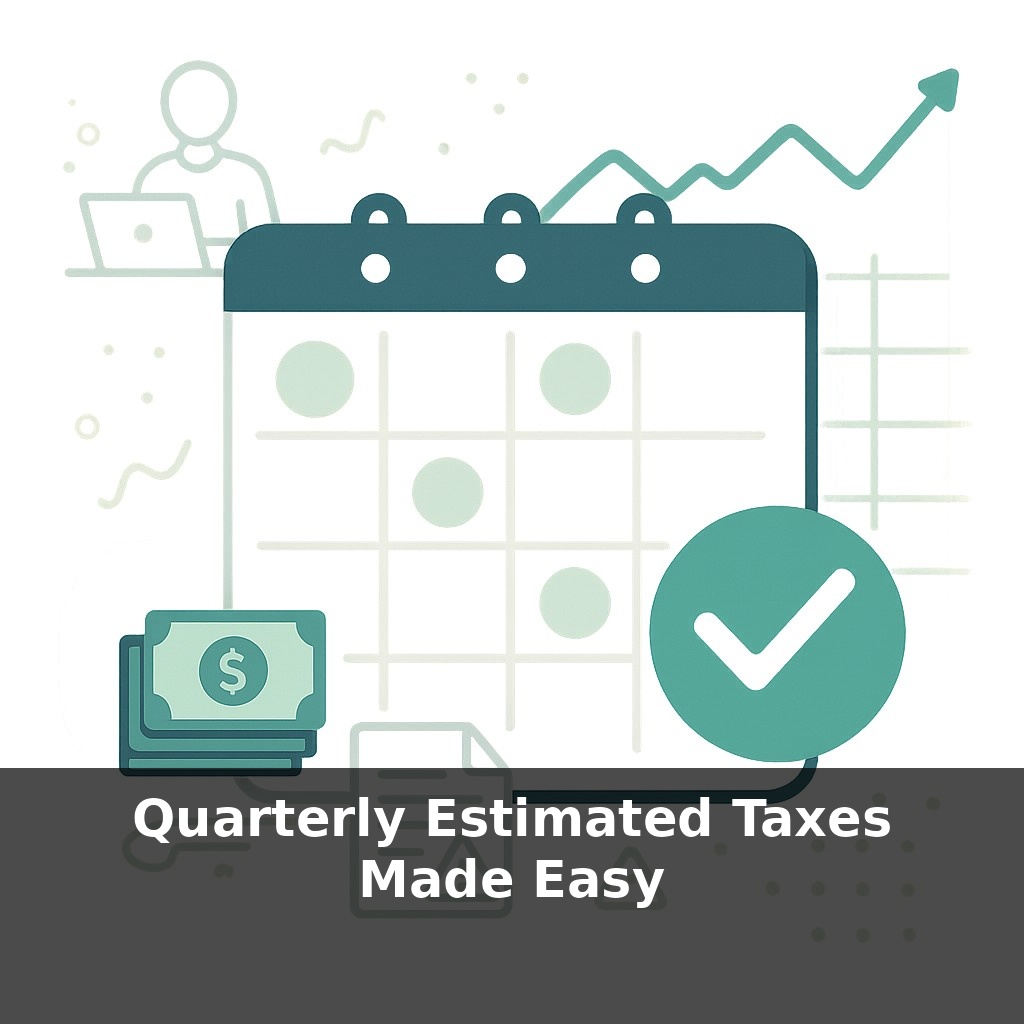
Layer 1 is your emergency parachute: the safe‑harbor based on last year. If your income won’t drop dramatically, this is your “I refuse to get a penalty” baseline. You can even set calendar reminders once a year, divide that number by four, and let automation handle the rest. Boring on purpose.
Layer 2 is where your actual cash flow lives: a percentage‑of‑income rule. Pick a single, slightly conservative percentage of every payment you receive—say 25–35 % of gross freelance income—and route it straight into a separate tax stash account. Treat that account as off‑limits for rent, flights, or “temporary” borrowing. You’re building a buffer big enough to handle both income spikes and the self‑employment component without needing to guess every quarter.
Layer 3 is calibration: tiny check‑ins that keep you from drifting. Once a month (or at least before each quarterly deadline), open whatever bookkeeping tool you use—wave, a spreadsheet, full accounting software, doesn’t matter—and look at three numbers: total freelance income year‑to‑date, expenses you’ve actually logged, and tax you’ve already sent in. You’re not doing full tax prep; you’re asking, “If this pace kept up all year, would my set‑aside and payments still feel safe?”
Here’s where modern tools quietly save you: most invoicing or bookkeeping apps can tag income that’s subject to self‑employment tax, apply your chosen percentage automatically, and even show a running “tax to reserve” number. Pair that with autopay through IRS Direct Pay, EFTPS, or your tax software, and your quarterly routine shrinks to: confirm the amount, click submit, archive the confirmation.
Think of it as tending a small garden: brief, regular attention beats heroic rescue missions after months of neglect. The goal isn’t perfection—it’s a system that still works on your busiest, most chaotic freelance day.
Lena, a freelance UX designer, treats her tax system like plotting a cross‑country train route. At the start of the year she marks four “stations” on her calendar and writes down a rough ticket price for each one based on last year’s numbers. That becomes her minimum commitment: as long as those tickets get punched, she knows the trip continues smoothly.
But her real control happens between stations. Every time a client pays an invoice, a fixed slice goes into a separate account labeled “Do Not Touch.” That’s her way of accepting that some stretches of track will be steep—big project months—while others are flat and slow. She isn’t trying to predict the landscape, only making sure the engine never runs dry.
Once a month she opens her bookkeeping app, glances at year‑to‑date income, expenses, and what she’s already sent in, then nudges her percentage a bit higher or lower. Ten minutes later, she’s done. No spreadsheets at midnight, no guessing game—just small, regular course corrections that keep the whole system from derailing when a surprise project lands.
Nearly 20 % of new freelancers get hit with an IRS penalty their first year—not because they’re careless, but because the system assumes you’re already good at being your own payroll department.
As real‑time withholding pilots roll out on gig platforms and banks build “smart” tax features into business accounts, your role shifts from tax calculator to systems designer. The freelancers who win will be the ones who plug these tools into a clear plan instead of hoping software alone keeps them safe.
Your challenge this week: pick *one* platform or bank you already use (PayPal, Stripe, your business checking, etc.) and explore its automation options. Can it auto‑move a percentage of each payout into a separate space? Can it tag income to make year‑end reports cleaner? Turn on exactly one automation that reduces how often you have to think about your next quarterly payment.
Over time, your system becomes less about fear of penalties and more about rhythm—like learning a new instrument until muscle memory kicks in. As income sources shift, you can tweak your percentages, adjust for new deductions, or add state payments. The payoff isn’t just compliance; it’s walking into tax season already 80 % finished, with no scramble and fewer surprises.
Try this experiment: Open your bookkeeping tool or bank statements and pull your actual income for the last three months, then plug it into the IRS Form 1040-ES worksheet (or a QET calculator) to estimate what you *should* be paying each quarter. Next, set up an automatic transfer for that exact amount (or percentage) into a separate “tax-only” savings account for the next 30 days every time you get paid. At the end of the month, compare how much is in that tax account to what the calculator says you’ll owe for the next quarterly deadline and note how close you are—and how much less stressful that upcoming payment feels.