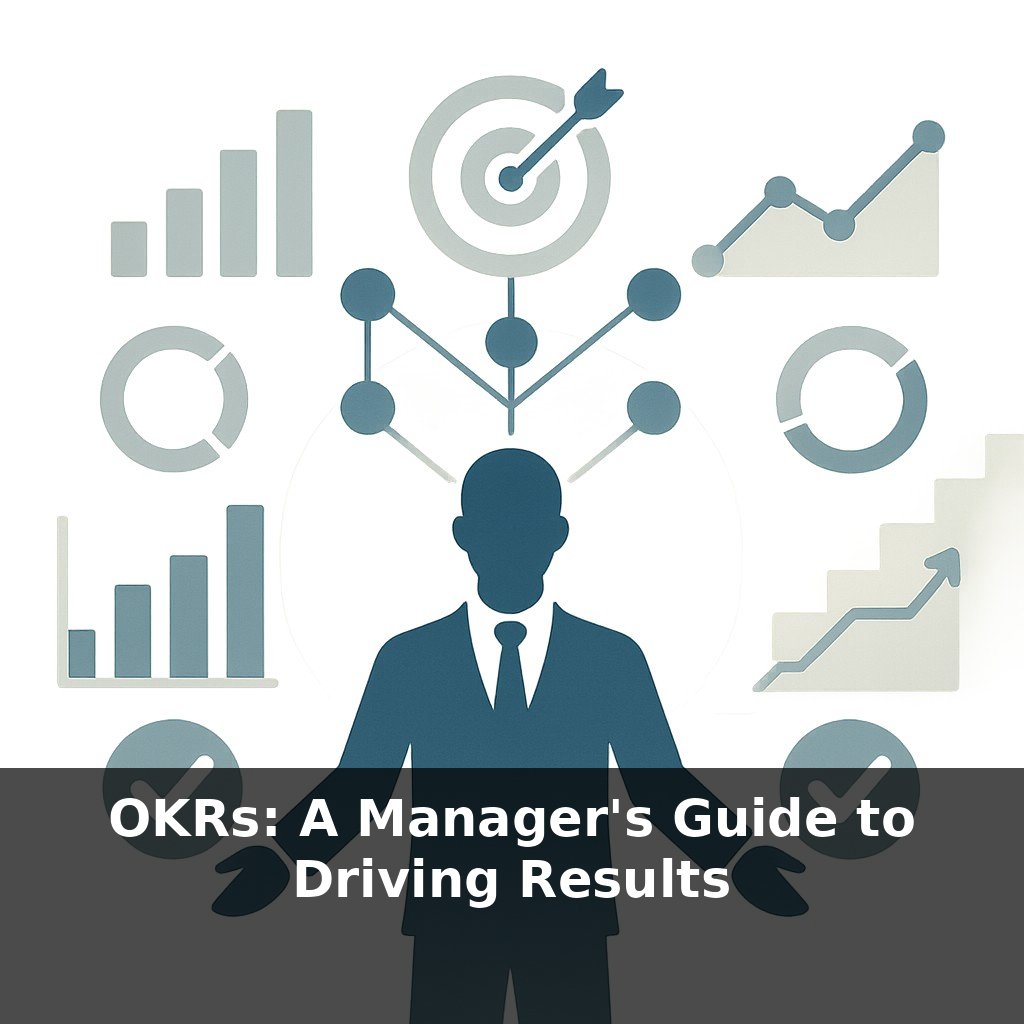
About three out of four companies that try OKRs quietly drop them. Not because OKRs are bad—but because the way they’re used almost guarantees failure. A team sets bold goals, gets busy, and by week three… no one can explain how today’s work connects.
Seventy‑three percent of organisations that give up on OKRs blame one thing: they stopped following up every week. Not the framework, not the ambition—the cadence. When OKRs fail, it’s almost always because of a few predictable patterns that quietly creep in. A team drafts ten objectives “just to be safe.” Key results are written as vague tasks instead of measurable outcomes. No one looks at progress until the quarter is nearly over. Or worse, people treat OKRs as performance scores tied to bonuses, so everyone plays it safe and sandbags targets. In contrast, high‑performing teams are almost boringly consistent: they keep 3–5 sharp objectives, each with 3–4 clear, numeric key results. They review them weekly in the same meeting slot, and they keep them visible across teams—without turning them into compensation levers. This episode breaks down those common traps and how to avoid them.
Most managers don’t fail at OKRs because they’re careless—they fail because the system around the goals is noisy. Excess priorities, vague metrics, and one‑off “goal setting days” pile up until the plan is unusable. In a 40‑hour week, your team might spend 2 hours talking about direction and 38 hours working blind. The good news: small structural choices change everything. Capping to 4 team priorities, insisting every number has an owner, and booking a 20‑minute weekly review can turn OKRs from a quarterly ritual into the operating rhythm of your team. This is what we’ll make concrete next.
Most OKR systems break in five places—none of them technical. As a manager, your leverage comes from spotting these breakpoints early and designing around them.
First, overloaded direction. When a team carries 8–10 focus areas, they don’t become twice as productive; they dilute attention. A practical guardrail: cap your team at 3–4 objectives and treat new ones as a trade‑off, not an add‑on. If a VP asks for “just one more,” respond with, “Which one should we drop to make space?” That single question protects your team more than any template.
Second, numbers that don’t drive behaviour. A key result like “launch new feature” sounds fine, but it doesn’t tell anyone what “good” looks like. Instead, hard‑code the effect: “Increase weekly active users of Feature X from 1,200 to 3,000.” Now engineers, PMs, and marketing can all see how their work moves the same needle. One signal you’re getting this right: people reference KRs unprompted in daily conversations—“This will move KR2 by about 10%.”
Third, weak linkage to the calendar. Many teams set OKRs on day 1 and see them next on day 70. Build a simple weekly rhythm: 15 minutes, same time, same agenda. Status (green/amber/red) for each key result, one blocker, one decision. That’s it. If you manage 7 people, this turns into roughly 1.75 hours of structured focus per week—far less than the time they currently lose to conflicting priorities.
Fourth, misalignment with real work. When your task board and OKR board tell different stories, people follow the one their manager inspects. Make it explicit: tag every project or epic with the objective it supports, or mark it “BAU.” If more than 30–40% of active work has no OKR tag, you’ve discovered why progress feels slow.
Finally, fear. When people think OKRs equal personal grades, they anchor goals low. Separate the two by design. You can still factor outcomes into reviews, but write this sentence into your team charter: “Hitting 70% on a stretch OKR is success, not failure.” Then live it—publicly praise thoughtful misses that taught you something.
Your challenge this week: pick one team you manage and run a “quiet audit.” Count current objectives, scan how many key results have clear start‑and‑end numbers, and check the last date your team reviewed them together. Don’t fix anything yet; just get the baseline. Next episode, we’ll turn that baseline into a concrete upgrade plan.
At a fintech startup with 26 people, the data science lead reduced chaos by forcing a trade‑off. The team had 9 competing “priorities.” She pushed leadership to pick 3 outcomes for the quarter and killed 11 projects that didn’t fit. Within 10 weeks, fraud‑related chargebacks dropped from 1.8% to 0.9%, support tickets fell by 37%, and they still shipped two long‑delayed features. Nothing about the team changed; only what they allowed on the plate.
A B2B SaaS sales org did something different: they rewrote “activity” KRs into impact KRs. Instead of “run 40 demos per rep per month,” they focused on “increase win rate from 21% to 28%.” Reps began disqualifying bad leads faster, marketing cleaned their MQL criteria, and legal simplified contracts. They ended the quarter at 29.4% win rate with 18% fewer demos—more revenue, less thrash.
Think of OKRs like plotting a route for a three‑day hike: if you mark 20 scenic detours on the map, you won’t reach the summit before dark.
AI will quietly raise the bar on how you run this system. As tools start updating progress from live data—deploys, tickets, NPS, uptime—you’ll spend less time collecting numbers and more time deciding whether to double down or pivot. Imagine 60% of your KRs auto‑refreshing by default. Your job becomes editing ambition: is this still the most valuable outcome? Are we learning fast enough from misses to justify the stretch next quarter?
Use the audit you just ran as a baseline, not a verdict. In the next 30 days, aim for one visible upgrade: trim 1–2 low‑value goals, add numeric ranges to at least 5 fuzzy targets, or lock a 15‑minute weekly review. Track before/after: number of escalations, slipped dates, and surprises. If those don’t drop by ~20%, refine and repeat.
Here's your challenge this week: Pick ONE current project and run a 15-minute “pitfall audit” on it using the episode’s four traps: vague goals, overstuffed scope, hidden assumptions, and solo-hero mode. Rewrite the project goal as a single success sentence a 10-year-old could understand, then cut or postpone at least two “nice-to-have” tasks that don’t directly serve that sentence. Next, list three assumptions you’re making (about time, people, or resources) and verify at least one of them today by sending a specific message, checking a calendar, or looking at the actual data. Finally, share your trimmed-down project plan with one person and explicitly ask, “What’s one way this could still go off the rails?”