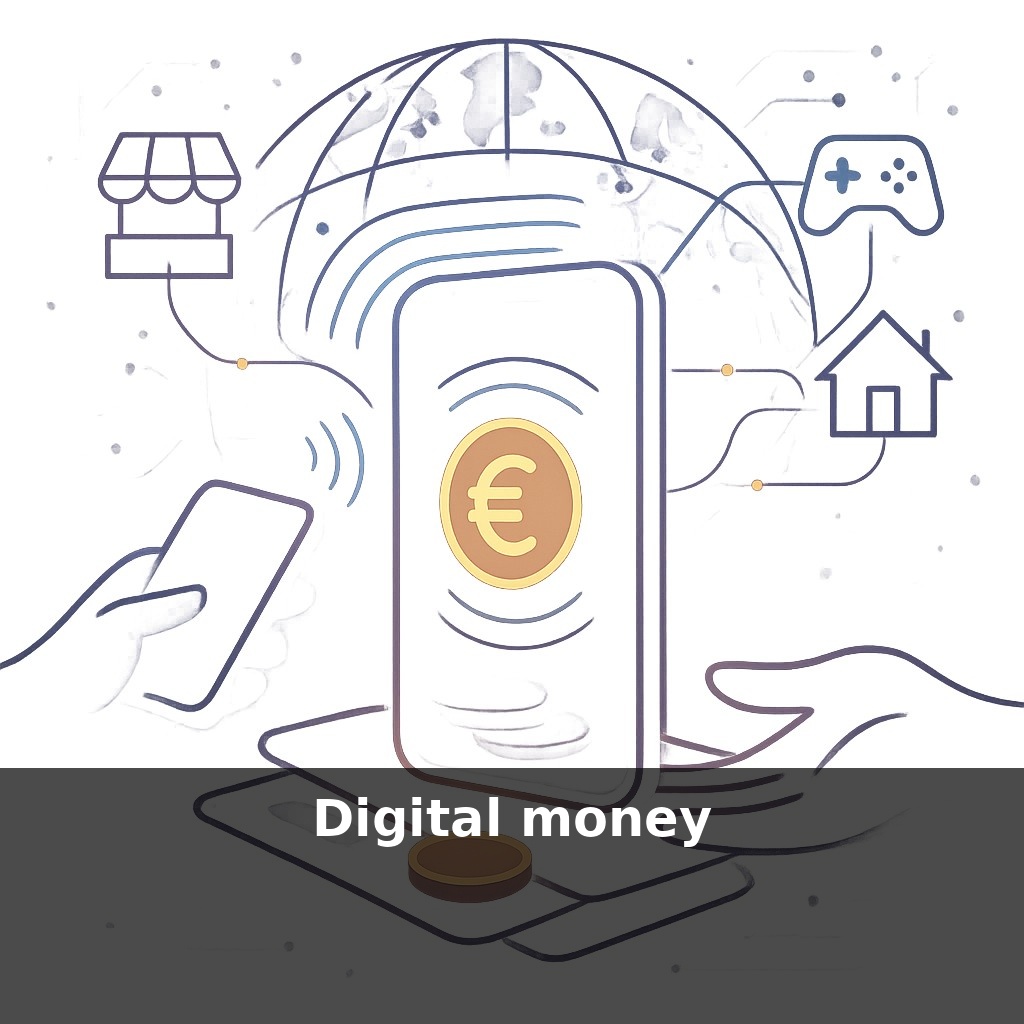
Right now, most of the world’s money moves without ever touching paper. A street vendor gets paid by tapping a phone. A gamer sells a digital sword and cashes out to real rent money. A nurse in London pays her mom’s grocery bill in Lagos—instantly, and for a fraction of old fees.
A few years ago, earning online meant fighting through clunky forms, waiting days for payouts, and hoping your bank “supported” whatever platform you used. Today, the tools are turning into near-invisible plumbing: a creator links a bank account once and wakes up to daily deposits; a part-time seller uses a QR code instead of arguing over “exact change”; a small studio releases a game and instantly accepts money from players in dozens of countries. As these rails get smoother, something subtle but powerful happens: ordinary people can test more income experiments, more often, with less risk. You can launch a side project on a weekend, charge from day one, and shut it down just as quickly if it flops—without asking anyone’s permission or filling a single paper form.
Now the “rails” under all those taps and clicks are changing too. Big players—governments, banks, fintechs, even crypto projects—are quietly competing to become the default path your money takes. Some build slick highways like Stripe that plug into a website in minutes; others test entirely new roads like central bank digital currencies that might plug citizens straight into a national wallet. For ordinary earners, this isn’t abstract policy; it shapes which customers can pay you, how fast you get funds, and whether you keep pennies or chunks on every dollar you make.
A single integration that takes under ten minutes doesn’t sound life-changing—until you notice who’s quietly using it. A solo craft seller connecting a checkout button to reach buyers in three countries. A language tutor in Manila accepting lessons booked from Berlin without touching a Western bank branch. A gamer in São Paulo joining a global tournament and actually receiving prize money, not just in-game credits.
Underneath these stories is a shift from “you must fit the old system” to “the system adapts to you.” Until recently, meaningful access to global money flows required a bank relationship, credit history, and often a local business entity. Now, platforms sit in the middle: they handle compliance, fraud checks, and currency conversions, then expose all that complexity as a few buttons and settings.
This matters because the new rails don’t just move money; they rewrite who can build on top of them. Developers stack services—identity checks, payouts, subscriptions—like modular blocks. Non-technical people piggyback on those blocks through marketplaces, print-on-demand shops, or freelancer platforms. Each layer widens the doorway for the next group of earners.
The public sector is experimenting too. With most central banks exploring digital currencies, you can see a fork in the road: one path where states offer basic, low-cost accounts directly to citizens; another where they outsource innovation to private rails but tighten oversight. Either way, the boundary between “government money” and “app money” is starting to blur.
Cross-border earnings are where this becomes most concrete. Remittances, freelance gigs, micro-exports—these used to be carved up by fees at every hop. New corridors that settle closer to real time at lower cost mean a designer in Nairobi keeps more of a U.S. invoice, and a café in Dhaka can afford to buy beans from a small roaster abroad, not just big intermediaries.
Think of it like a music scene where the cost of studio time collapses: suddenly, more people can record, experiment, and distribute. Not everyone becomes a star, but the number of people who can earn *something* from their talent multiplies.
A Kenyan driver records short safety tutorials between rides, uploads them to a niche platform, and sets payouts to the same wallet where family remittances land. A Brazilian illustrator licenses sticker packs to three different apps; each one settles in its own way—one via a fintech balance, one through a marketplace wallet, one using crypto off-ramps—but to her it’s a single pool she can withdraw from at the corner kiosk. A retiree in Poland rents out idle GPU power to a research network and receives tiny drips of value around the clock, which auto-convert into her local currency every Sunday. These aren’t edge cases; they hint at a pattern where “getting paid” dissolves into the background. The rails can fan out earnings across currencies and jurisdictions, then recombine them at the edge of your life: a school fee, a grocery bill, a savings pocket. Your role shifts from chasing invoices to orchestrating streams.
As code starts to shape how we’re paid, “getting money” may feel less like opening a paycheck and more like watching a map update in real time. You’ll see dots for projects, tips, royalties, tiny bonuses for training an AI or sharing data on your terms. Some streams might pause if rules change; others could unlock when you cross a threshold, like loyalty tiers. The real skill becomes deciding which flows to nurture, which to cap, and which to refuse entirely.
As more of life plugs into these rails, your “wallet” could start to feel less like a container and more like a remote control: nudge a slider toward savings, redirect a trickle to a friend, pause a noisy stream that no longer fits. The frontier isn’t just more ways to get paid—it’s more ways to express what you value every time you move a single unit of money.
Before next week, ask yourself: “If my salary arrived only as digital money (no cash option), which 3 everyday payments would worry me most, and what backup would I put in place for each (e.g., second bank, prepaid card, small cash buffer)?” “Looking at my main banking and payment apps, which single provider currently has the most power over my day‑to‑day spending, and how comfortable am I with that if their system went down for 48 hours?” “If central bank digital currencies (CBDCs) became standard, which specific freedoms or conveniences (e.g., offline payments, privacy from retailers or government, cross‑border transfers) would matter most to me, and how could I start diversifying now to protect those?”